Pressures weigh on Northern Rivers farmers amid ongoing economic uncertainty
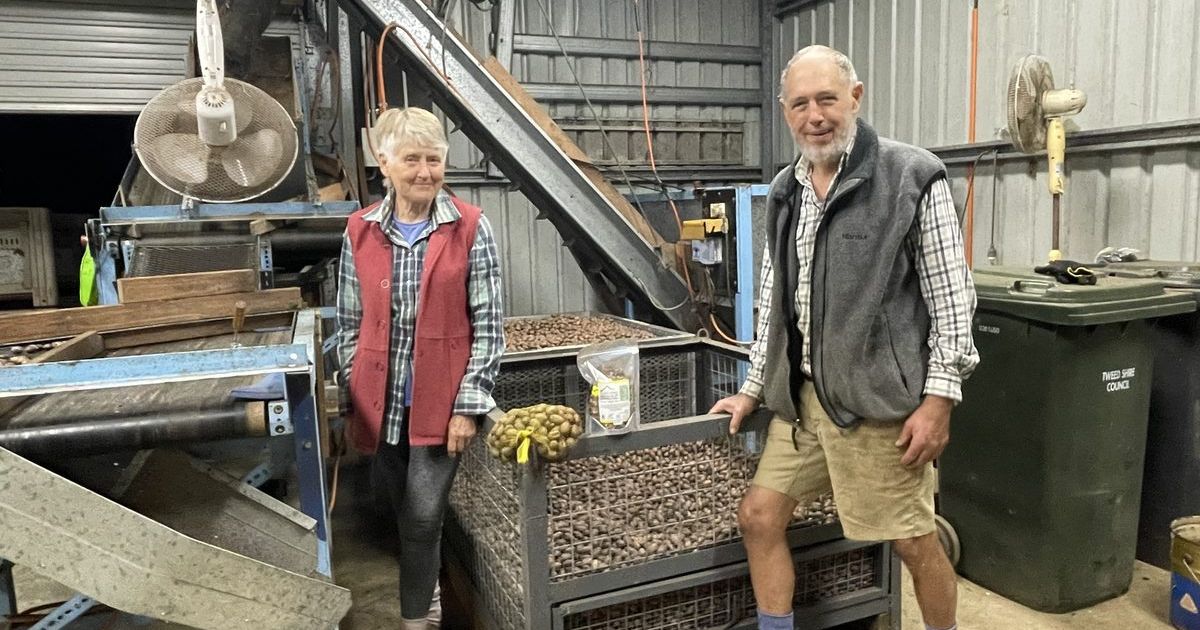
Tweed River Pecans farmers Kaye and David McNaught. Photo: Pancho Symes.


NORTHERN Rivers farmers say rising fuel and fertiliser costs, along with ongoing supply uncertainty, are increasing pressure on agricultural businesses across the region and forcing some to rethink how they operate.
Murwillumbah sugarcane grower Greg O’Connor, of Belleuve, said fertiliser and fuel costs are some of the biggest challenges facing cane producers.
He said sharp increases in fertiliser prices could impact many farmers, particularly those trying to plan ahead in an unstable market.
“Urea is currently 1760 dollars a tonne, while it was approximately 850 dollars a tonne last year,” O’Connor said.
With some farmers purchasing early, O’Connor said that he had taken a more “optimistic” approach.
“Maybe I’m too optimistic,” he said.
“I don’t need fertilizer until at the latest – September, October… so a few months away.”
“I was hoping the war would have been over by now and then by the time the supply chain catches up it might have been okay, but that’s probably not going to be the case.”
“I’m trying to be optimistic and hopefully that fertilizer will come down to a more reasonable rate.”
He said sugarcane production relies heavily on three key cost drivers – all currently under pressure.
“The biggest cost in sugar farm is harvesting, transport – using diesel to get the crop to the mill to process it, and then fertilizer to grow the crop for next year… and they’re all affected,” he said.
“The double whammy is if particular farmers had a below average crop this year – with the high cost of growing the next crop, there wouldn’t be a lot in it.”
Meanwhile, farmers at Tweed River Pecans have said local customers and farmers markets are helping keep their business afloat amid ongoing uncertainty affecting wholesale demand.
Pecan farmer David McNaught said rising costs had added to broader economic anxiety and weakened consumer confidence, causing a drop in wholesale pecan purchases.
“We’re very lucky because we’re being saved by our local farmers markets and our local shops and cafes and stuff who buy our pecans, because the pecan wholesale purchases have collapsed.”
McNaught said two wholesalers had stopped buying altogether this season, while a third was yet to commit to prices amid fears around weakening consumer demand.
“They’re still sitting on the fence, and they say, “We don’t know what consumer demand is going to be, we don’t know what the future is”,” he said.
“We’re very fortunate that the vast majority of our nuts we’re able to sell locally, and without that, our farm would be in trouble like some other farmers are.”
Rather than risk harvesting produce that could not be sold profitably, the farm has scaled back the amount of nuts picked for wholesale markets.
“If you harvest it and can’t find a market or they’re offering a price below production – you actually lose,” he said.
“But if we’re leaving them out there, we’re not losing.”
McNaught added that the farm’s organic and regenerative practices had also helped soften the impact of rising input costs, with limited reliance on fertilisers and relatively low fuel use outside harvest periods.
“The other thing that’s saving us is we’re certified organic and we’re regenerative practices,” he said.
“We don’t buy fertiliser – we might buy a little bit of compost.”
McNaught said local support had become critical to the farm’s survival, with returning customers from across the region and interstate buyers continuing to purchase directly despite economic pressure.
“We’re lucky in this area, we’ve got a lot of loyal customers who religiously buy our nuts,” he said.
McNaught said the hardest pressure during the current economic uncertainty was not just financial, but psychological, affecting people across the wider community.
“I think the hardest thing – it’s not just farming, it’s everywhere – it’s the uncertainty,” he said.
“It’s the uncertainty of interest rates, the uncertainty of markets, the uncertainty of what’s going to happen in the Middle East…”
He said confidence now drives spending behaviour across the economy.
“It comes down to confidence – consumer confidence,” he said.
“If people are confident, they’ll spend.”
“If they’re not, they pull their belt in.”
Share


Related Articles
Local health, education projects to receive multi-million-dollar injection through state budget
New ambulance stations, expanded maternity services and ongoing flood recovery…
ED and surgical activity remains high as acuity levels rise across Northern NSW hospitals
EMERGENCY departments and surgical theatres across Northern NSW Local Health…