Soaring fuel costs squeeze Northern Rivers musicians
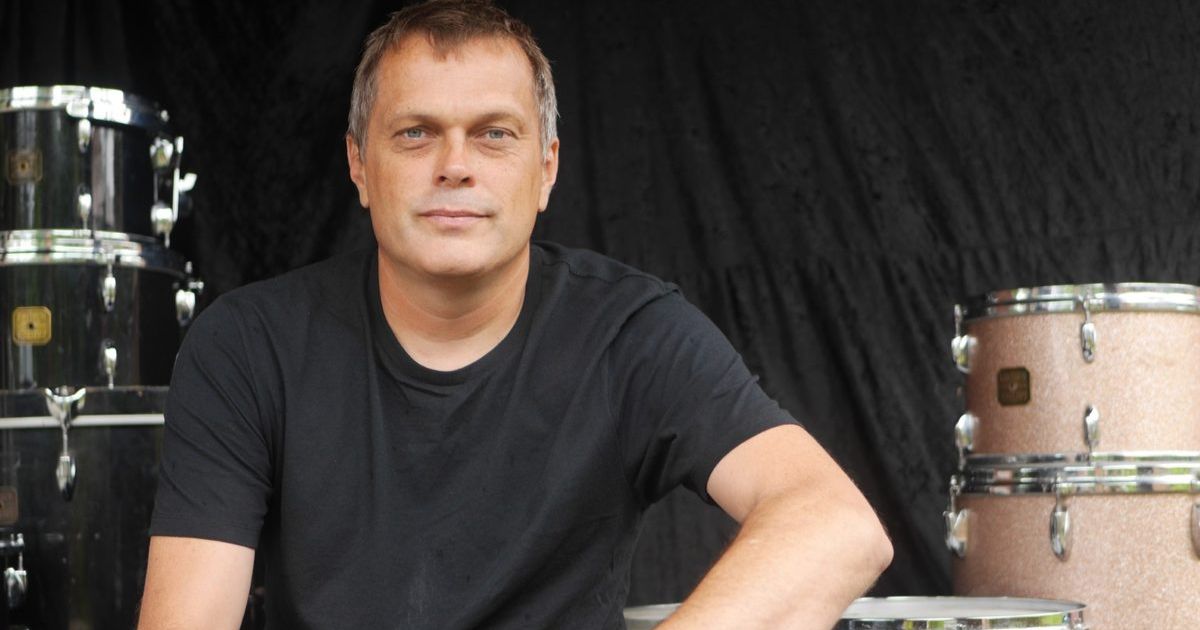
Mullumbimby based drummer Dave Sanders travels between 35,000km and 40,000km a year for work, regularly performing across the East Coast from Brisbane to Coffs Harbour. Photo: Waz Porter.


MUSICIANS across the Northern Rivers say rising fuel costs are making it harder to sustain a career built on long-distance travel and regular gigs.
Dave Sanders is one of Australia’s most well-rounded and sought-after drummers and drum educators, travelling between 35,000km and 40,000km a year for work and regularly performing across the East Coast.
“From my home in Mullumbimby I have a two-hour circle that I operate around, as far south as Coffs Harbour and just north of Brisbane,” Sanders said.
“In any given week, I’m doing two trips to Tweed to teach, at least one trip to Brisbane, and then the other gigs which can be anywhere between Brisbane and Coffs Harbour.”
With all sectors of the community affected by rising costs, Sanders said he is in no position to compensate by increasing his rates.
“I don’t think there’s room for that at the moment at all,” Sanders said.
“Everyone’s talking about potentially charging more but I think it’s too soon to do that.”
Following the cancellation of Bluesfest, Sanders is preparing for a run of local shows, which he believes will serve as a gauge for the industry.
“I think Easter’s going to be the gauge of it,” he said.
“It’ll be really interesting to see how many people are going out and spending money.”
“This region is heavily affected by tourist trade, so if tourists aren’t coming and people aren’t going out to venues, it’s not like I can then turn around and charge more for what I do.”
Caught between rising costs and limited earning capacity, Sanders said he will have to wait and see how the industry weathers the uncertainty.
“I just feel like I’m gonna get squeezed, and I’m just going to have to bear the brunt of it for the moment,” he said.
“People are saying it feels like it did before COVID, no one really knows what’s going to happen.”
Northern Rivers singer-songwriter Hayley Grace, who has worked in the industry for 25 years, said the situation is adding pressure to an existing challenge for regional musicians.
“On any given day, a musician can be driving three hours one-way to go and play a show,” Grace said.
“Most of the time, for a normal show, we don’t get paid for travel anyway.”
“For a normal show, by the time you pay for your petrol, food, and the time you’re on the road, the actual hourly rate that you’re making as a musician is really bad.”
Grace said there are few solutions available.
“The only way that you could change the cost significantly is to have an electric car,” she said.
“But as a musician, it’s very hard to use an electric car because you don’t know if you’re going to be able to get enough kilometres out of it to get to wherever you’re playing.”
She said staying local may become the only viable option, though it comes with financial trade-offs.
“Maybe we’ll just have to stay in our local area, but there’s only so many venues within a 50-kilometre radius that’ll have you once a month,” Grace said.
“I’ve been travelling to Brisbane for eight years because I get paid well.”
With fuel costs expected to rise further, Grace believes more musicians will be faced with these tough questions.
“It’s so difficult as a workhorse musician in this industry to really make it work,” she said.
“If it keeps going, you’re going to find, just like through COVID, more and more musicians just absolutely cannot afford to be a musician unless they have a day job.”
Share


Related Articles
Graffiti attack leaves business owner facing $20,000 bill
A Tweed business owner says she is facing a $20,000…
Bundjalung artist Bronwyn Bancroft to share her story at Small SHIFT I Will Survive fundraiser in Byron Bay
SHE was recently named winner of the Red Ochre Award…