New push to lift bowel cancer screening
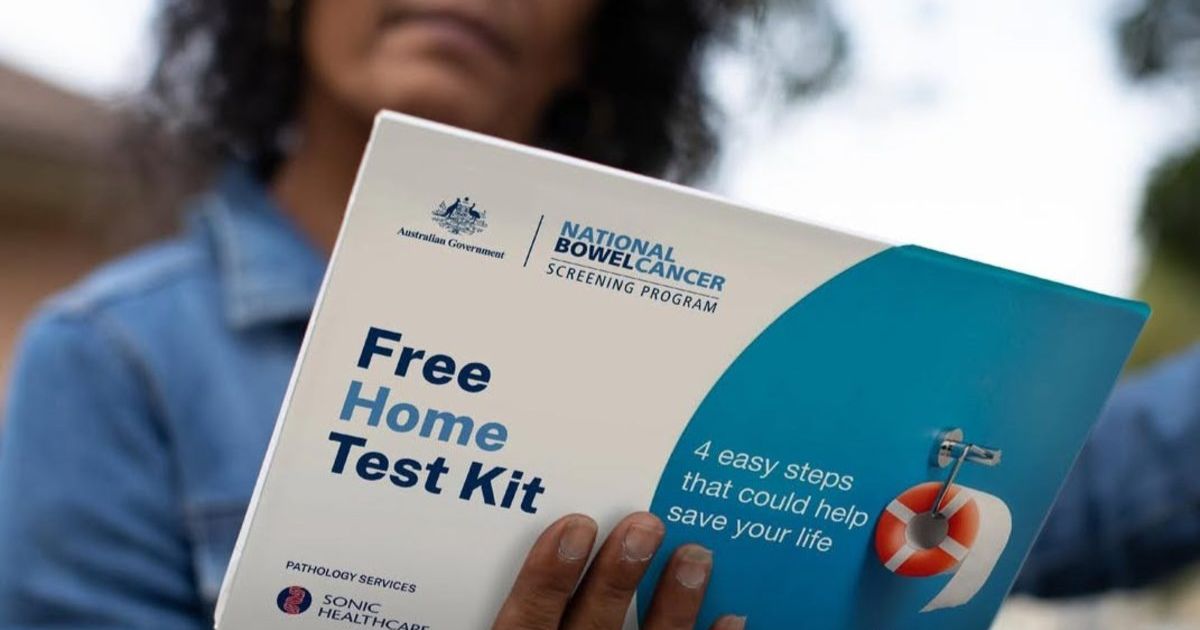
Despite the availability of a free at-home screening test, fewer than half of eligible Australians currently participate in the national program. Photo: supplied.


BOWEL cancer claims about 100 Australian lives each week, but health experts say more deaths could be prevented if more people took part in regular screening.
Despite the availability of a free at-home screening test, fewer than half of eligible Australians currently participate in the national program.
Cancer Council Australia and the federal government this week launched a new awareness campaign encouraging Australians aged 45 to 74 not to delay screening, with research showing many people continue to put off taking the test.
Participation in the National Bowel Cancer Screening Program sits at 41.7 per cent. Health experts estimate that if that figure increased to 60 per cent, about 84,000 lives could be saved by 2040.
Federal health minister Mark Butler said the free test offered a simple opportunity to detect the disease early.
“The Albanese Government is funding this vital campaign because we know bowel cancer screening saves lives,” he said.
“Bowel cancer waits for no one – it is claiming the lives of 100 Australians per week.
“My message to Australians is simple: do not delay your bowel cancer screening test. It is a free, simple test that could potentially save your life.”
Bowel cancer is Australia’s second-biggest cancer killer, but more than 90 per cent of cases can be successfully treated when detected early.
Cancer Council Australia chief executive Jacinta Reddan said awareness of bowel cancer screening was generally high, but many people still delayed taking the test.
“People put it off, life gets in the way, or fear of what the result might show holds them back,” Reddan said. “Prioritising your health is the best thing you can do.”
Australians aged 50 to 74 automatically receive a free bowel cancer screening kit in the mail every two years, while people aged 45 to 49 can request their first free kit through the National Cancer Screening Register.
The test can be completed at home and detects traces of blood in a stool sample, which can be an early sign of bowel cancer before symptoms develop.
Share


Related Articles

Time to dust ’em old boots
LIKE it or loath it, you simply can’t underestimate the…
The deadpan comic winning over Australian audiences
GEELONG audiences are in for a stellar night of comedy…