Kayak legend returns to Queenscliff
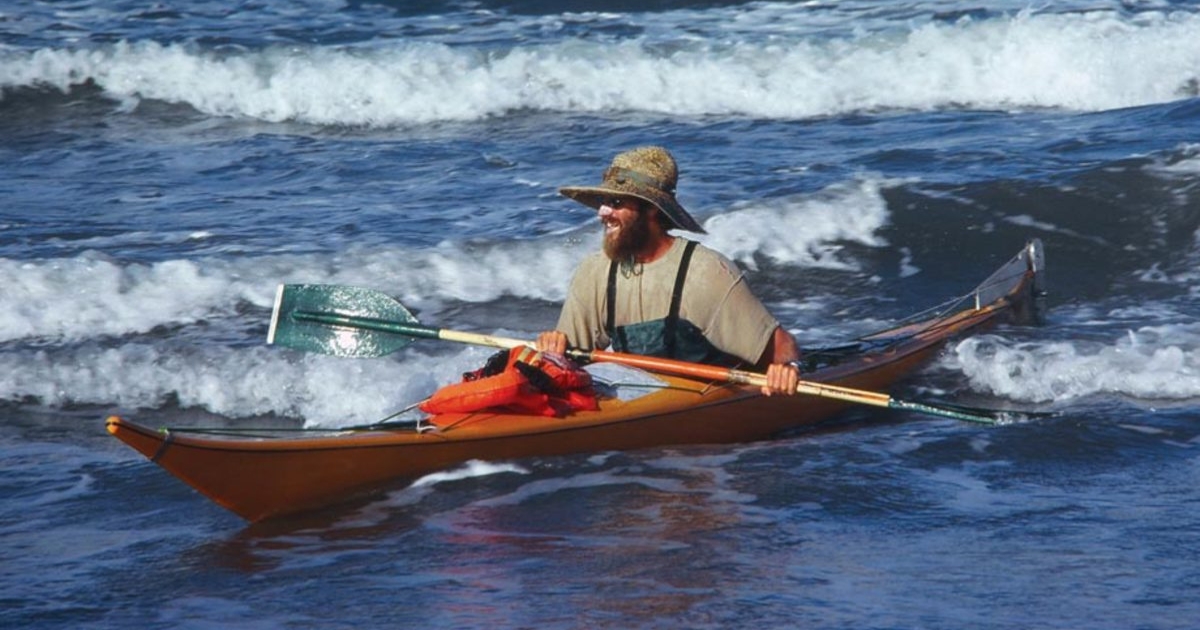
Paul Caffyn surfing into Queens Beach in Bowen, during his circumnavigation of Australia. Photo: Supplied.


MORE than four decades after pushing off from Queenscliff on what is still regarded as one of the most extraordinary small-boat journeys ever attempted, legendary sea kayaker Paul Caffyn has returned to where it all began.
On 28 December, 1981, the New Zealander launched from the shores of Queenscliff in a single West Greenland-style kayak, setting out to circumnavigate mainland Australia.
Over 365 days he paddled about 15,000km, travelling in tough conditions that included tropical cyclones, long stretches of remote coastline where there was no possibility of landing and circling tiger sharks.
The memories are still vivid.
“The cyclone was moving eastwards across Cape York and the only time I could hear radio forecasts was when it was dark,” Caffyn said.
“I heard that there were two cyclones in the offing, and I can still picture myself in the tent reading – the only thing I had to fill the time was an elderly Reader’s Digest – but the island started going underwater.”

He remembers the howl of the wind, the rising sea and watching a stunted casuarina tree in the middle of the island getting battered along with him.
But his most eventful night came when he reached the Zuytdorp Cliffs in Western Australia. With nowhere to land, he had to paddle continuously for 34 hours to clear the 160km stretch.
“That was something I did not know if I could do when I first started out,” Caffyn admits. “I could barely eat, I could barely keep food down, I was so nervous because this was make or break.”
If he couldn’t clear the cliffs, he said, the journey was over. He set out with a packet of Iced Vovo biscuits, an orange drink and No-Doz tablets, and took Lomotil to keep his bowels dormant.
“I got caught by a cold front that wasn’t forecast off the backs of cliffs and it roared in,” Caffyn said.
“It’s pitch dark. I can’t see anything. I’m surfing out of control in front of these raging seas. I’m bracing from side to side to stay upright. I’m using the rudder pedals of the deep draft rudder on the stern to keep my bow from smashing into the cliffs.”
But a swell rose underneath him and pushed him toward the breaking zone at the base of the cliffs.
“I did a full hard rudder and flailed my way out to sea, but that was a close as close things go,” Caffyn said.
He made it ashore at Twilight Cove about noon the next day. His knees and heels were worn bare of skin down to the blood vessels.
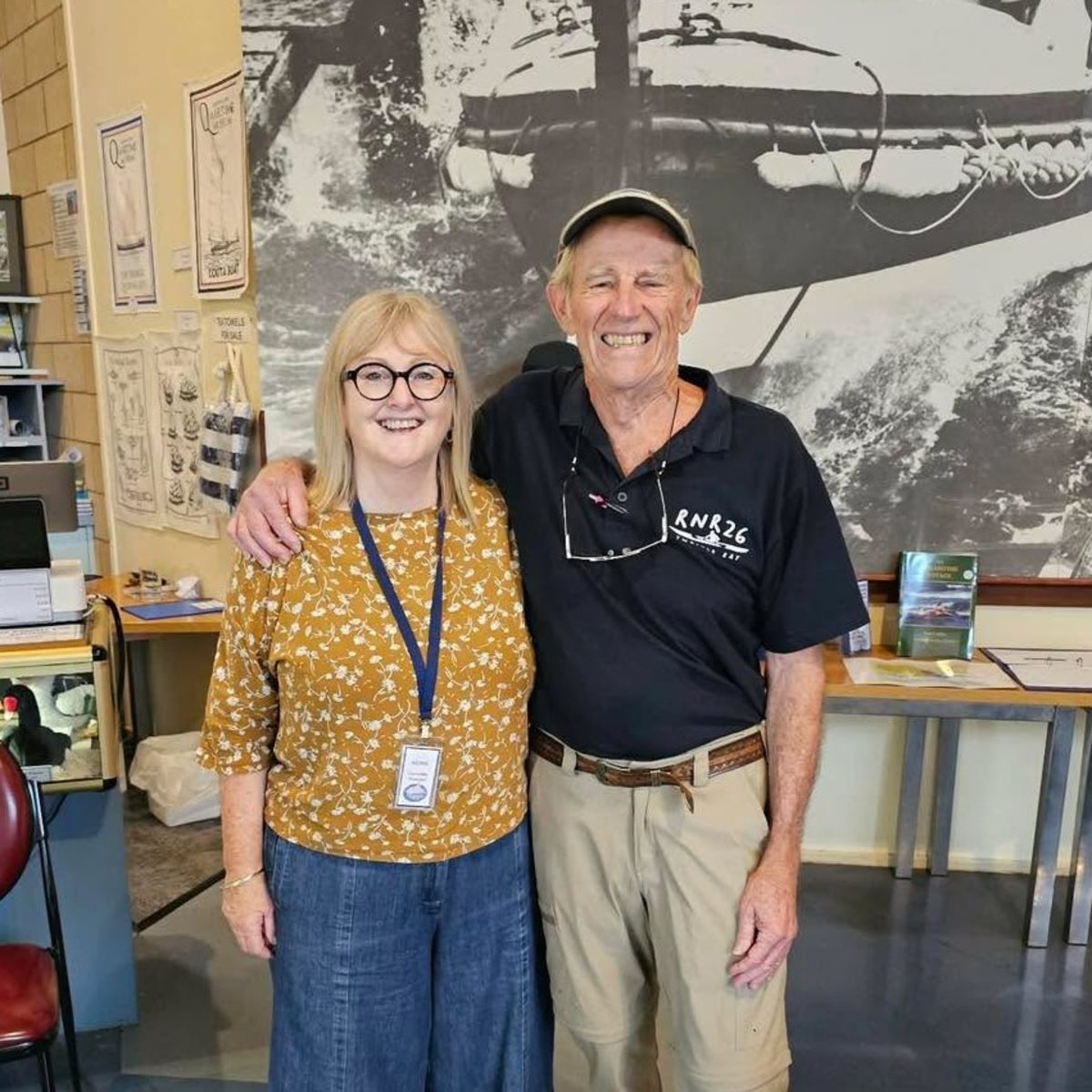
Returning to Queenscliff last week, those moments feel both distant and immediate.
“To walk down that track and go and dip my toes in the water and think this where it all started and where it finished in December 1982 – that’s pretty special,” Caffyn said.
His kayak, Lalaguli – an Aboriginal name meaning “water nymph” – was donated to the Queenscliffe Maritime Museum in 2007, where it remains on display alongside photos, footage and diary notes from the journey.
“It’s pretty neat seeing the kayak again because of all we went through,” Caffyn said. “The poor old thing’s got a few scratches on the hull from grinding over rocks.”
Caffyn’s journey is chronicled in his book The Dreamtime Voyage – Around Australia Kayak Odyssey, which is available through the Queenscliffe Maritime Museum.
Share


Related Articles
Molly Smale knows the system – now she has helped change it
Three Geelong locals have used their firsthand experience of the…
Free V/Line travel after 24-hour rail shutdown: here’s when
Two days of free V/Line travel have been announced for…