Printmaker explores farming practices and the environment
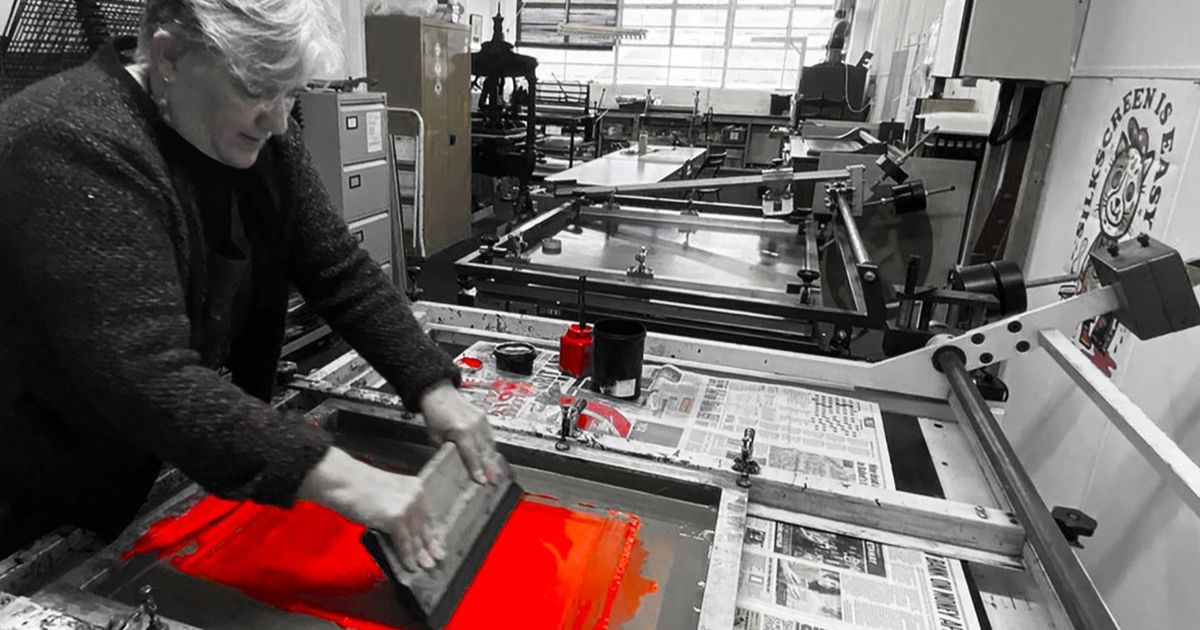
Biodiversity loss, extinction, vulnerability: Agricultural historian and printmaker Justine Philip working at Birmingham Printmakers in Birmingham, England. Photos: SUPPLIED


A TIMELY new exhibition at Dudley House in View Street delves into how modern farming practices since the 1940s have impacted the environment, landscapes and wildlife.
Museum of Monoculture, supported by the City of Greater Bendigo’s Artists on View program, features works from local agricultural historian and printmaker Justine Philip.
Philip was inspired to present the exhibition after working on a European Research Council project, The Making of Monoculture. A Global History.
It features 24 original hand-printed limited edition screenprints of rare and extinct wildlife and industrial agriculture, based on themes around biodiversity loss, extinction and vulnerability.
The collection draws from traditional protest posters and posters from the British Empire Marketing Board that appeared from the 1920s.
Philip said until the early to mid-20th century, industrial agriculture and visual arts worked closely together.
“Artists were often invited to document new technologies, and museums focused on industry and technology, which were popular,” she said.
“Since the late 1940s, however, modern food and fibre production has grown larger, complex, and become less visible to the public, revealing a gaping hole in the visual archives.
“I hope people will find my prints compelling.
“This exhibition is an opportunity to share the research I have worked on over the past 10 years with a wider audience, outside of academia.
“I want to highlight the vulnerabilities of our rare and endangered species as they navigate our increasingly agrochemical environment.”
Museum of Monoculture is open at Dudley House until Tuesday 21 October.
Share


Related Articles

Timeless opera in full voice on Ulumbarra stage
RENOWNED Australian playwright, director and screenwriter Michael Gow’s production of…
Flying start for concert band conductor
RECENTLY-appointed Bendigo and District Concert Band musical director Renée Boland…