From Kabul to Alstonville: Refugee couple find safety and a fresh start in Australia
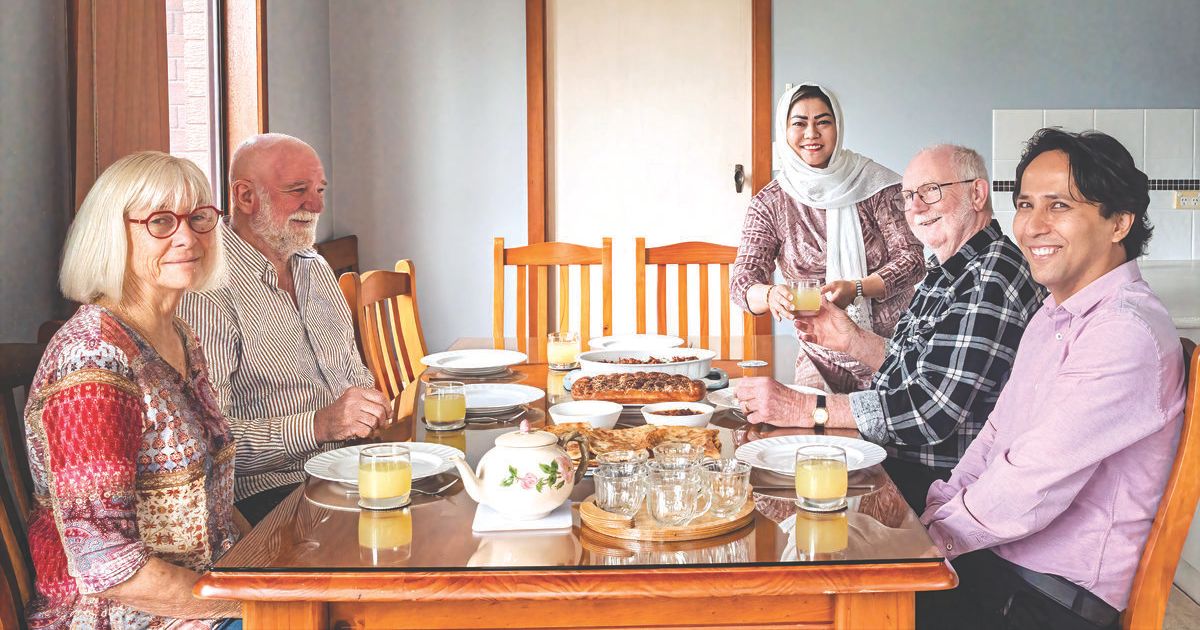
Sue Milne, Tim Limbert, Atefeh Qasemi, Larry Westbrook and Ali Akbari. Photo: Lyn McCarthy.


WHEN the Taliban seized control of Afghanistan in 2021 images of desperate civilians clinging to a US military aircraft as it taxied down the runway in a desperate attempt to flee the regime were broadcast around the world.
Accountant Ali Akbari and his wife Atefeh Qasemi – a political science graduate who worked in the media – were among those living in the capital city Kabul at the time who feared for their safety under a fundamentalist political regime that severely restricts the rights and freedoms of educated women.
With the support and generosity of the Alstonville community, the couple have now resettled in Australia and are beginning a new chapter in their lives. The pair left their homeland in 2023 after Akbari was accepted to do a Master’s degree at a university in Iran. But with their legal residency in Iran and passports due to expire and the threat of war escalating, they found themselves in a race against time to secure a safe future.
Fortunately, an old university friend of Akbari’s connected them with Tuckombil woman Susan Milne.
Milne had participated in a 2016 homestay program run by Northern Rivers for Refugees, enabling people living in Australia without permanent residency to visit the north coast for a holiday.
“I had two lovely young Afghan men stay,” she said. They stayed in touch, and when the Taliban came to power, one of them told her he was applying for humanitarian visas for his family. But, he said, he also had friends there who were terrified.
Milne helped the couple in applying for humanitarian visas, but with 200,000 applicants already in the queue, their chances of success were slim.
“They were going through terrible things,” she said. “I felt a huge weight as I knew what was happening to them and how vulnerable and at risk they were.”
She learned about the Australian government’s Talent Beyond Boundaries Skilled Refugee Labour Agreement Pilot Program, which enables employers to recruit skilled refugees and other displaced people through employer-sponsored migration pathways.
She set about emailing accountancy firms all over Australia and was feeling increasingly desperate when she heard Tim Limbert, director of Alstonville firm Beacon Accounting, was looking for an accountant.
Limbert had in fact been searching unsuccessfully for two years and had considered closing his business when Milne tapped him on the shoulder at a Chamber of Commerce meeting. He interviewed Akbari via video and, impressed by his attitude and intelligence, came on board.
Milne described Limbert as a hero.
“It’s such a big leap of faith to do what he did,” she said. “When he heard their story that’s when he became really emotionally committed.”
Milne also established the Alstonville Supportive Group, whose members helped the family settle in Australia, including securing a rental property. Among them was an accountant who began mentoring Akbari in Australia’s tax system, while two retired English teachers provided online English lessons.
The bulk of the financial support for the process has come from Northern Rivers for Refugees.
The couple arrived in Australia in February after being granted visas by the Department of Home Affairs.
Qasemi is currently studying English at TAFE, regularly attends the gym, and enjoys swimming at the local pool. She also plans to contribute positively to Australia in the future. Akbari also hopes to start going to the gym and playing soccer. Both have their driving learner’s permit. Akbari said Limbert is “a supportive and kind man” and that he will never forget the help he, Milne and the wider Alstonville community has provided.
“It is hard to find an employer who invests in an employee who is new to the system, culture and language, but Tim did this for me,” he said. “Susan was the trigger of our journey to Australia and she put much effort into making it happen; Tim turned our hopes to reality.”
Milne said she was also moved by the support and compassion the Alstonville community has shown.
“There’s so many people who want to be involved and transport them and take them out,” she said. “It’s really heartening in this world of racism and anti-immigration to see this town in regional Australia welcoming them with open arms.” While they are not marking Refugee Week, which runs from 14–20 June, in any special way, Akbari said it provides a valuable platform to raise awareness about refugees and asylum seekers, and to reflect on the contributions they make to society.
Share


Related Articles
Graffiti attack leaves business owner facing $20,000 bill
A Tweed business owner says she is facing a $20,000…
Bundjalung artist Bronwyn Bancroft to share her story at Small SHIFT I Will Survive fundraiser in Byron Bay
SHE was recently named winner of the Red Ochre Award…