How a 1960s sand mining disaster was transformed into Byron Bay’s newest nature haven
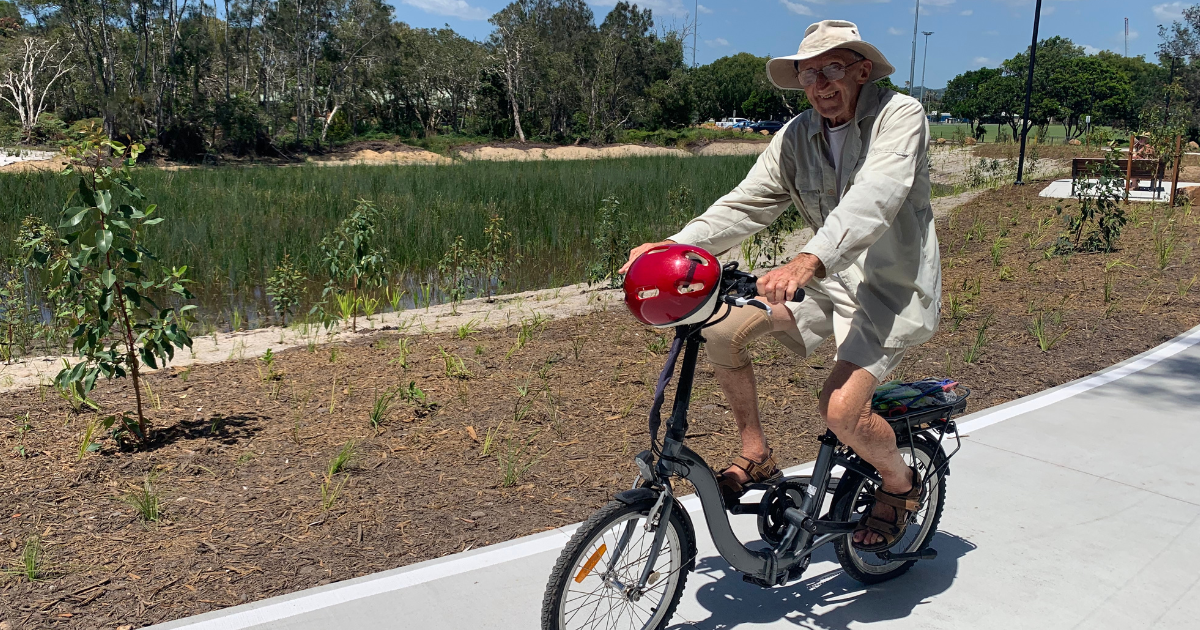
Maurice Jones, 86, riding on one of the new shared pathways at Sandhills Wetlands. Photo: Angela Saurine


HE’S been watching it take shape for months, and Maurice Jones finally had the chance to ride along one of the new pathways at the Sandhills Wetlands in Byron Bay today.
The 86-year-old was among several residents from the neighbouring St Andrew’s George’s Cottages aged care facility who attended the official opening. He said he now plans to walk or ride the paths several times a week.
“I have been watching it since the start and I’m very interested in the environment,” he said. “I think the design is a credit to everybody.”
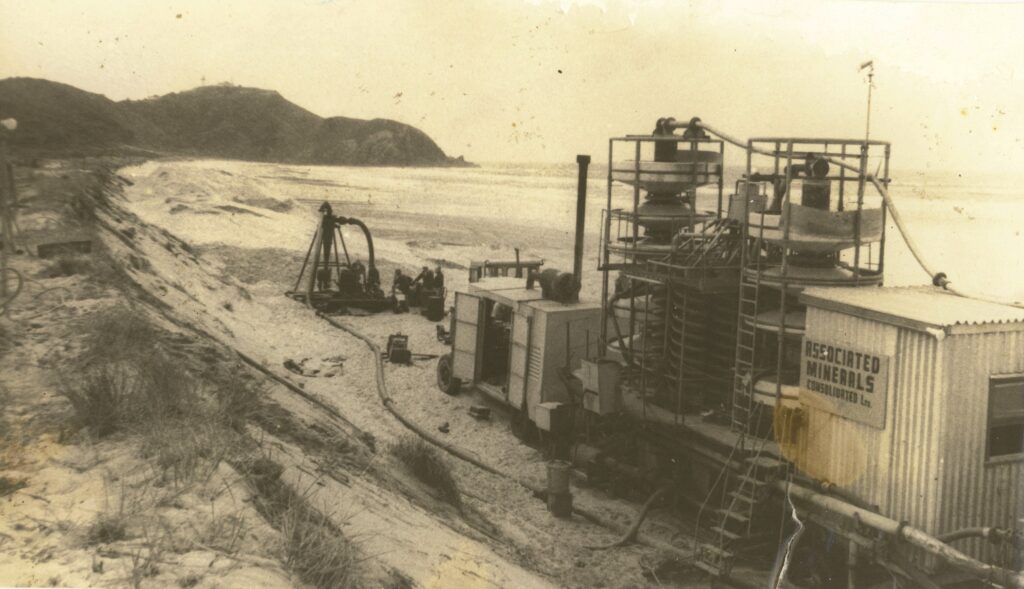
Located between Lawson Street and Massinger Street near the recreational fields, the 1.8-hectare site was destroyed by sandmining in the 1960s. Several years ago, Byron Bay’s Indigenous Arakwal community approached Byron Shire Council with the idea of restoring the original wetlands.
Standing alongside her cousin Brian Kelly, who conducted the Welcome to Country smoking ceremony at the opening event, Byron Shire councillor Delta Kay reflected on her ancestors.
“They would be very proud, they really wanted it cared for,” she said.

The project is expected to enhance biodiversity and create habitat for birds and wildlife, and improve water quality at nearby Clarkes Beach, where a polluted lagoon often forms, as well as Belongil Creek and Cumbebin Swamp.
The restored area now features three interconnected wetlands, seating and a network of shared paths linking the town centre with the Jarjumirr skatepark, the wetlands, and onwards to Walgun Cape Byron Lighthouse.
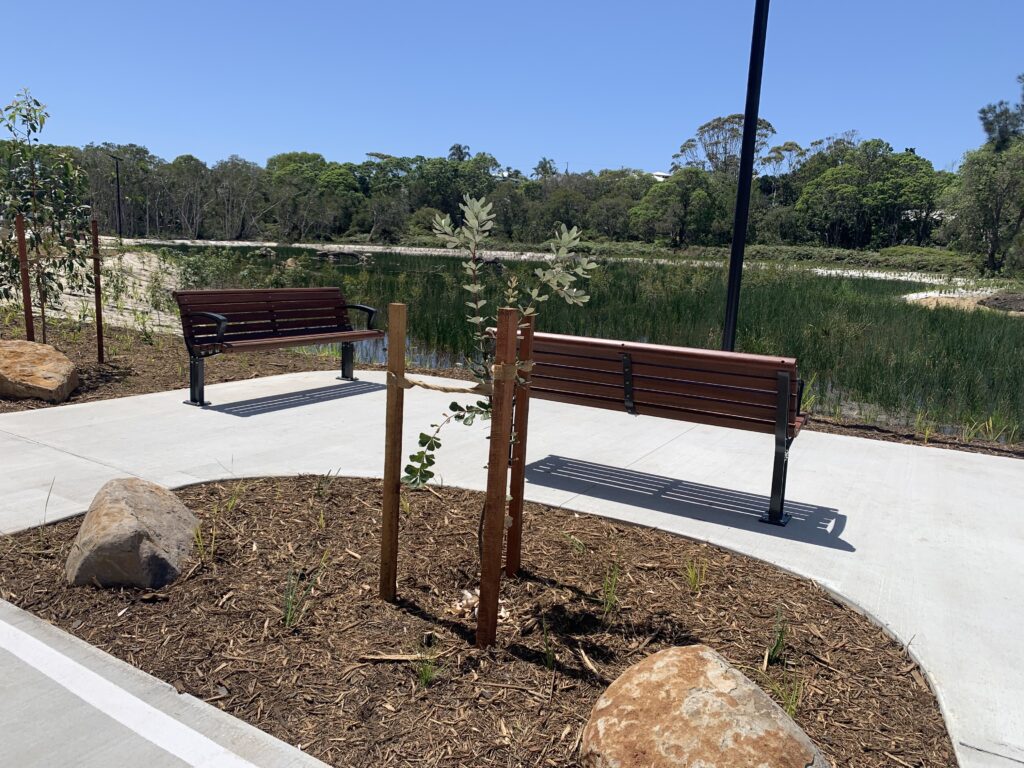
Byron Shire Mayor Sarah Ndiaye said it was Council’s biggest and most complex environmental project to date, with 15,000 cubic metres of material removed and thousands of native trees planted.
“Spoonbills are already coming here and we have heard that wallabies have come back,” she said.
Cr Ndiaye said there are also plans for an Indigenous cultural centre to be connected to the site in future.
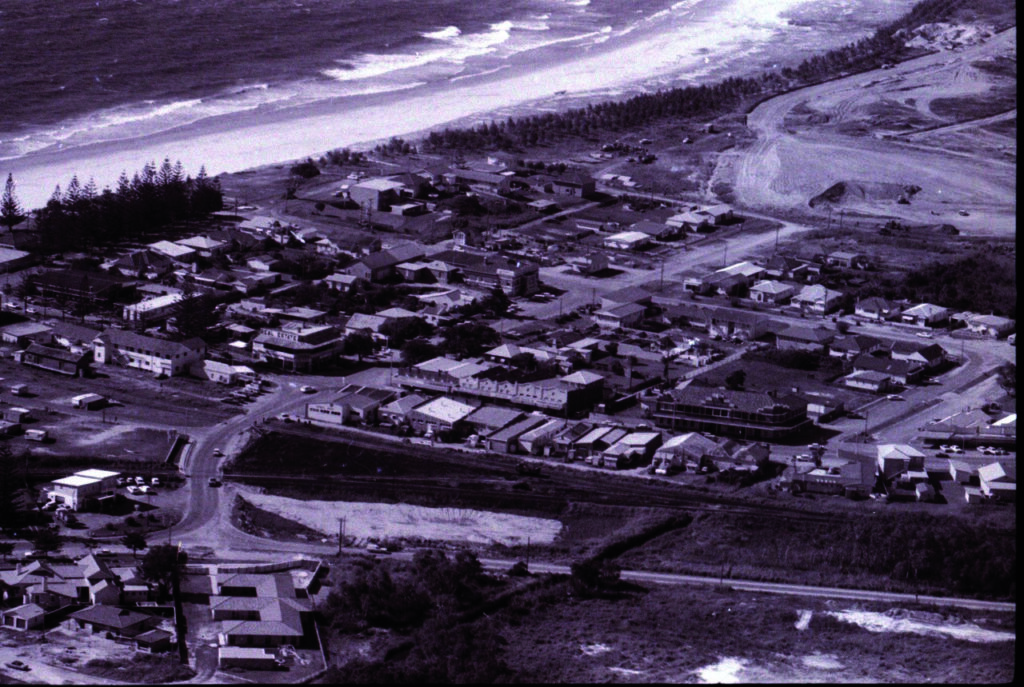
The wetlands restoration forms part of the Byron Bay Drainage Strategy, designed to improve stormwater management and reduce flooding.
Minister for Recovery Janelle Saffin, Federal Member for Richmond Justine Elliot and State Member for Ballina Tamara Smith were among those who attended the opening.
The project was funded by Byron Shire Council, the NSW Public Open Spaces Legacy Program, and the Australian Government through the Emergency Response Fund administered by the NSW Reconstruction Authority’s Northern Rivers Recovery and Resilience Program 2022–23.
Share


Related Articles
Shop local and win big at Epiq Marketplace Lennox Head
THERE’S never been a better time to shop local at…
CBD safety upgrades continue with focus on lighting, surveillance and parking
LISMORE City Council will focus on safety and public space…