A unique take on sustainable jewellery
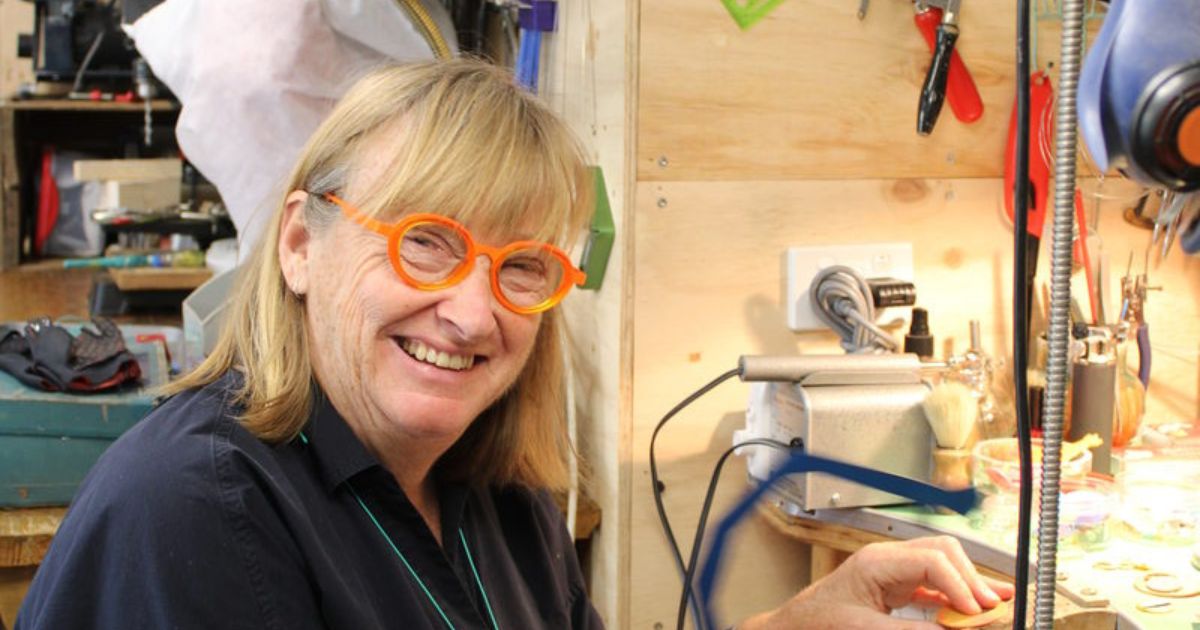
Aireys Inlet local Bin Dixon-Ward is bringing a new meaning to the term upcycled. The local jeweller blends innovation with sustainability, creating jewellery from plastic found on the beach and 3D printed pieces constructed around the built environment. Photo: ABBY PARDEW


Milk bottle tops, bread tags, and plastic fish once filled with soy sauce are not uncommon to find washed up along the beaches.
For some, these items are purely rubbish, but for local artist Bin Dixon-Ward, they serve another purpose and are transformed into jewellery.
Trained in jewellery, gold and silversmithing, Dixon-Ward’s jewellery practice started almost two decades ago, initially in 3D printing before she moved to the Surf Coast.
“Since moving permanently down here to Aireys, I got really interested in beach plastics and how every time there’s an easterly swell it ends up on the beach,” she said.
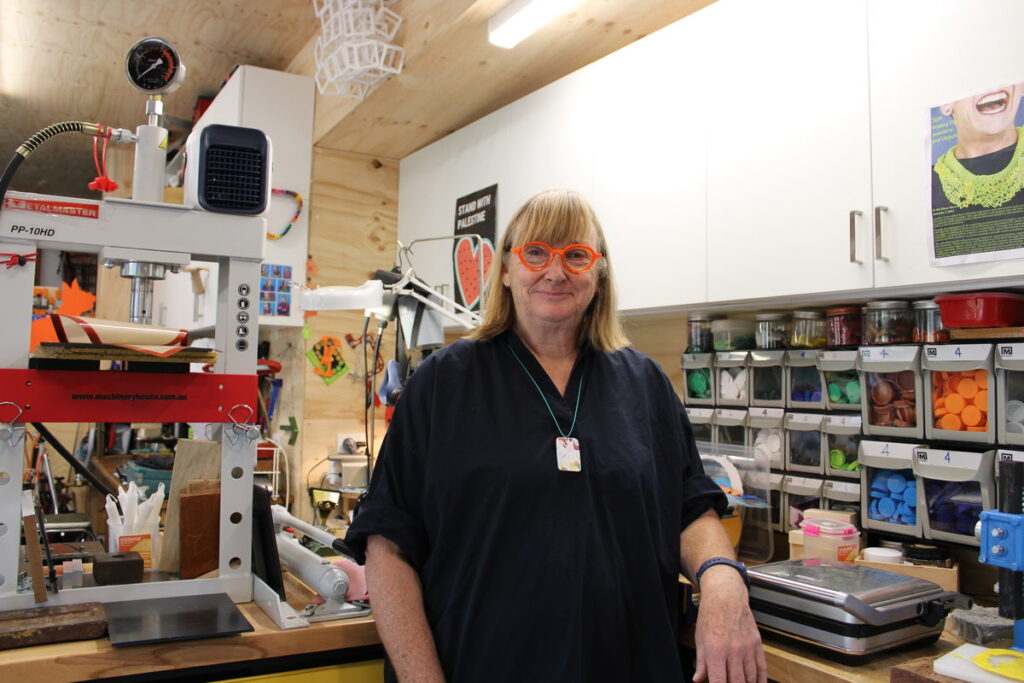
“I was thinking about what else can you do with this stuff and how can you encourage people to think about all the plastics in the ocean.”
“Every time I go to the beach now, I’m picking up microplastics and also looking at using milk bottle tops as a main ingredient.”
Together with Greta Atwell – a student with a passion for design – the pair have turned their passion into Pailkalac Plastics, where discovered plastic gets a second chance.
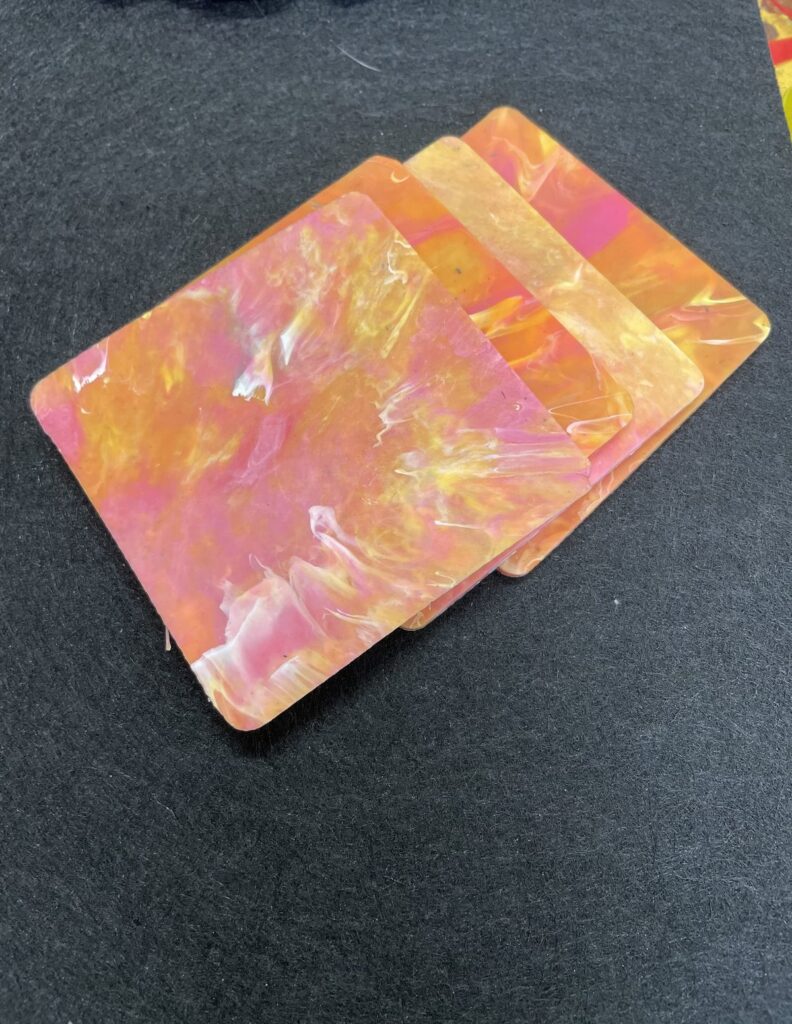
Dixon-Ward has created her own method for turning the discarded plastics into wearable items and useful pieces.
Her practice starts simple, melting materials in a humble sandwich press before flattening them, shaping them and turning them into the desired product.
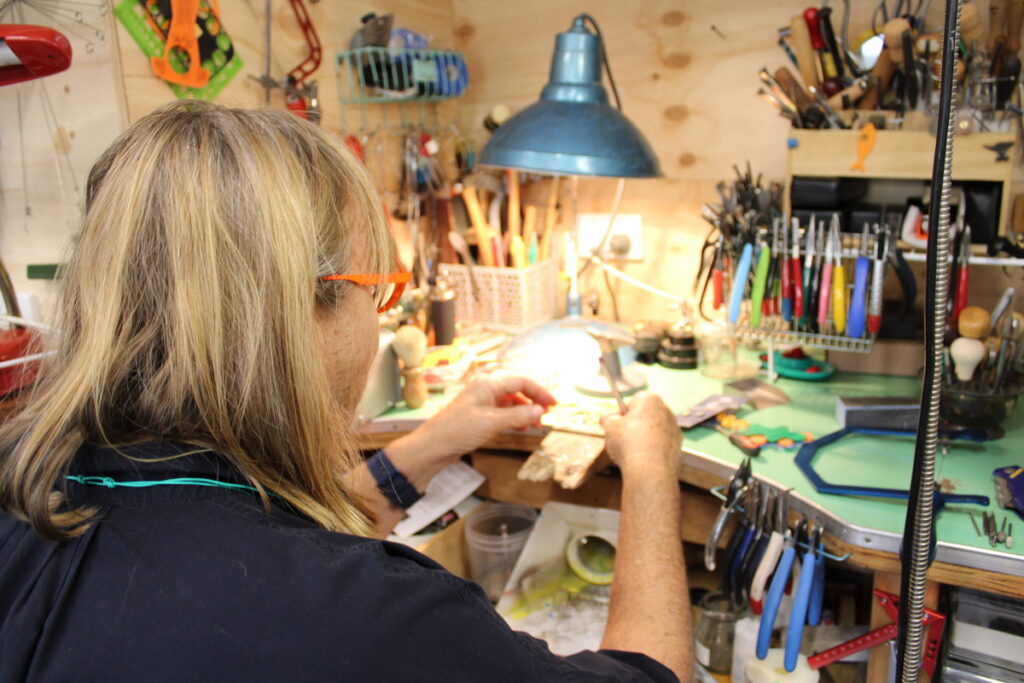
The materials are often what dictates the final product and a thought-out design is not part of the normal plan.
“It’s more about using the materials and finding some pleasing shapes and forms that people might like to wear or things that just maybe are a bit more outrageous that they’d like to wear,” Dixon-Ward said.
“It’s always surprising, because there’s always someone who wants something large and outrageous, they seem to really like the work that I do.”
The creator’s working life has always centred around art, with her career starting in the management and co-ordination side of community art.
Losing her father and starting to feel burnt out, the artist made the switch.
“When he died, I thought life’s too short to be burnt out all the time, I want to do something I really want to do,” she said.
“I’d done an CAE evening course in making jewellery just as a hobby, as something to distract me from work and I was doing quite well in that, I seem to have a natural affinity to it and so I just went from there.”
When she completed her course at RMIT, Dixon-Ward then did a PhD in 3D printing in jewellery.
Her pieces were often very geometric, using forms and making complex neck pieces and rings — a major difference to her pieces using melted plastic.
“The theme of my 3D printing stuff has been about the built environment, how people that inhabit a built environment, how we actually change that environment by the way we use it,” she said.
Her 3D printed masterpieces have been exhibited around the world, from Europe and China through to North America and a show that’s just opened in Dallas.
Dixon-Ward said while it was fun to have her work on display for a larger audience, she also felt a sense of imposter syndrome.
“It is very affirming, particularly in collections, like museum collections, they collect the work because it’s an example of something that’s an issue that’s quite present in time.
“It’s really special to have that work recognised in 3D printed jewellery or jewellery art to be collected and held in a museum, and it will be there for as long as the piece is still intact.”
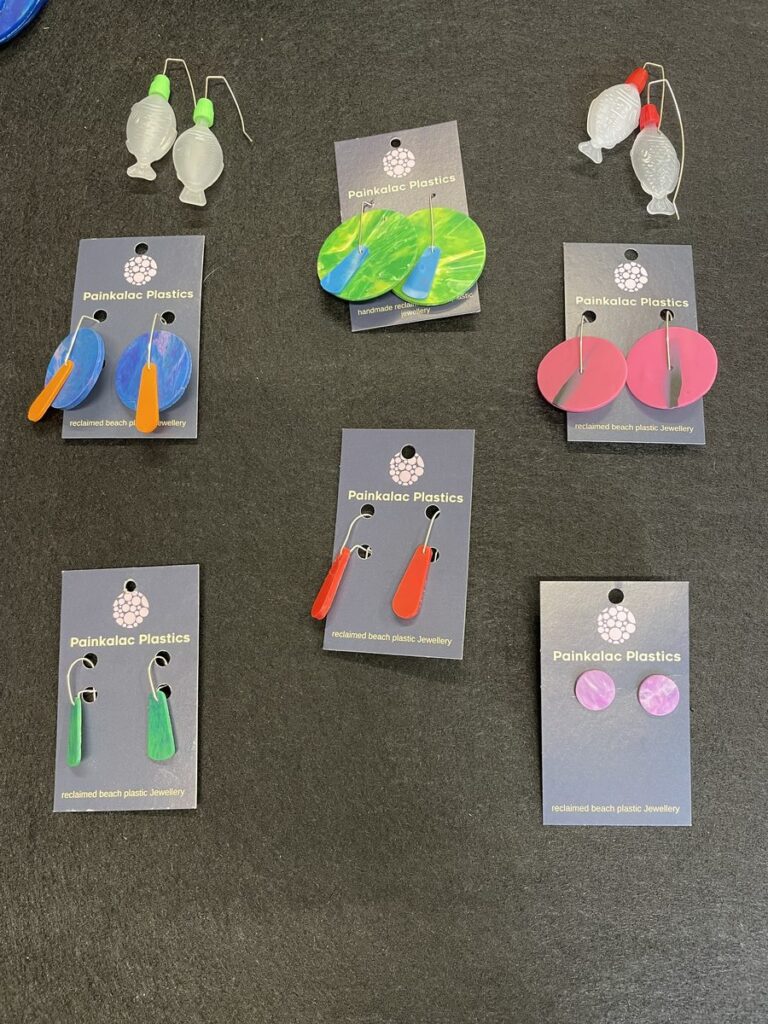
Dixon-Ward’s work follows two very distinct styles – her 3D work and her melted plastic pieces – and she finds enjoyment through both of those practices.
For her, the enjoyment starts early on in the process, when she’s required to work out how to do a particular part or the problem solving of the technical side of things.
“Working with these recycled plastics, it’s not immediately obvious how to do it and so it takes a lot of experimentation and working out what processes to use and learning about when plastics become workable and how far you can heat them up,” she said.
“The other time I really like, even though it makes me really nervous, is showing my work to other people and then having some really nice feedback.”
For more, head to bindixon-ward.com
Share


Related Articles

Historic church reborn as live music venue
A restored historic church will reopen as one of Geelong’s…
Meet the Geelong performers who ran away to the circus
THREE former CircArts Geelong students have returned home as professional…