The printer that could transform home building
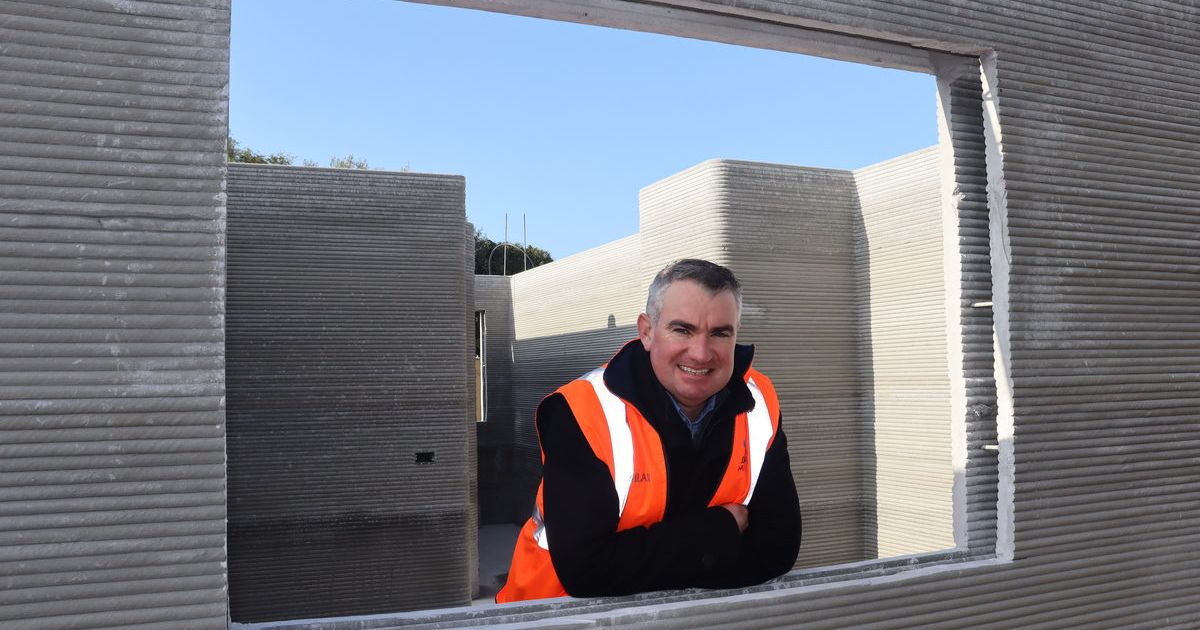
Hamlan Homes general manager Josh Liston in the space where a window will be fitted in one of the 3D printed homes. Photo: James Taylor


TWO social housing homes in Norlane have had their walls 3D printed in just seven days, in a project that could transform the way houses are built in Australia.
Hamlan Homes, with backing from the Victorian government, is building the two three-bedroom homes using a 3D concrete printer, with the technology expected to reduce construction costs and build times.
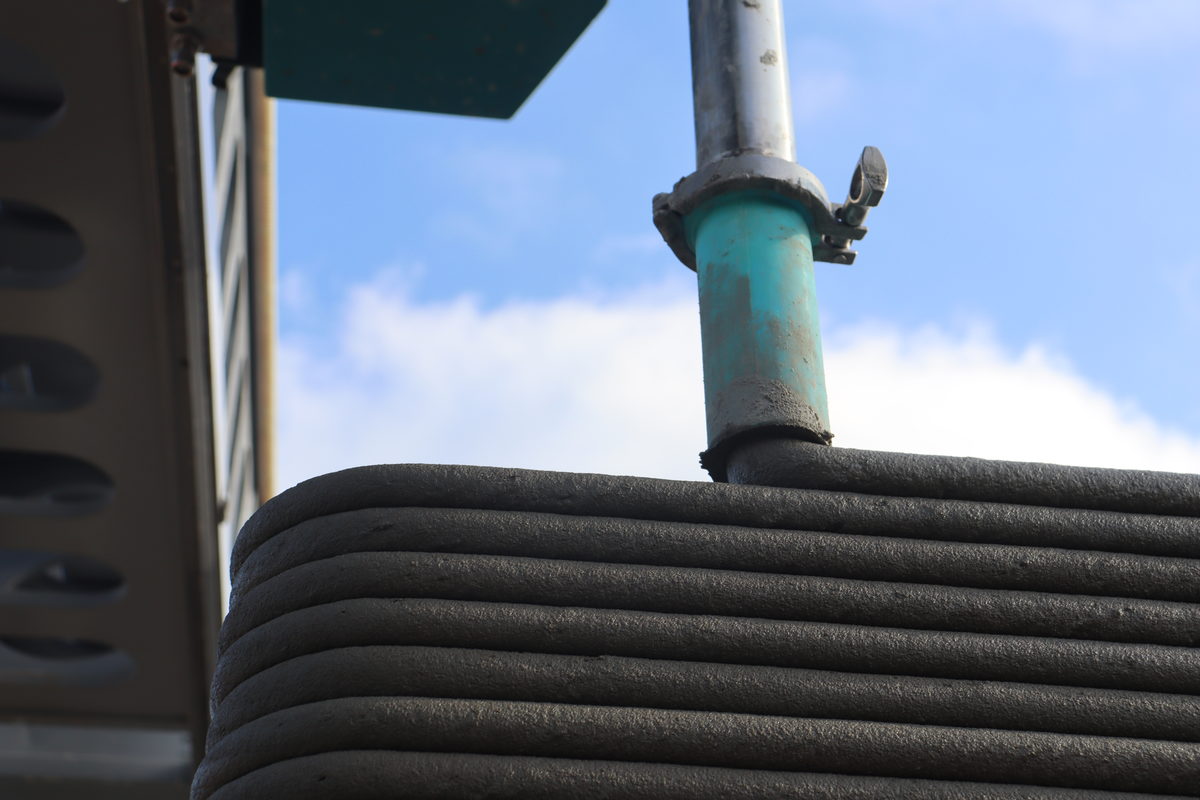
The walls of each home were printed directly onto the concrete slab using a recycled concrete mix, with the printer operated by just two staff rather than teams of bricklayers and framers.
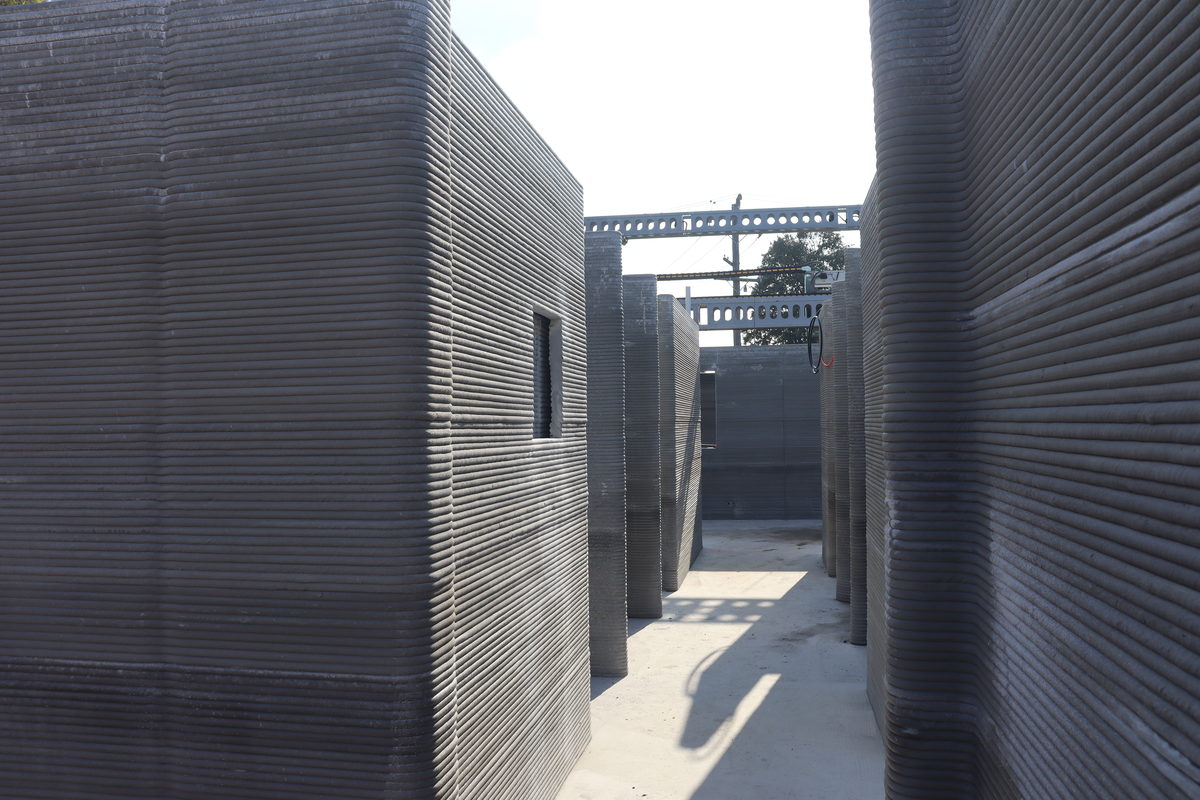
Hamlan Homes general manager Josh Liston said the system, developed by Sydney company Contour 3D, worked much like a standard 3D printer.
“Once you map out the path it has to follow, it’s just a matter of keeping the mixture up to the printer and it just goes round and round,” he said.
“Not only is it good for social housing, it also has an architectural aesthetic to it as well, which as time goes on, we’ll start to incorporate into our builds.”
Liston said the technology could eventually reduce construction costs by up to 20 per cent compared with traditional building methods.
The concrete mix is currently made from 40 per cent recycled material, with the long-term goal of increasing that to between 80 and 100 per cent.
The concrete walls also offer energy-efficiency and safety benefits, retaining heat during winter, staying cooler in summer and providing greater fire resistance than conventional building materials.
“Something like this solves that [fire] issue straight away,” Liston said.
With the printing complete, the homes in Norlane are expected to take about three months to finish, including constructing the roof, completing the internal fit-out, painting and landscaping.
Liston said Hamlan Homes hoped to deliver more 3D-printed housing projects, particularly larger developments where the technology’s efficiency could be fully realised.
“If you had 10 or 20 of these houses in a row, that’s when you could really get some efficiencies going,” he said.
He said the technology could also prove valuable in bushfire-prone areas such as Anglesea because of its fire-resistant concrete construction.
Share


Related Articles

Festival celebrates women in sport
THE efforts of thousands of women and girls across the…
New stores rise across Armstrong Creek Town Centre
THE Armstrong Creek Town Centre precinct is a hive of…