The upside of an interest rate rise


WELCOME back to the property market for 2026. We have had many distractions already this year, however, the decision to increase the cash rate last week, ending the shortest easing cycle in our economic history, has brought housing affordability squarely back into focus.
The RBA has specifically called out productivity and government spending as reasons for the inflation jump. The problem is the cost of big government.
In Victoria, unfortunately, we are copping the double whammy: a big-spending, but broke, state government. History shows that big governments, with a large number of employees, only decrease productivity, as they add layers of bureaucracy, and spending that doesn’t help us do more with less.
What we are seeing is Paul Keating’s economic prediction mark 2. But this time, it will be the recession we didn’t have to have!
There are two burning questions people have been asking me since last week’s announcement.
What impact will a rising cash rate have on the property market?
Firstly, in the context of our regional property market, the effect will be minimal in the short term and will depend highly on the next RBA meeting in May.
Many potential buyers will continue with their current plans, keeping one eye on interest rates. The big question they will be asking is whether it is a one-and-done thing or the start of another contraction phase of multiple rate increases.
The positive fundamentals of a strong property sector in our region haven’t changed. Our region continues to be one of the fastest-growing regions in the country. Affordability in comparison to other parts of the country is very good, as we have not experienced the spikes in value seen in every other state throughout 2025.
We have strong employment figures, which basically show that if you want a job, you can get one. Our regional economy is in good shape; we have new employers moving to the area, including whispers that Lockheed Martin will soon announce a manufacturing facility at Avalon. Supply is slowly starting to return, but still largely outmatched by demand.
The increase in the RBA cash rate, and subsequent increases in lending rates, will push more demand for the lower end of the market, the sub <$850k sector. People who were on the cusp of a loan approval will still buy but will fall into the lower market tier.
This market was already in hot demand, with record growth. Selling periods in this market across our region are in days, not weeks. Supply is low, and demand is hot.
However, the mid-tier market will suffer the most (say $1m-$2.5m). This market has had minimal growth over 2025. Demand is slow and sales are taking weeks. Agents report one buyer for one property, with little price push.
With fewer participants in this sector, days on market are likely to expand out marginally.
The higher-tier markets will be mostly unaffected, as they were already very slow. There is very low, if not nil, demand. Properties with asking prices above $3m have been sitting on the market for months and months, some for years. I speak of properties such as: Raith Terrace, Newtown, asking $8.25m, 239 days on market; Stephen Street, Newtown, asking $4.25m, 346 days on market; Balmoral Crescent, asking $4.29m, 121 days on market.
What opportunities exist?
Firstly, if you already own a property, you should, like me, fist pump when you see inflation. Property is a tangible asset class, it will always appreciate in a high-inflationary environment. High inflation helps property owners gain equity.
There is a real opportunity here! The differences between the three market tiers have never been so stark, and the RBA’s decision will only emphasise this.
Right now, you can cash in on lower-tier property growth and upgrade to the mid or upper tier, which has seen no growth over the same period.
Essentially, you can upgrade without paying the full $$ for the added value. If you wanted a bigger house. Now is the time!
//SPONSORED CONTENT
Share


Related Articles

Coastal lifestyle continues to drive demand in postcode 3228
THE postcode 3228 property market continued to show resilience throughout…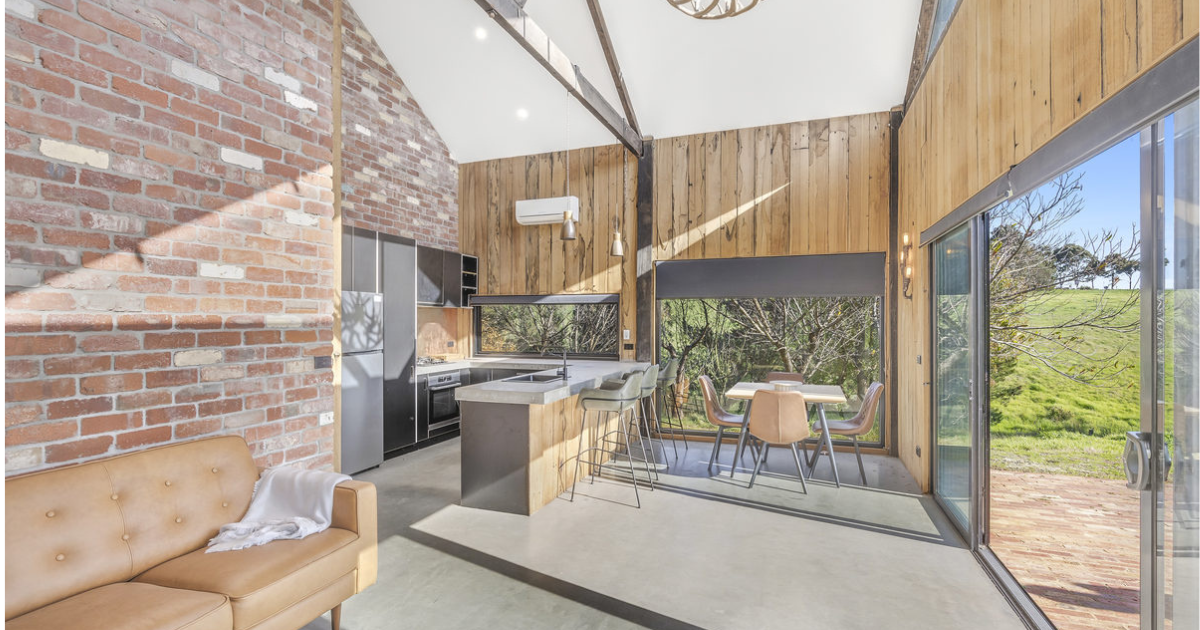
Untapped commercial agricultural opportunity on the Bellarine
A 10-acre Bellarine property combining a modern barn, large commercial…