Cam Mooney: Geelong’s smartest win was built on control
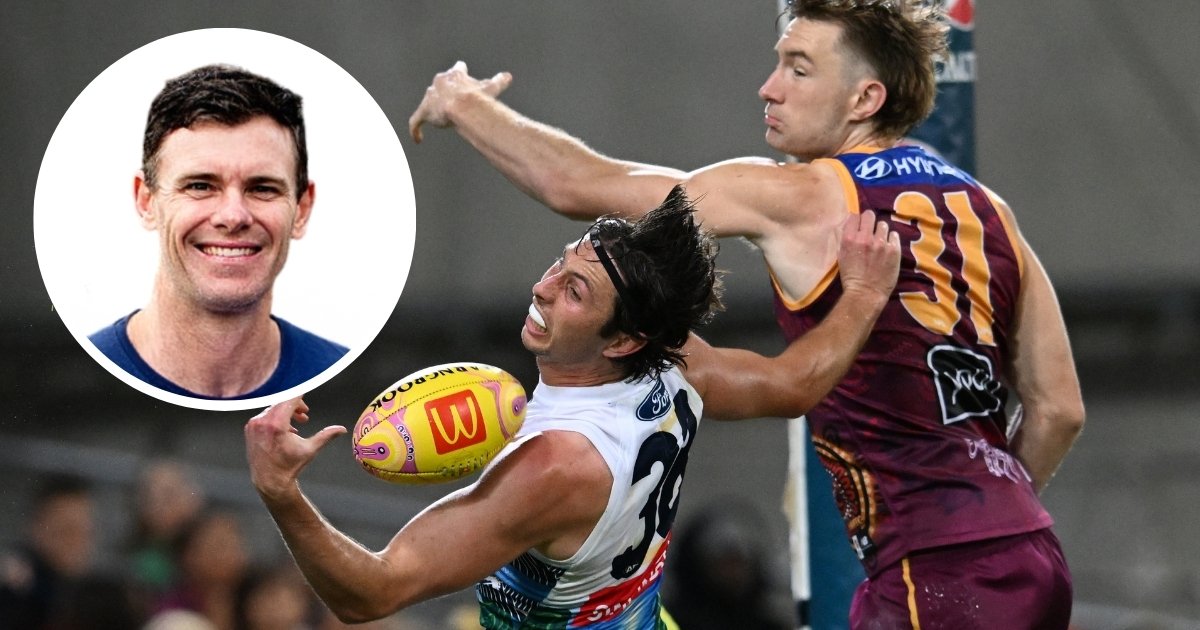
Photo Caption: Jack Henry’s forward role on Harris Andrews was a key part of Geelong’s control in the win over Brisbane at the Gabba. Picture: Darren England/AAP


Geelong’s win over Brisbane was built on control. Not revenge, not one great quarter, and not just Shaun Mannagh having the game of his life. The Cats won because they took away the spaces Brisbane wanted to own, made their key interceptors accountable, and got their own ball movement looking clean again.
That is the part I loved most about Thursday night at the Gabba.
Yes, Mannagh was outstanding. Five goals, 30 touches and a third-quarter burst that blew the game open is a serious night out. Tom Stewart was brilliant again behind the ball. Bailey Smith and Max Holmes gave them run and power through the middle. Jeremy Cameron looked dangerous every time the ball went near him.
But the bigger story was the way Geelong shaped the game.
The Jack Henry move on Harris Andrews was the one that stood out. Andrews is one of the best intercept defenders in the competition. If you let him sit there, read the ball and roll across, he can destroy your forward entries and turn defence into attack. Geelong did not allow that to happen.
They sent Henry forward and gave him a clear job.
Now, people can say, “Why doesn’t every team do that?” The answer is, you need the personnel. Henry has played most of his career down back, but he can read the footy, compete in the air and understand where Andrews wants to go. That made the role almost natural for him, just at the other end of the ground.
He did not have to be a traditional key forward. He did not have to lead up, create all the patterns or kick a bag. Andrews was always going to take him to the dangerous spots because that is where Andrews wants to defend. Henry’s job was to go with him, compete, fly, bring the ball to ground and stop Brisbane getting clean intercept marks.
That sort of move changes the whole feel of a game.
It gives your small forwards a better chance at ground level. It gives your mids confidence to kick to a contest. It stops Brisbane launching from half-back with no pressure. And it means your own defenders are not constantly defending repeat entries from turnovers.
That is cause and effect football.
The other part was Geelong’s connection through the middle of the ground. A few weeks ago, after the Port Adelaide game, they had no real ability to get out of their back half. They were missing those link players who can get involved between the arcs and keep the ball moving.
Now Mannagh is getting his hands on it. Ollie Dempsey is back involved. Gryan Miers is back in the team, and from a Geelong point of view he is probably their number one link-up player. When those three are up and going, the Cats look a completely different side.
It means Stewart’s intercepts can become scores. It means Smith and Holmes have options forward of the ball. It means Cameron and Shannon Neale are not just standing under long, predictable kicks.
That is why Geelong looked dangerous. The stars were still stars, but the shape around them made sense again.
Now the challenge shifts to Sydney at GMHBA Stadium, and the obvious problem is Nick Blakey. He is the one Geelong cannot allow to run free. On that long ground, if he gets space, he can carry the ball a thousand metres and break your whole defensive shape.
So the Cats have to find another answer. Maybe it is Henry again. Maybe it is a different forward match-up. But they need someone who can make Blakey defend and block the space he wants to attack.
Geelong showed against Brisbane they can control the opposition’s biggest weapons. If they do it again against Sydney, this season starts to look very interesting.
Listen to The Run Home with Worlo & Moons on SEN Geelong, Mondays and Fridays from 3–5pm, via the SEN App.
Share


Related Articles

The Facebook message from Troy Selwood that started a football career
GEELONG AFLW defender Rachel Kearns never imagined a holiday to…
Junior surfing back at Bells for first time in six years
AUSTRALIA’S best junior surfers will return to Bells Beach for…