Gladstone dredging warns Geelong to oppose LNG terminal
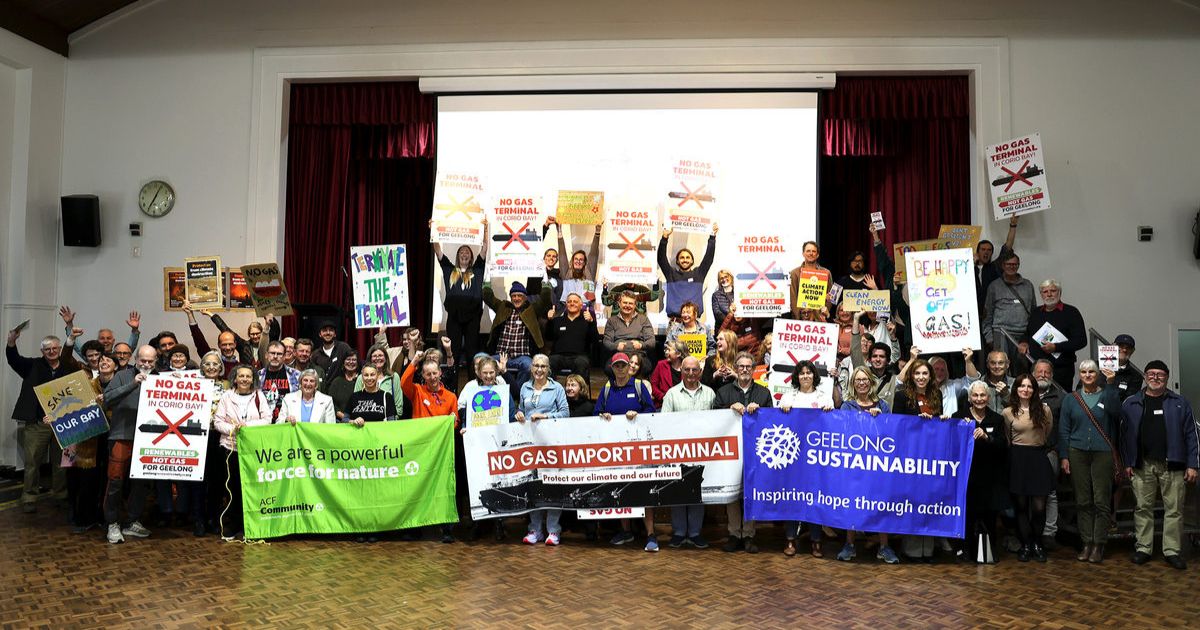
Attendees at the forum at Geelong West Town Hall hold up banners and signs. Photo: SUPPLIED


MEMBERS of the Geelong community opposed to LNG expansion gathered on Monday this week to hear about the impact of dredging at a Queensland port in 2011 and how the same circumstances may arise here.
Geelong Renewables Not Gas (GRNG) organised the “Australia’s Gas Problem: Lessons from Gladstone” event at the Geelong West Town Hall, which was attended by more than 200 people.
Speakers included Mark Ogge from The Australia Institute, Kat Lucas-Healey from Environment Victoria, Darren Kessner from Australian Conservation Foundation Gladstone, Jan Arrens from the Gladstone Conservation Foundation, and Lauren Dillon from GRNG.
After dredging began in Gladstone following the development of three LNG facilities on Curtis Island, it is claimed more than 1,500 hectares of seagrass were destroyed, and 90 per cent of the local fish market business was lost.
Gladstone residents travelled to Geelong to warn locals about the environmental and economic effects of gas terminal dredging; damage they said must not happen in Corio Bay to support Viva Energy’s gas import terminal project.
Mr Kessner expressed his concerns that history would repeat itself, having witnessed first-hand the impact dredging had on his community.
He and Ms Dillon identified parallels between what happened in Gladstone and what was needed in Corio Bay, and listed four key factors:
Corio Bay is more physically constrained than Gladstone Harbour, potentially amplifying the impacts of dredging and increasing the risk for turbidity and sediment disturbance
Historical evidence from Gladstone showed initial dredging approvals underestimated the dredging needed, with claims the volume of dredging in Corio Bay could be between 10 to 100 times greater than assessed because shipping channels in Corio Bay are not deep enough.
Unlike Gladstone, Corio Bay has no safe turning point for LNG carriers, and the nearest safe anchorage is 30km away through narrow channels, and As the Geelong Refinery has been operating since 1954, dredging would disturb a likely build-up of chemicals on the Corio Bay sea floor.
Mr Ogge noted 80 per cent of Australian gas was presently being exported overseas, which predominantly profits foreign-owned gas corporations.
He said it was “absurd” that Australia was considering importing gas.
Share


Related Articles
Club believes it has the secret sauce for national success
FROM a 15-year-old preparing for her first national championships to…
Kelly Slater back on surfing’s biggest stage as wildcard
Eleven-time world champion Kelly Slater will return to the World…