Fighting for the right to play
Victorian survivors of child sexual abuse in schools can share their story with the Forum for Truth and Recognition before 18 March 2026. Photos: SUPPLIED


When the women of Kyneton’s football community walked away from their club at the end of 2024, it was not because they had fallen out of love with the game.
It was because they wanted to play it with dignity.
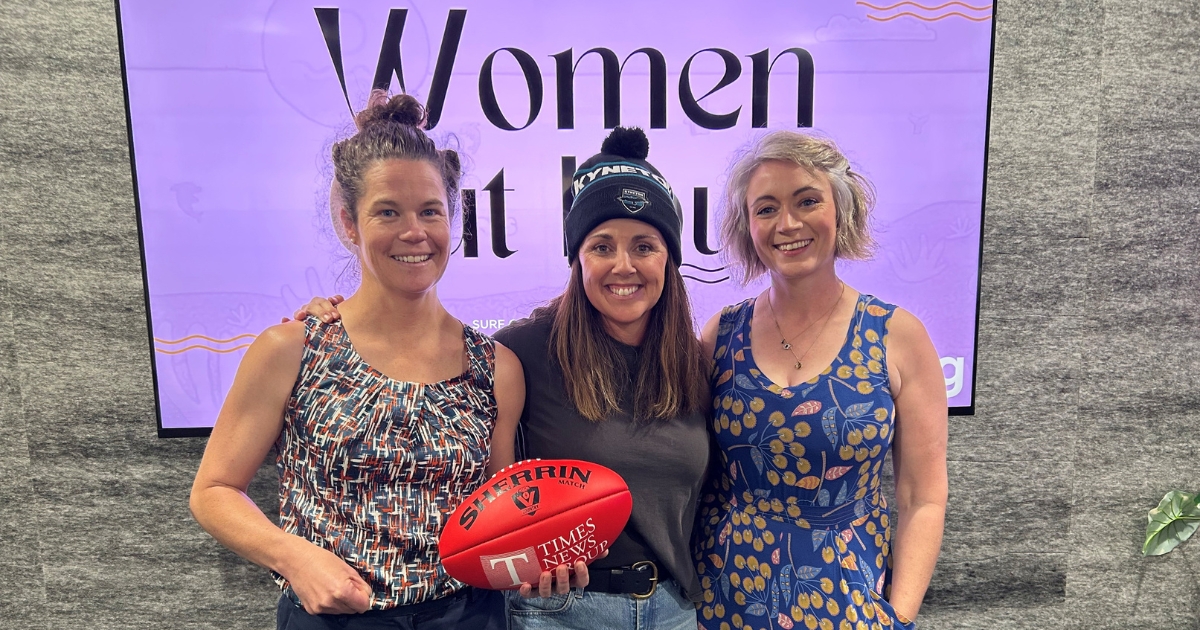
On the latest episode of Women Out Loud, hosts Amy McElgunn, Courtney Weybury and Dr Niamh Logue sat down with Kyneton Women’s Football Club president Natalie Korinfsky and players Marnie Love and Peta Pemberton to unpack a 15-month battle that at the time had left a premiership-contending team without a place to play.
Korinfsky said the decision to leave their former club followed “pretty ongoing poor treatment” and “pretty shocking conditions at the club rooms”.
“There was just a general sense of disrespect and the lack of care and support for our team,” she said.
For years, players tolerated substandard facilities and cultural double standards.
“As most women would experience in footy clubs, you kind of just suck it up and move on,” Korinfsky said.
Love described walking into change rooms littered with dirty clothing and empty cans.
“I think that just sent a message to our team that don’t worry about it, it’s only the girls,” she said.
Repeated requests for change, the women say, went largely unaddressed.
In response, players, coaches and volunteers formed an independent club, the Kyneton Wedge-Tailed Eagles, built on inclusion, respect and a sense of real community.
They were unanimously accepted into the Central Victoria Football League for the 2026 season. An eleventh-hour appeal by their former league temporarily blocked the move.

The Kyneton Women’s Football Club has now received formal written approval to compete in the Central Victoria Football League in 2026.
AFL Victoria waived the standard new club admission deadline to allow the application to be considered on its merits.
Korinfsky said the approval represented far more than just a place in a competition.
“This is an incredibly significant day for our players and our community. Our group has remained united and resilient throughout this process, and today’s outcome ensures they will be able to take the field together, as the club they have built,” she said.
“There were compromises along the way, but we have stood firm on what matters most — the right for our players to compete as their own entity, in an environment that is safe, supportive and respectful.”
Beyond governance disputes, the conversation highlighted broader structural issues facing women’s sport in regional communities.
“To slap on a women’s side to a club, yeah, it looks really good on paper,” Korinfsky said.
“But when you scratch a little more below the surface, are we actually doing everything right?”
Vinall said even on-field success did not shift attitudes.
“We were in finals and premierships, but even that wasn’t enough,” she said.
For Pemberton, football provided belonging.
“I just found this group of really powerful women who didn’t necessarily feel like they fit in in other spaces in society,” she said.
“They’re becoming family.”
Korinfsky said the club’s values centre on inclusion, respect and community contribution.
“You walk through the doors and you’ve got a place at our club, no matter who you are,” she said.
As the Wedge-Tailed Eagles now prepare for their inaugural CVFL season in 2026, their message to community clubs remains clear: listen early, listen often, and build cultures where belonging is not an afterthought but a foundation.
Because taking up space in sport is not a privilege.
It is a right.
Share


Related Articles

Big names added to Queenscliff Music Festival bill
MATT Corby will return to the Bellarine this November after…
Teachers walk off the job for second time as AEU pushes government for deal
Victorian public school teachers will strike for the second time…