Subsidised waste services go-ahead – Moorabool Shire Council meeting briefs
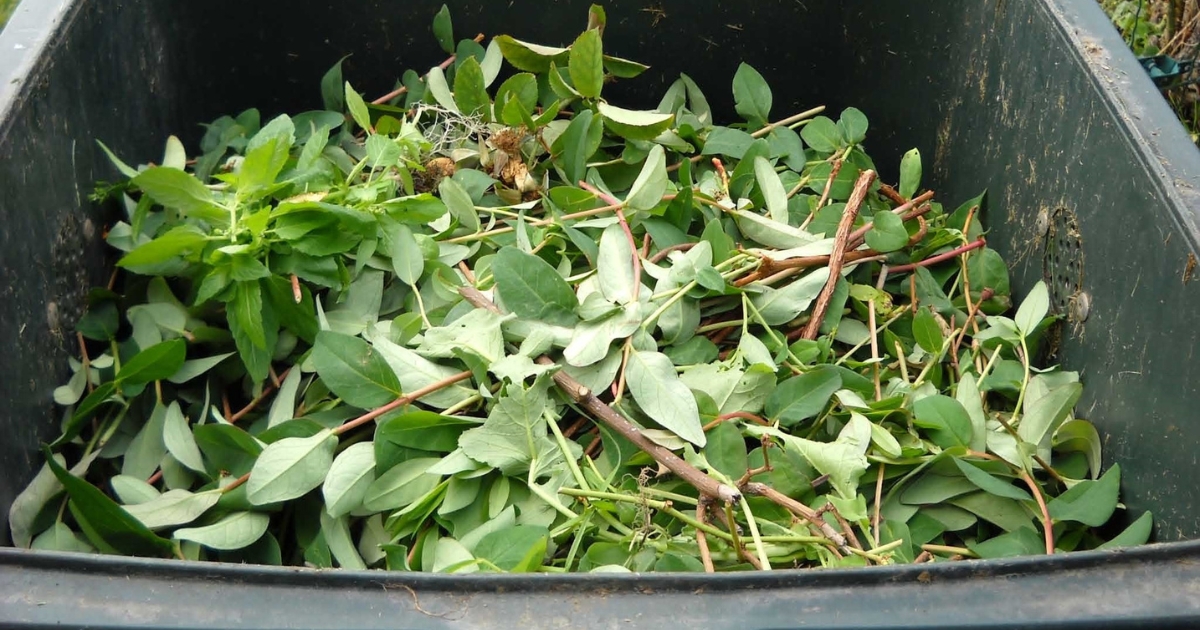
Green waste green light: Councillors voted 5-4 to implement subsidised green waste, hard waste and mattress drop-off services, along with an annual hard waste kerbside collection for eligible residents. Photo: FILE


SUBSIDISED hard waste, green waste and mattress drop-off services will be implemented by the Moorabool Shire Council sometime in the 2026-27 financial year.
A subsidised hard waste kerbside pick-up service for a maximum of 500 properties annually for ‘unable’ or elderly residents, capped at two cubic metres, was also approved.
Cr Sheila Freeman successfully moved the introductions at last week’s monthly council meeting, prompting a lengthy debate.
Her move was in response to an officer’s report on the issue in the meeting agenda, which was itself a response to a notice of motion in May that called for an investigation of subsidised waste services.
The report outlined a range of subsidised service options, with consideration of their benefits, limitations and indicative costs.
The officer’s recommendation was for councillors to consider the report, but Cr Freeman moved an alternative recommendation that subsidised services be introduced in the 2026-27 financial year.
Her motion also recommended that the costs of the subsidised services be included in that year’s budget process.
The motion called for a subsidised hard waste drop-off service at the Shire’s transfer stations in the form of two one-cubic-metre allocations annually, with no charge at the gate.
It also sought a subsidised green waste drop-off service at the transfer stations at no charge for one month a year, and a half-price subsidised mattress drop-off for one month a year.
In addition, Cr Freeman sought a subsidised hard waste kerbside pick-up service for ‘unable’ or elderly residents through a two-cubic-metre allocation at 500 properties annually.
“This is about fairness, accessibility and restoring confidence in our waste services,” Cr Freeman said.
She said many residents had made their feelings very clear since green and hard waste services were removed last year.
“They have expressed frustration, confusion, and in some cases genuine distress about the loss of services they relied on,” she said.
She said her alternative recommendation responded to those concerns by providing clarity and certainty for residents.
But Cr Tom Sullivan was one of several councillors to speak against the recommendation, arguing that Cr Freeman’s motion was to actually implement the services rather than refer them to a budget process.
“So fundamentally we’re asking for a blank cheque,” he said, adding that every ratepayer would pay for the services even if they did not use them.
Cr Rod Ward, who seconded Cr Freeman’s move, responded by saying that not all residents used the Shire’s sporting reserves, the Ballan Library, the Navigators Hall or the West Maddingley Learning Centre, but they had paid for them through their rates.
“I pay GST on goods and services I buy; part of that GST goes to roads in WA. I can’t dictate where my GST is used,” Cr Ward said.
Cr Ward said councillors had to make decisions they considered were in the best interests of the community.
“I think this … is fantastic and it’s going to please the majority of the population,” he said.
Cr Ally Munari’s contribution to the debate was: “I can’t vote on something that was dumped on my desk two to three hours ago. It’s as simple as that.”
Cr Munari was referring to Cr Freeman’s circulation of her alternative to the agenda recommendation.
But Cr John Keogh spoke in favour, saying that hard waste tip passes were the biggest issue for residents in much of the municipality.
“To resolve this matter early gives our residents certainty in the future,” he said.
Cr Paul Tatchell spoke against the motion.
“I’ve been here 13 years and I don’t think I’ve ever voted on a financial matter for the budget (for) the next year that’s not costed,” he said.
“[I’ve] never done it and I’m not going to do it today.”
Cr Moira Berry also spoke against, primarily because there had been no time to consider all the separate issues after Cr Freeman circulated her alternative.
Closing the debate, Cr Freeman reiterated that the ending of last year’s trial green and hard waste services generated significant community concern.
“Residents have told us again and again that they have felt unheard and that the change created uncertainty and disadvantage – particularly for those with limited mobility, limited income or limited means to transport waste,” she said.
“This alternate recommendation is a constructive and responsible response.”
Cr Freeman said costings were in documents already supplied to councillors.
When mayor Cr Steve Venditti-Taylor called for a vote, Crs Freeman, Ward, Keogh, Venditti-Taylor and Jarrod Bingham voted in favour.
Those against were Crs Berry, Sullivan, Tatchell and Munari.
Hard waste collection report noted
Cr Freeman’s move was preceded by an earlier agenda item on consideration of an officer’s report regarding engaging a contractor to collect up to one cubic metre of hard rubbish directly from residents’ homes, once per household, for one month each year.
That report was a response to a notice of motion – also in May – that officers investigate a kerbside hard rubbish collection service.
It said providing a subsidised service recognised the challenges faced by residents of a “geographically large and diverse municipality” where access to transfer stations or contractors was not always practical or affordable.
“Rising landfill costs, combined with community expectations for more sustainable waste solutions, mean that councils are increasingly required to balance cost recovery with the delivery of socially and environmentally responsible services,” it said.
The report said an option of a one-month, shire-wide kerbside hard waste collection with a limit of one cubic metre per household would apply to about 15,000 properties across 2110 square kilometres.
It said properties not eligible for kerbside collections due to inaccessibility or very low density would not receive it.
The report said that many other municipalities had moved away from blanket services because of high costs and inefficiency.
“This demonstrates the challenge of achieving meaningful resource recovery through blanket services, which contrasts with the better outcomes of drop-off or booked models,” it said.
The report also said that a program would probably not be rolled out until July 2028 given the complexity of arranging contracts and planning its implementation.
The report was received without debate.
Updated Dunnstown reserve plan received
Councillors voted without debate to receive the updated Dunnstown Recreation Reserve Master Plan.
A draft master plan was presented to the September meeting, which endorsed its exhibition for public comment.
The comment period ran from 4 September to 6 October and received 880 views, 472 downloads and nine submissions.
An officer’s report said community feedback had been “overall positive.”
It said the main themes were that netball and cricket upgrades should be concurrent, as should the aligning of the oval and the netball court upgrades, and that lighting and shelter considerations form part of the reserve frontage and pedestrian zones.
All these were incorporated into the master plan.
Recreation and leisure strategy updated after feedback
The Shire’s Recreation and Leisure Strategy 2025-2035 has been updated to reflect public feedback.
Like the Dunnstown master plan, the strategy was placed on exhibition from 4 September to 6 October, receiving 964 page views and 682 downloads. Ten submissions were lodged.
An officer’s report said two respondents asked for more investment to build a new skate park and improve existing infrastructure and two indicated support for an indoor pool.
“Some sporting clubs provided feedback in relation to their priority projects,” the report said.
“Some of these proposed projects already form part of the list of projects included in the strategy as they form part of the existing master plans.”
The report said that some projects listed by respondents as priorities were outside the “council master plan process” and had therefore not been included in the strategy.
But they could be investigated as part of the implementation process, it said, adding that officers would work to develop them during the strategy’s implementation or as part of future master plans.
Share


Related Articles

Scorpions young gun Henry to don the Aussie green and gold
IT’S been a massive year of soccer already for Bacchus…
Recycled water more suitable for data centre
MOORABOOL Environment Group (MEG) has said it is preferable that…