A time to grow
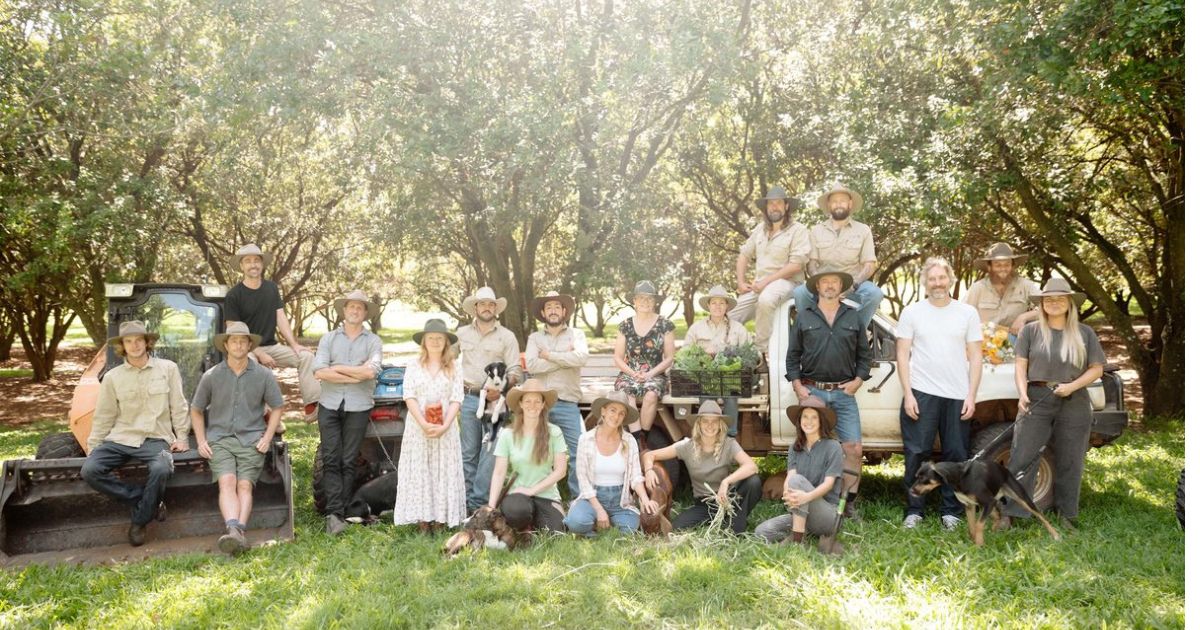
The Farm Byron Bay is looking ahead to its second decade, with no plans to slow down. Photo: MIA FORREST


AFTER celebrating its tenth year of operation in 2025, The Farm Byron Bay is looking ahead to its second decade, with no plans to slow down.
The 80-acre regenerative farm welcomed more than 500,000 visitors last year.
Now, The Farm is sharpening its role as a year-round education hub, scaling what has always sat at its core: hands-on learning, food grown in tune with nature, and deeper participation on the land.
Business development manager Tiffany Horton said the milestone had sharpened the farm’s thinking rather than prompting a pause.
“We don’t feel like we’ve arrived,” she said. “It feels like the work is just beginning.”
From the outset, The Farm was built around how food is grown, with practices shaped by soil health, seasonal conditions and long-term productivity rather than speed or yield.
That philosophy is lived across the site through chemical-free, seasonal and regenerative farming practices, systems designed to restore soil rather than deplete it and to produce nutrient-dense food while improving the land it comes from.
The Farm was established a decade ago by Tom and Emma Lane, parents who wanted to reconnect their children, and their community, with where food comes from and how it is grown.
It now brings together growers, chefs, food producers and educators across 14 on-site enterprises, all working to the same mission: Grow. Feed. Educate. Give Back.
“The Farm isn’t one business,” Horton said. “It’s a group of people working together, sharing knowledge, resources and responsibility.”
That collaboration plays out daily through a circular, farm-to-table system. Produce grown on the land supplies the on-site restaurant, Three Blue Ducks Byron, and local markets.
What comes back from the kitchen is reused on the farm.
Between 2022 and 2024, the farm’s composting system processed close to 50 tonnes of food waste from the restaurant, diverting it from landfill and turning it into around 160 cubic metres of nutrient-rich compost returned to the soil.
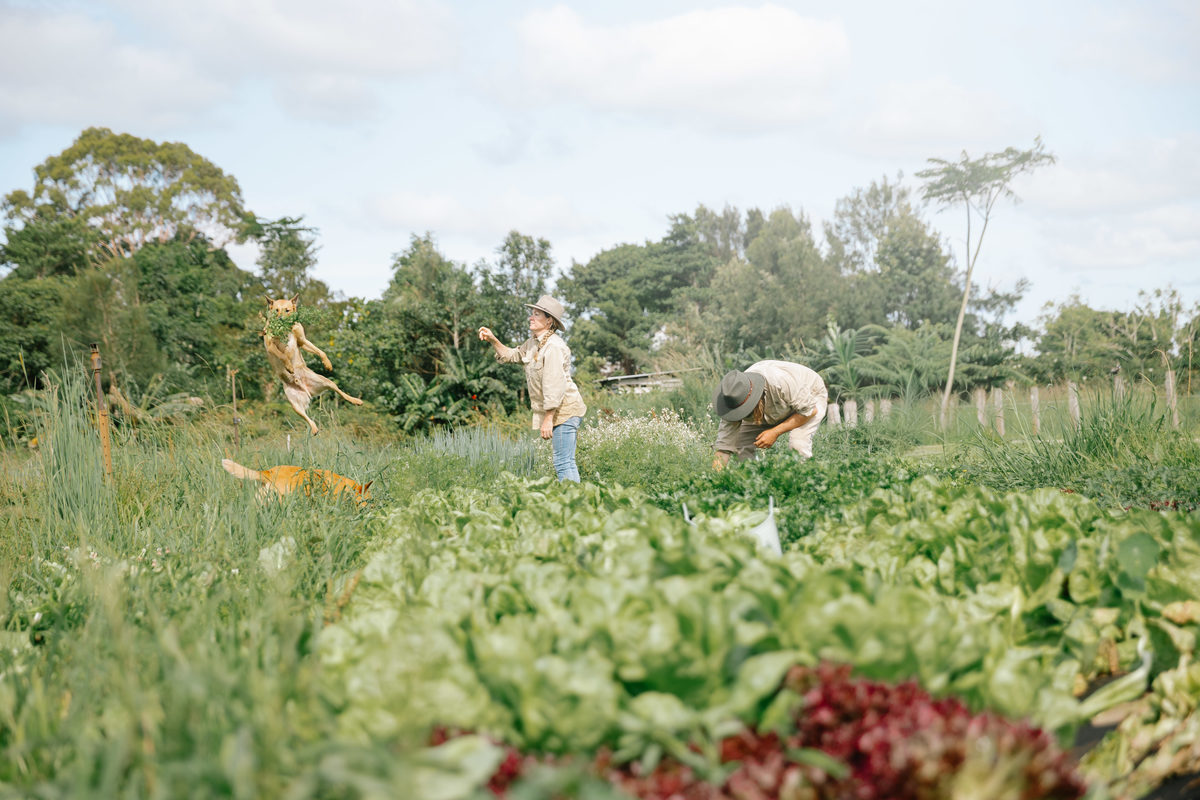
Among the enterprises working side by side are market gardeners Josh and Lynette, ferment producer Katerina from Byron Fermentary, florist Jess from Poppy & Fern, and Oliver’s Hens, which began as a school project and now produces eggs through a regenerative system developed on site.
As visitor numbers continue to grow, education has become a central part of the farm’s work.
Education programs for primary and secondary schools are expanding, alongside guided farm tours and new hands-on offerings designed to show how regenerative systems work in practice.
Into the Paddock, a hands-on experience that introduces visitors to feeding animals and understanding their role in a regenerative farming system, launched last spring and sold out quickly.
Long-running initiatives like Farm Kids continue to form the backbone of the farm’s education offering, supporting school holiday programs, term-time learning and homeschooling families.
“If we want to see change, we have to educate the next generation,” Horton said. “It isn’t one group — it’s everyone.”
That education-first approach is reinforced through partnerships with Southern Cross University and Byron Bay Community College, where students and educators work directly with the land to bridge theory and practice.
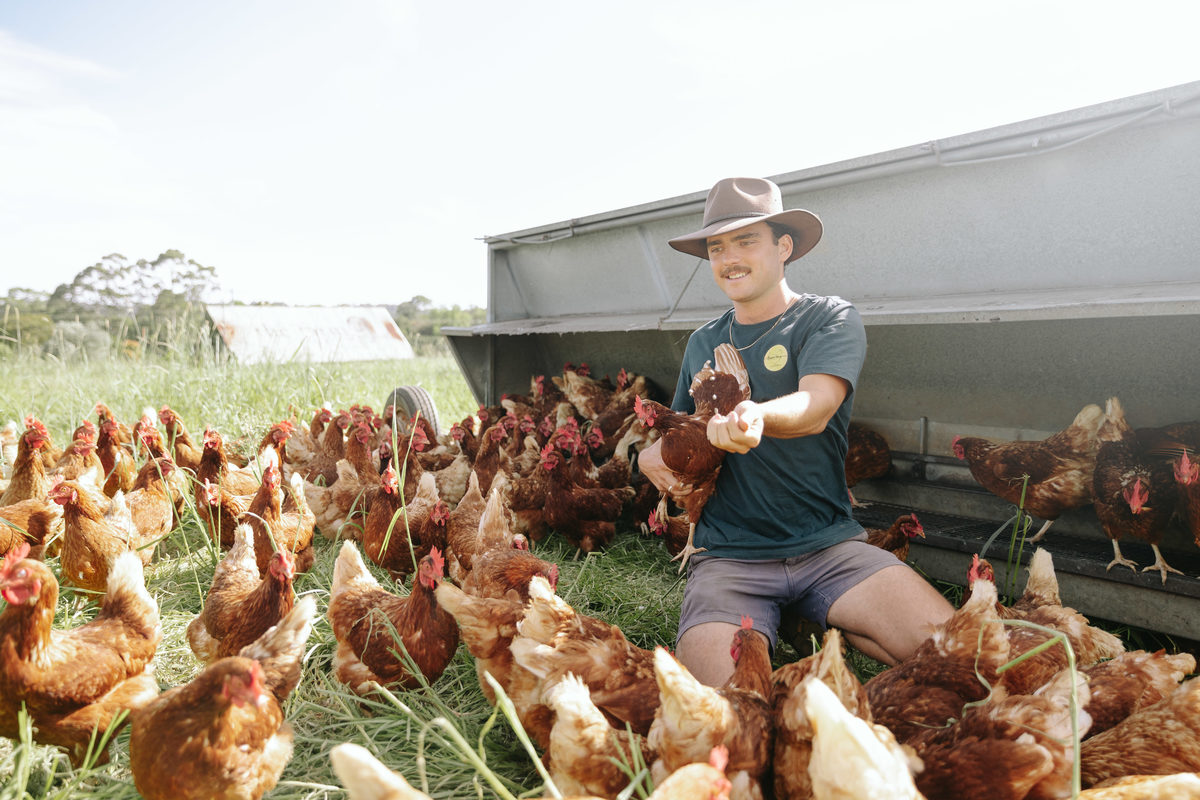
The Farm also collaborates with aligned Australian brands in ways that support the people doing the work.
One of its most recent partnerships followed Akubra’s opening of a Byron Bay store in October, with the company providing hard-wearing hats to growers for sun protection over the warmer months.
“Growing food is physically demanding, especially in the harsh Australian subtropical climate,” Horton said. “Quality gear isn’t a luxury; it’s essential.”
“One of our growers had a hat you could literally put your hand through,” she said. “It had been worn hard over many years.”
The partnership grew out of a shared appreciation for durability and doing things properly rather than quickly.
“They’ve been making hats the same way for generations,” Horton said. “It’s not the easy way, but it’s the way that lasts, and that really resonated with us.”
As The Farm looks to its next decade, the focus is on strengthening what already exists: its people, its systems and the responsibility that comes with its reach.
“Half a million people is significant,” Horton said. “It means we have a responsibility to show what’s possible.”
“We want people to leave with more than a coffee,” Horton said. “We want them to leave understanding how food is grown here, why that matters, and how deeply connected they are to it.”
Share


Related Articles
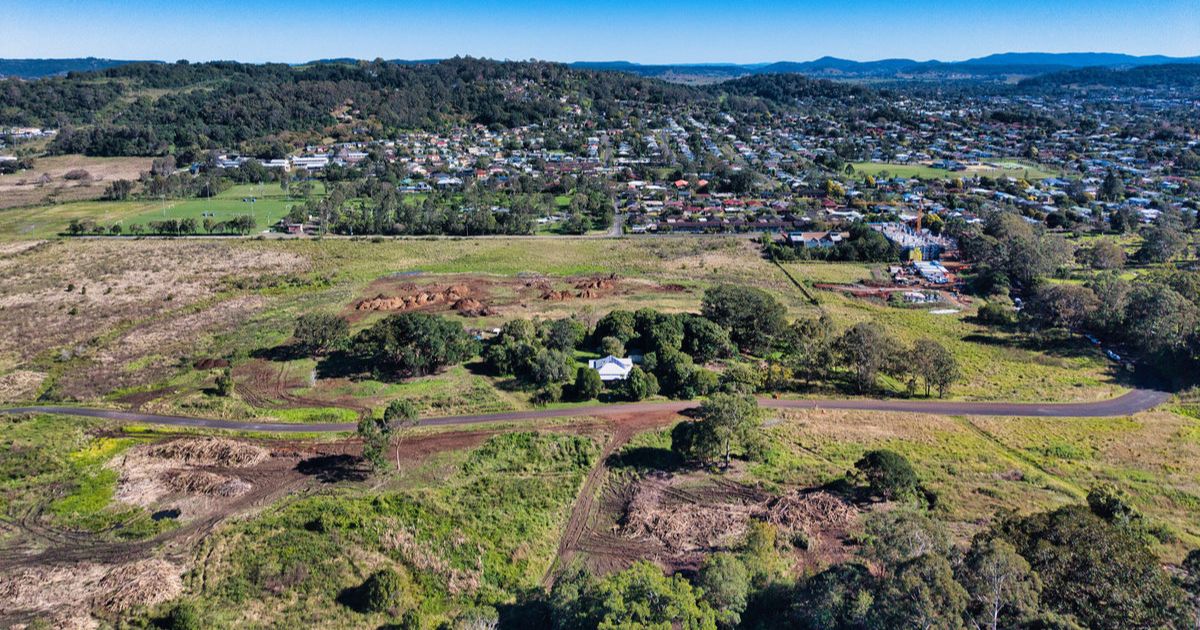
More than 500 flood-resilient homes proposed for East Lismore
THE NSW government has released a draft master plan for…
$1.47m upgrade will revitalise Jack Evans Boat Harbour foreshore
AGEING infrastructure at Jack Evans Boat Harbour will be upgraded…