Byron Bay Turtle School working with scientists in Peru to save marine life
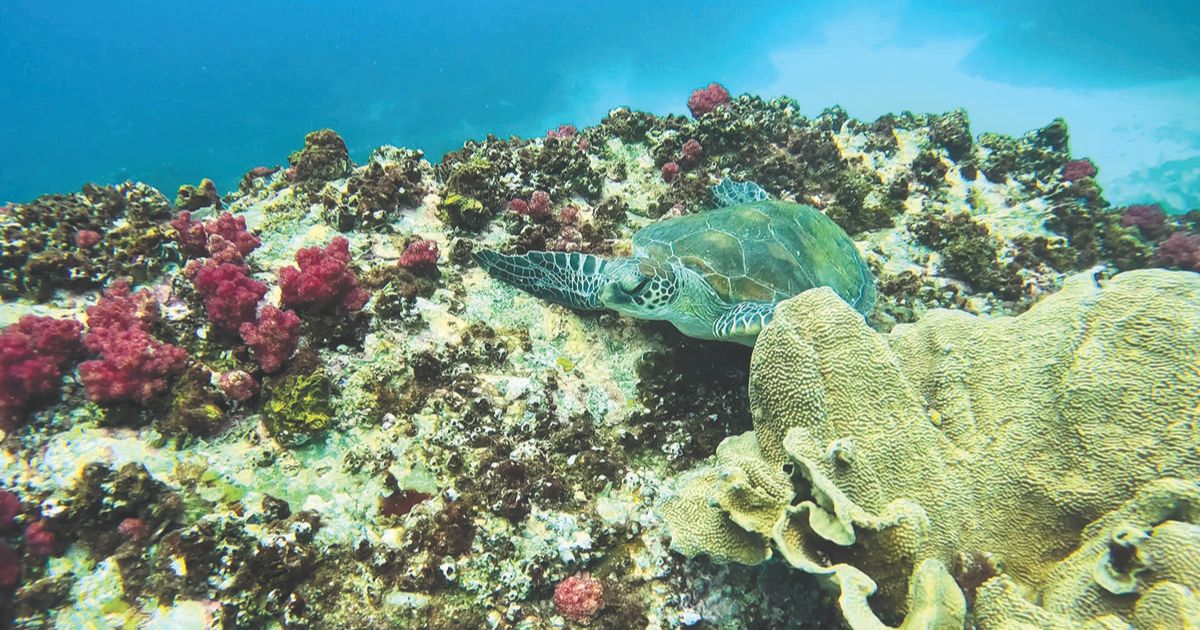
A green sea turtle at Nguthungulli Julian Rocks. Photo: BYRON BAY TURTLE SCHOOL


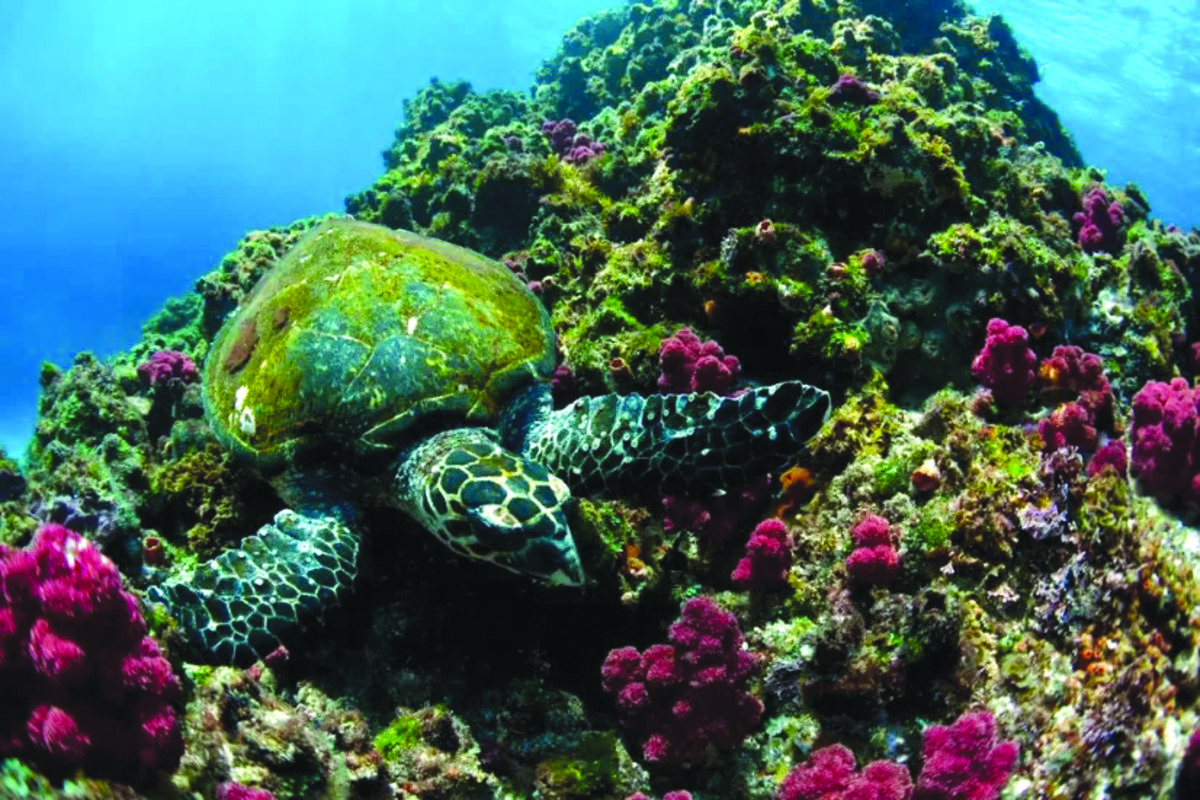
WHEN Josh James was working as a dive instructor off the coast of Byron Bay, he noticed that three species of sea turtles call the waters home – green, hawksbill and loggerhead turtles. But beyond that, there wasn’t much data available about them.
The marine scientist set out to change that. Over the past three years, he has been using photo identification and surveys to collect as much information as possible in a bid to help these endangered and vulnerable species.
In that time, James has identified more than 70 individual turtles in the Cape Byron Marine Park.
“There hadn’t been any real data collected since 2002 and even that was unpublished, so there was a bit of a gap there,” he said. “I was looking for a project, and turtles need our help, so that’s how it started. I thought I would try to learn what was going on with them and work out the best way to help them so we can see them every day.”
James founded Byron Bay Sea Turtle School in 2022 and took over Byron Dive Centre and Whale Watching in 2024, using tourism to fund the organisation’s conservation work.
“We called it a turtle school mainly because we didn’t know anything – we’re teaching and learning,” he said.
Participants in the Turtle School workshops learn about sea turtles and the critical role they play in marine ecosystems, how to identify local species and how to interact with them responsibly before heading out to snorkel alongside them. On average, groups encounter around five turtles a day.
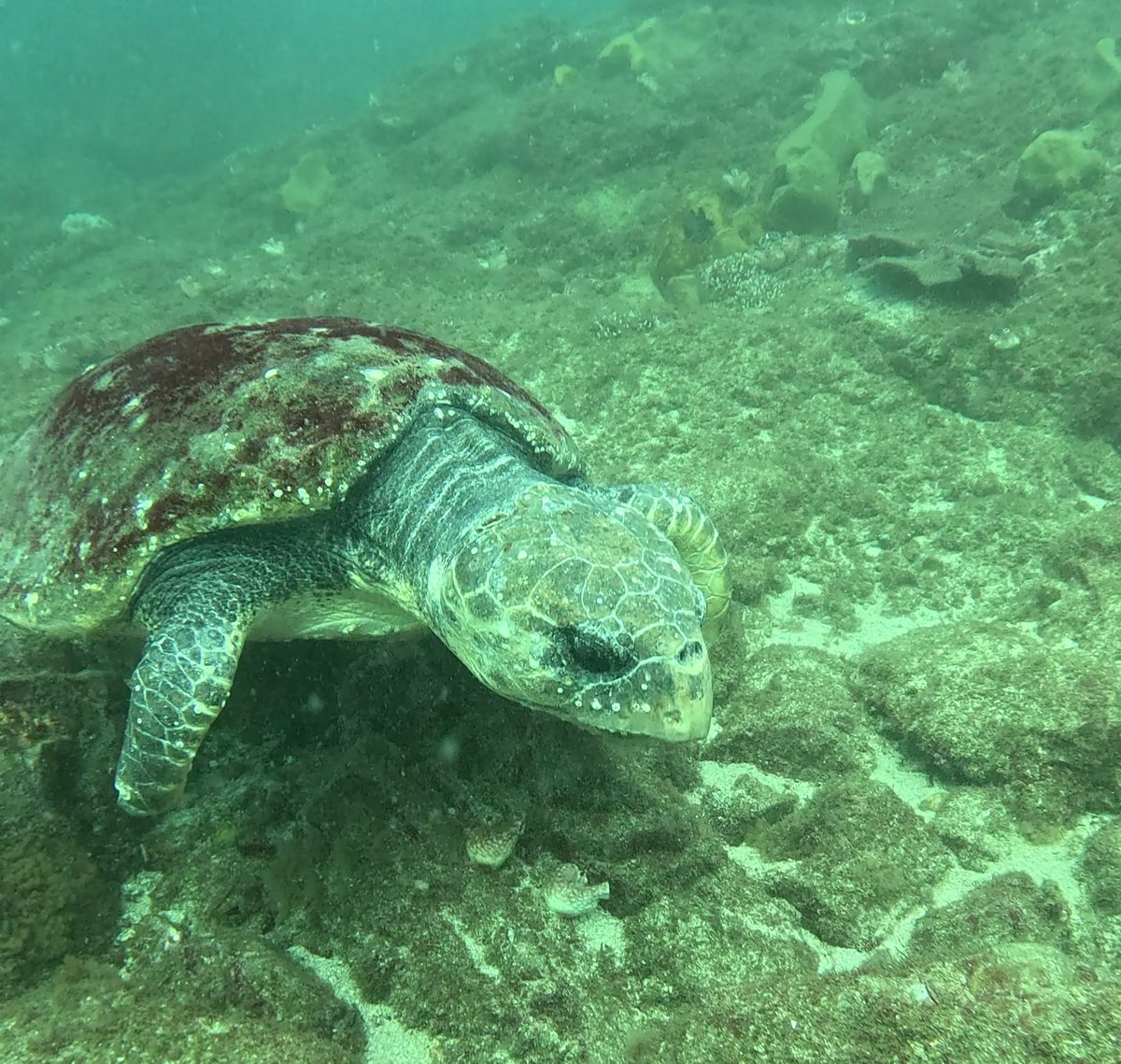
Of the three local species, James said loggerheads are the most intriguing to study.
“We have a resident population in the marine park and it’s unusual because they usually live in a bit deeper water,” he said.
“There are around 1000 left on the east coast, but there should be 30,000 to 40,000. It was once a healthy population.”
While the largest nesting site is at Mon Repos near Bundaberg in Queensland, Turtle School research has shown that some loggerheads live year-round in the waters off Byron Bay.
“We can say we have turtles who have a 20-year life span living here because we use photo ID as part of our project and we know we have one loggerhead, Frank, who’s been here for 20 years,” James said. “We also have visiting turtles come down from the Great Barrier Reef.”
James said that some juvenile loggerheads travel with ocean currents all the way to South America, but many become entangled in fishing nets as bycatch and don’t return. Studying that impact, he said, is a long-term project, one that can take 15 to 20 years to fully understand.
To help tackle the issue, Turtle School has begun working with Pro Delphinus, a not-for-profit organisation in Peru that monitors and protects sea turtles.
“Part of our funds go to them as well because they don’t really have much money over there and the government doesn’t give them much for turtle-related conservation efforts,” James said. “They do a lot for turtles and fishing management. They use photo ID as well so they’re sending us photos of turtles and we’re trying to supply them with simple equipment like gloves and de-hookers so that the fishermen over there are able to unhook the turtles. If we can make it easier for them to let them go, maybe we can help a few more get back.”
For more information, visit byronbayseaturtleschool.com.au
Share


Related Articles

Council moves ahead with Lismore Walk of Honour plans
LISMORE residents will have the opportunity to recognise people who…
Former hospital site set to deliver 800 new homes
THE former Tweed Hospital site in Tweed Heads will be…