Council tests new whale disposal policy
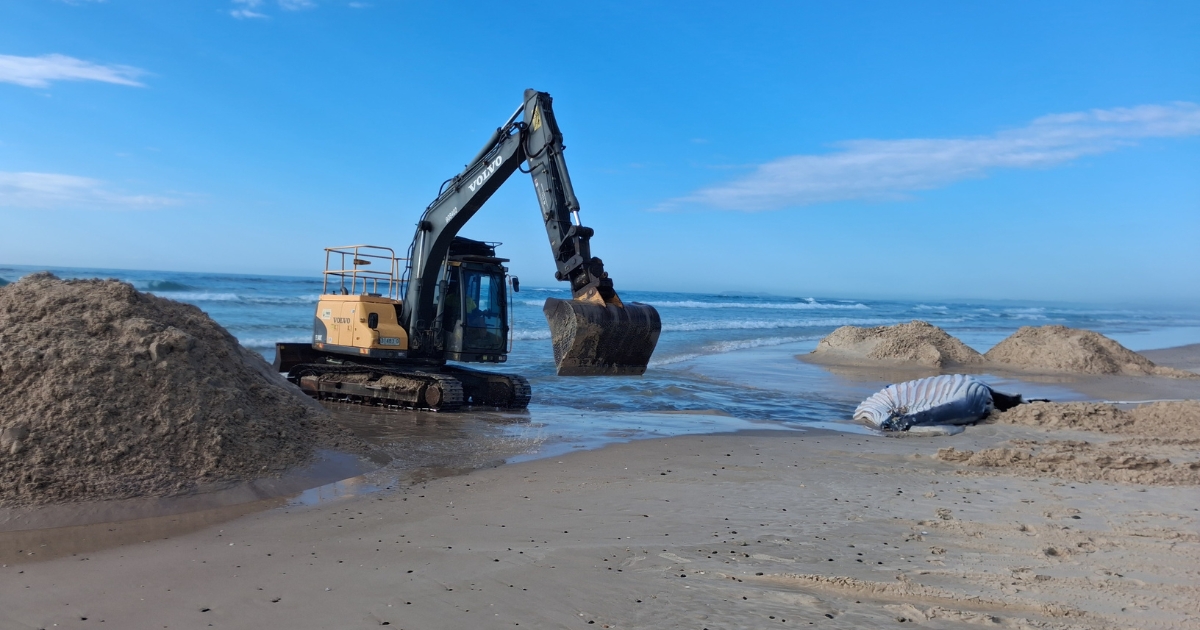
A juvenile whale carcass that washed ashore near Crabbes Creek Beach, south of Wooyung Road, has been towed back out to sea in the first operation of its kind undertaken by Tweed Shire Council. Photo: Tweed Shire Council.


A juvenile whale carcass has been towed back out to sea off the Tweed coast in the first operation of its kind undertaken by Tweed Shire Council.
The whale, which washed ashore near Crabbes Creek Beach south of Wooyung Road, was released about 19 nautical miles offshore under the council’s new draft Management and Disposal of Deceased Large Marine Animals policy.
In a social media post, council said initial preparations were completed on Thursday, July 2, with the carcass fitted with a tracking device before being towed offshore on Friday morning to coincide with favourable tidal conditions.
Council’s team leader natural area management Louise Bennett said the draft policy was developed following a councillor notice of motion almost two years ago.
“The policy is the result of a councillor notice of motion almost two years ago where there was a request from the councillors for us to develop a policy and a standard decision making process and procedure on how we will respond to these events,” she said.
Bennett said the growing humpback whale population meant these incidents were becoming increasingly common.
“The humpback whale population is increasing continually so we’re experiencing more and more of these incidents,” she said.
“We’ve had at least one every year for the last few years, so the expectation is that it’s only going to continue.”
While similar offshore towing operations have been carried out elsewhere in Australia, Bennett said it was the first time the Tweed had used the approach, with previous whale carcasses typically disposed of in landfill.
“It was a test case for us for sure, and it did go very smoothly,” she said.
Bennett said returning the whale to the ocean offered significant environmental benefits.
“The primary benefit is the ecological value of keeping the whale in the ecosystem,” she said.
“From an ecological and environmental perspective, you’re returning it to the environment so it can decompose naturally out there, provide food for predators, those types of things.”
She said there were also cultural and ethical considerations in returning the animal to the ocean.
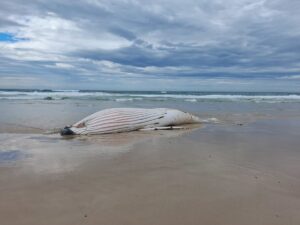
Bennett said there were no obvious signs to indicate what had caused the whale’s death.
“The carcass was intact. All of the organs were still internal and there was no entanglement,” she said.
“There were no signs of predation or immediate signs of gross infection or anything like that.”
Surf Life Saving advised beaches from Cabarita Back Beach to the Tweed-Byron border would remain closed until further notice following the incident.
Share


Related Articles
What to expect when the AusAlert test hits phones today
Phones across Australia will sound at 2pm today as the…
Waste audit reveals $670,000 in unclaimed container refunds
LISMORE households recently threw away an estimated $670,000 in container…