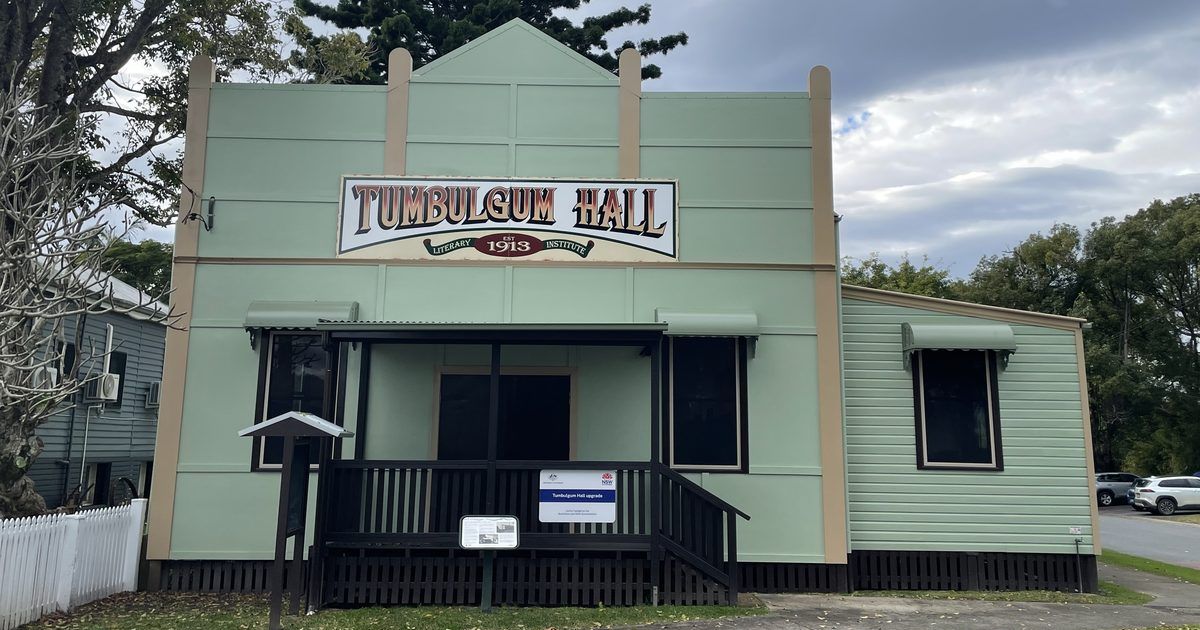
Historian to launch new book on colonial law in Murwillumbah bookstore
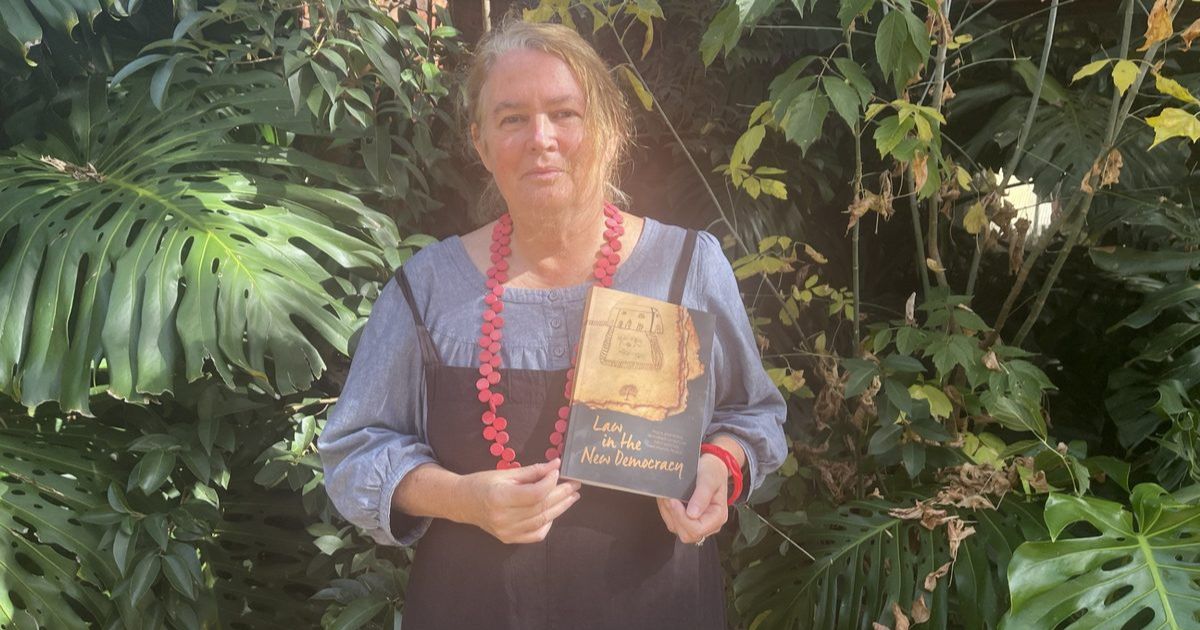
Historian Paula Jane Byrne with her new book Law in the New Democracy. Photo: Rosemary Burns.


SYDNEY – based historian Paula Jane Byrne will return to the Northern Rivers this month to launch her latest book at Murwillumbah’s Pulp Fiction bookstore.
Raised in the Tweed region, Byrne grew up in Condong before leaving in the late 1970s to study history at the University of New South Wales, beginning a career that has since produced multiple historical works.
Her new book, published through ANU Press, examines the role of law in the early years of democracy in colonial New South Wales.
The work focuses on the period between 1850 and 1859, a decade that saw the colony move toward self-government, including the establishment of its first elected assembly in 1856.
One of the book’s defining features is its inclusion of Aboriginal perspectives through a process Byrne describes as “right of reply”.
“What’s so important about this book is the right of reply that I have by different Aboriginal people from the different communities where I looked at the courts,” she said.
“So, at the end of each chapter of the book there’s a comment by an Aboriginal person from a particular area that I’ve just written about.”
She said the approach reflects the importance of recognising the limits of historical authority when dealing with Indigenous histories.
“Aboriginal people have got their own history, and it belongs to them, and I make that clear in the book,” she said.
Byrne said writing the book presented challenges, particularly in navigating consultation with communities.
“The major challenge was right of reply because you never know how many Aboriginal cases you were going to come up with,” she said.
“One of the big challenges was how to deal with that as an Australian historian in 2026.”
She said the responses from communities highlighted different ways of understanding history.
“What they make clear in their comments in the book is that there indeed is two different ways of looking at history,” she said.
“There’s the non-Aboriginal way of looking in terms of the empirical past, and then there’s Aboriginal history itself, which is tied up with Aboriginal knowledge systems and different ideas of responsibility.”
The research also challenged long-held assumptions about colonial law, with Byrne arguing legal systems varied significantly by location.
“The law was different depending on where you were,” she said.
“This imaginary idea that as you move further out from the centre it becomes more lawless, this I discovered is not the case.”
She said commonly used “language of the frontier” appeared primarily in coastal centres rather than inland regions, where different forms of legal and social order emerged.
Among her findings was evidence of Aboriginal political participation earlier than commonly recognised, including a case in Balranald where court officials compiled a list of Aboriginal people eligible to vote in 1859.
“This is one hundred years before it was even thought of Aboriginal people voting, so it’s very different to how it’s been imagined,” she said.
The launch of Law in the New Democracy will be held at Pulp Fiction in Murwillumbah on May 22 from 3.30pm to 4.30pm and will feature a talk from Byrne about the making of the book.
Share


Related Articles
Art exhibition to highlight end of an era at town and gown event
THE annual Lennox Head Lions Town and Gown Art Exhibition…
Gordon Ramsay-trained chef Elizabeth O’Brien takes over at refurbished Crystalbrook Resort restaurant
SHE honed her skills at the local RSL and worked…