Students take learning off the page with 1,000-tree restoration project in Numinbah
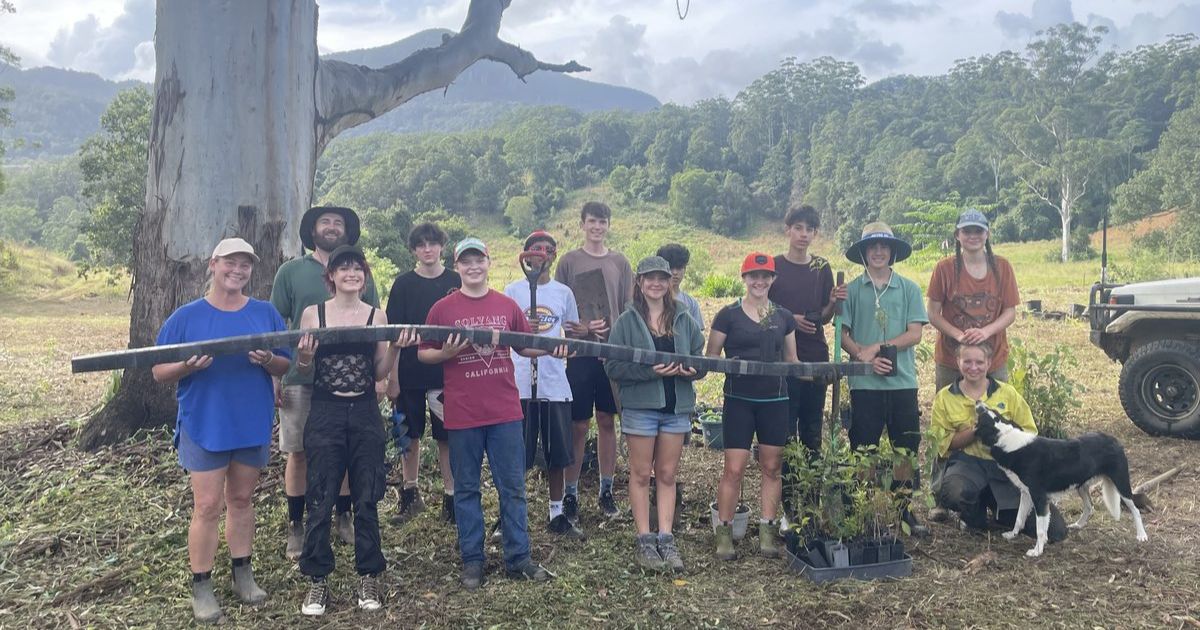
Property owner Sarah Fogarty, teacher Jimmy Kakanis, and the Sathya Sai College year 10 geography class at the Numinbah site. Photo: Pancho Symes.


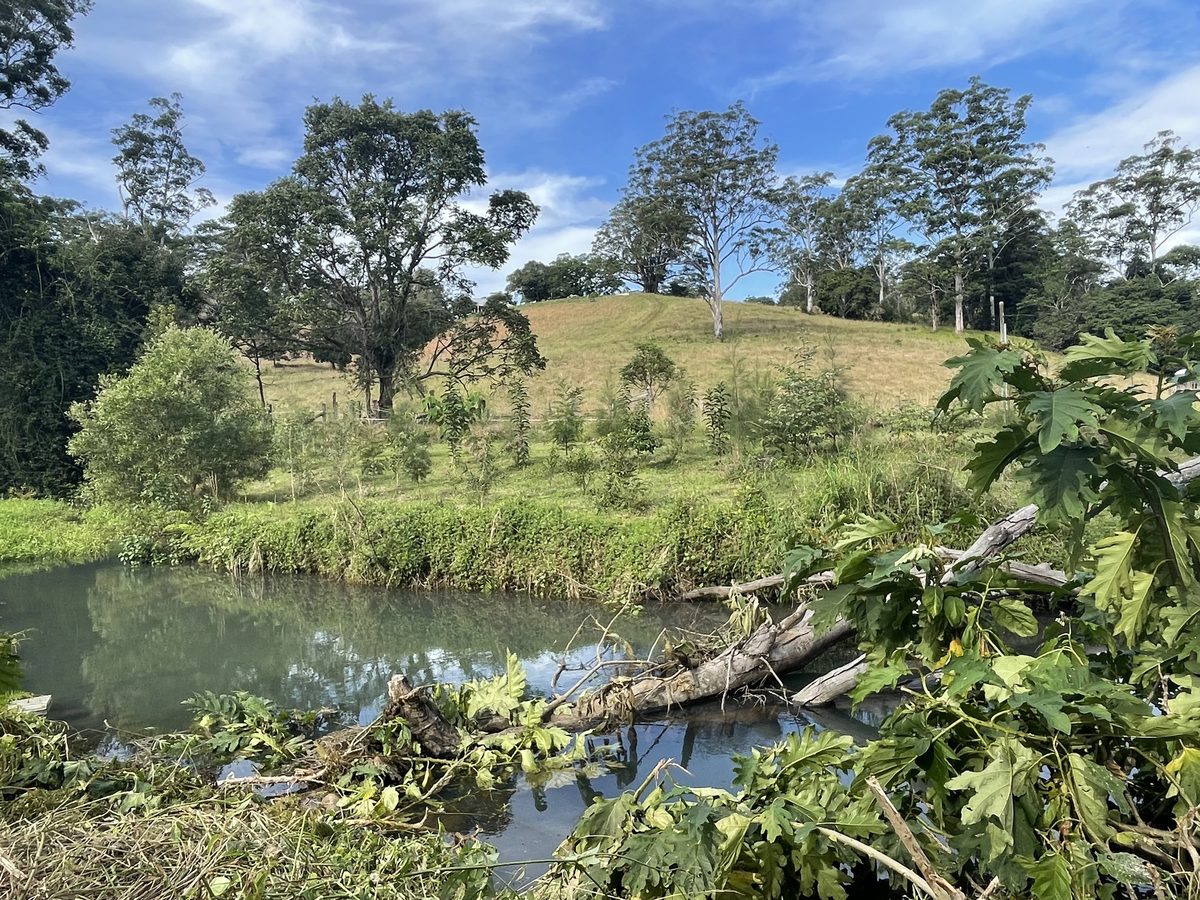
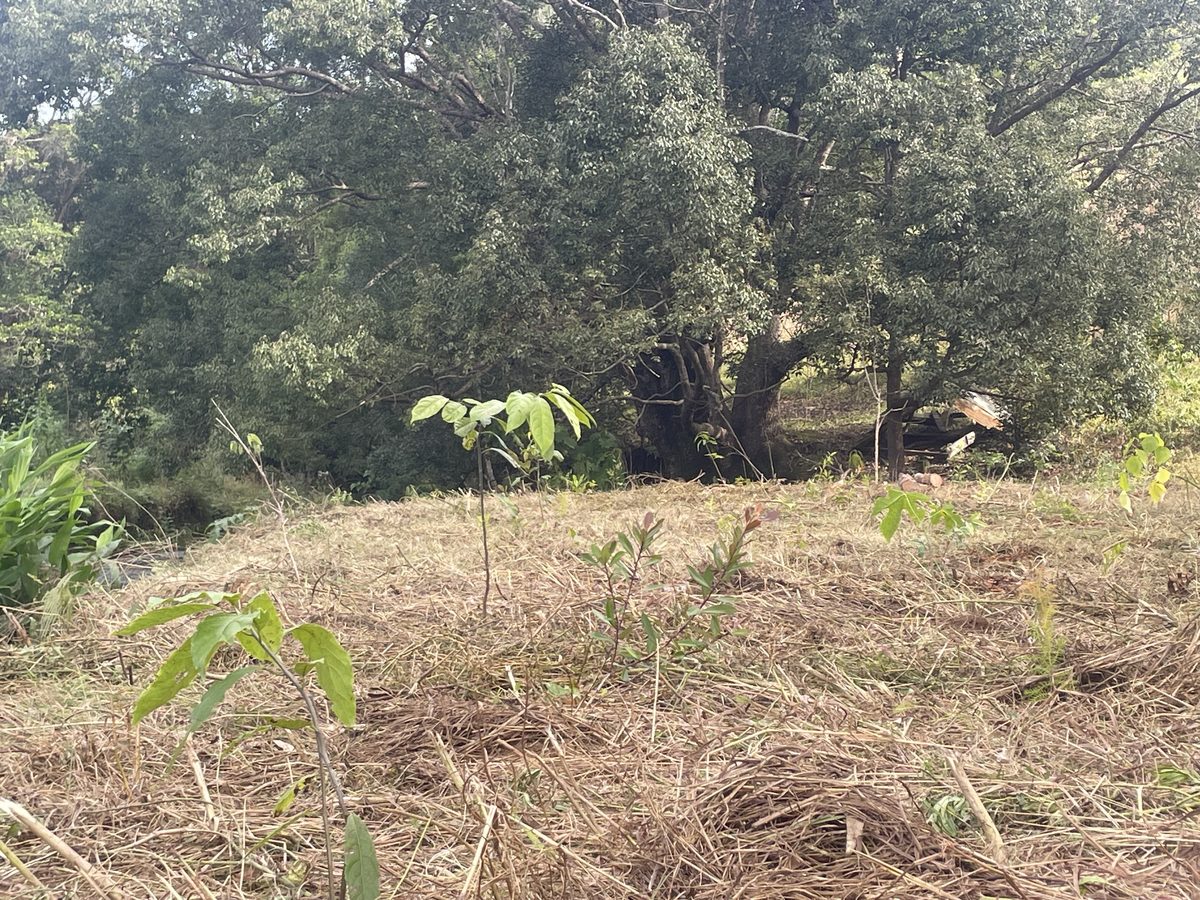
YEAR 10 geography students from Sathya Sai College have planted roughly 1,000 native trees on a Numinbah property as part of a hands-on effort to restore flood-affected creek banks and regenerate degraded land.
The two-day planting project, which saw students camp on the site overnight, formed part of the school’s “100 Trees Project” – a hands-on assessment challenging students to each plant 100 trees while organising every aspect of the project themselves.
“They’ve had the goal of 100 trees planted each,” geography teacher Jimmy Kakanis said.
“It’s involved digging holes, planting, watering, mulching, all that sort of stuff.”
The project was largely coordinated by students, who sourced plants through local council, community connections and their own initiative.
Through collaboration with Tweed Shire Council, the group secured around 1,000 native riparian trees, while also propagating additional saplings from local species on school grounds.
“These guys had also taken a bunch of saplings from under the local natives at our school and replanted them and repotted them and brought them in,” Kakanis said.
Kakanis said the program had been roughly two months in the making and reflected a broader shift toward practical, outdoor learning at the school.
“We’re really looking for more practical, real stuff in our assessments – getting them off their computers a little more,” he said.
“And to be honest, I think they’re all a bit over the old ‘do a bit of research, write an essay’ type situation.”
Students were responsible not only for planting, but for planning the entire experience, from risk assessments to organising food, gear and the overnight camp.
“Part of the process is that these kids do the risk assessment for it,” Kakanis said.
“They do the planning for the camping, and they’ve organised all their own food and their own gear.”
“You can’t really embody the concepts if you learn them in a vacuum.
“That’s why getting them out into the world is so important.”
The work ties directly into their Environmental Change and Management unit, examining how natural and human forces shape the landscape.
“Lots of natural forces in the environment are changing things, as well as human forces,” Kakanis said.
“200 years ago, this area was all rainforest.”
“And it’s been cleared along the way for paddocks and grazing, so this is about rewilding the land.”
The restoration site, owned by Numinbah resident Sarah Fogarty, was identified through a local connection with the school.
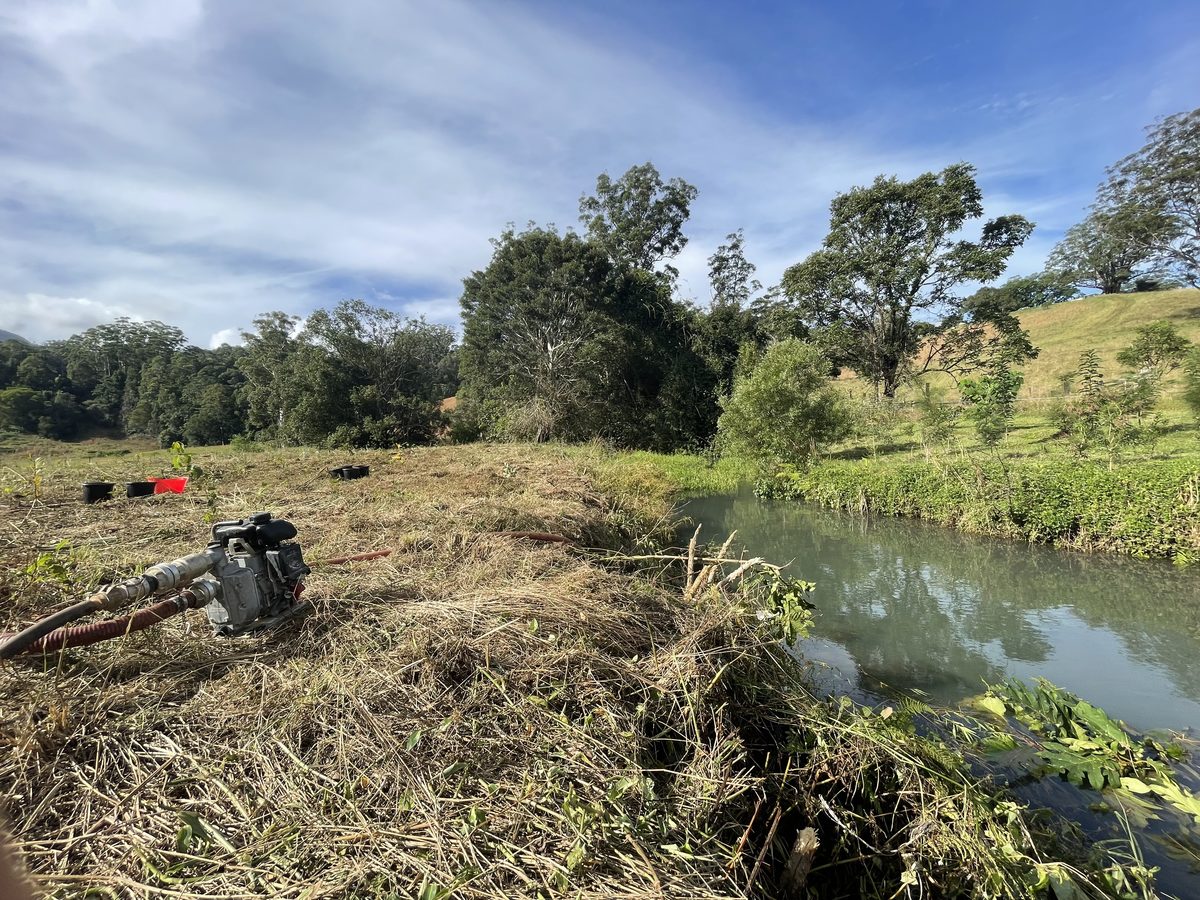
The planting focused on stabilising flood-prone creek banks on land previously used for cattle grazing, with Fogarty saying the project would deliver long-term environmental benefits for the property.
“It’s something we wanted to do to preserve it for future generations because it gets smashed through here with floods,” she said.
“Now we’re just hoping that the trees will grow and stabilise this bank and also it’ll provide a linking environment for birds and habitat across the rest of the creek.”
For student Joshua Hudson, the project offered a different kind of learning experience.
“It’s been so much fun planting trees with my mates and camping,” Hudson said.
“It was more like a team project.
“Everyone was trying to get everyone’s hundred trees planted, so we were all collaborating to get it done together.”
Hudson said the hands-on approach made the learning more meaningful.
“It’s way better actually being out in the field doing something practical,” he said.
“I feel like I’ve actually learnt more than sitting in a classroom.”
“We got to actually go and plant the trees and learn about the species and where they come from and regenerate our local area.”
Hudson said he hopes to return in the future to see the impact of their work.
“It’s so great to see how we’ve transformed the place, and I’d love to come back in a couple of years’ time and see how big the trees are,” he said.
Share


Related Articles
Art exhibition to highlight end of an era at town and gown event
THE annual Lennox Head Lions Town and Gown Art Exhibition…
Gordon Ramsay-trained chef Elizabeth O’Brien takes over at refurbished Crystalbrook Resort restaurant
SHE honed her skills at the local RSL and worked…