‘Holy grail’ Bells collection searches for new home
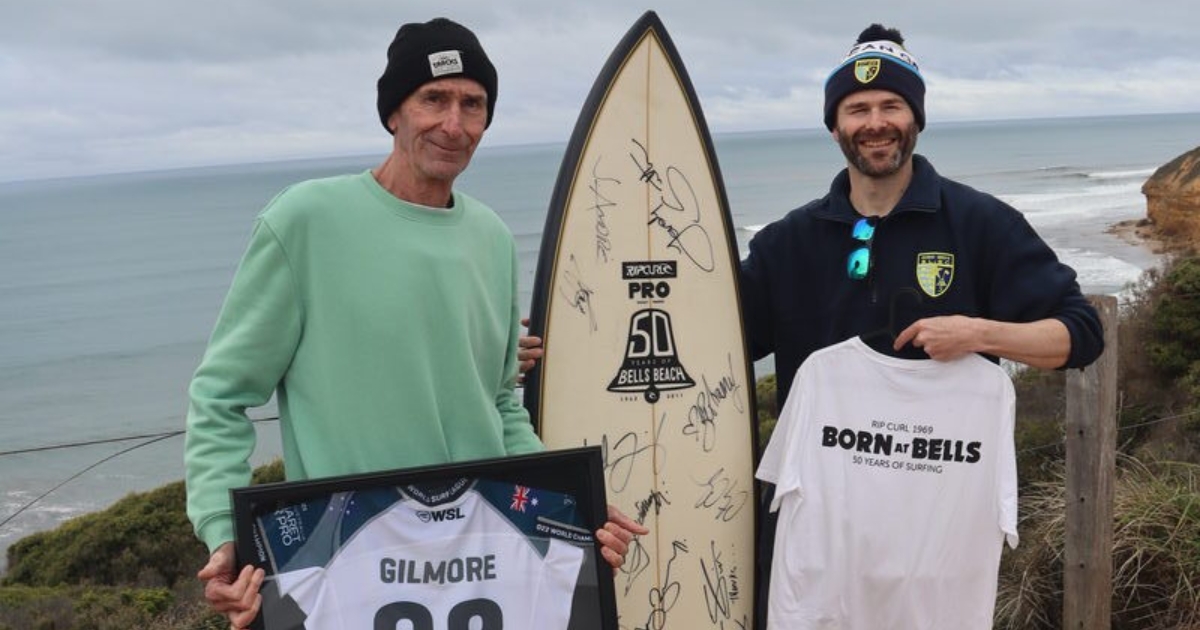
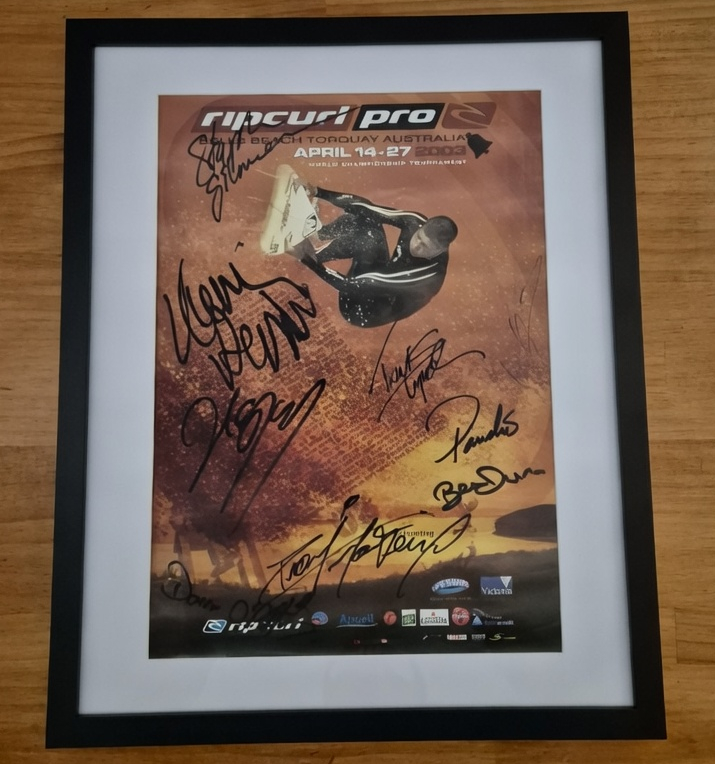
Lee Johnson (right) with his father Glenn Johnson holding some of the memorabilia at Bells Beach. Photo: Nathan Rivalland. Insert: A 2003 signed Rip Curl Pro Bells Beach poster. Photo: Supplied.


FOR 15 years, Lee Johnson has quietly guarded a remarkable slice of surfing history, kept largely out of sight.
But as the crowds drift away following this year’s Rip Curl Pro at Bells Beach, Johnson has reached a turning point: his collection is too significant to remain hidden in a private vault.
Driven by a sense of stewardship, he is preparing to part with it, with plans to reinvest the proceeds into the coastal communities that shaped his life.
Known as the Bells 50 Archive, the collection was curated to mark the 50th anniversary of the Bells event in 2011, bringing together a carefully assembled suite of memorabilia in what Johnson describes as his “holy grail”.
He is seeking to partner with a charity gala or auction house to find the collection’s next custodian.
Under his vision, proceeds would be shared between the Surf Coast and Ocean Grove Surf Life Saving Clubs, reflecting a family connection that stretches back more than 70 years.
The connection runs deep. Johnson’s grandfather, Ray, was a foundational pillar of the Ocean Grove club, credited with establishing the Nippers program in Victoria and founding the annual Rip to River run.
Johnson’s father, Glen, followed as a club champion and lifelong surfer.
“He taught me that the ocean isn’t just a playground, but a heritage to be protected,” Johnson said.
“Growing up in the shadow of these traditions, I learned that surfing is not just a sport, but a community asset. The Bells 50 Archive was curated with that same spirit of service.
“This archive is not merely a collection of modern artefacts; it is a continuation of a 70-year family commitment to the Victorian Surf Coast.”
The centrepiece of the collection is a 50th anniversary Skye Bourton surfboard, which Johnson won in the lead up to the 2011 Rip Curl Pro through an supermarket competition.
History wasn’t just made in the water; it was etched into the item.
The surfboard was signed by 21 surfing legends including Mick Fanning, Joel Parkinson and Bethany Hamilton.
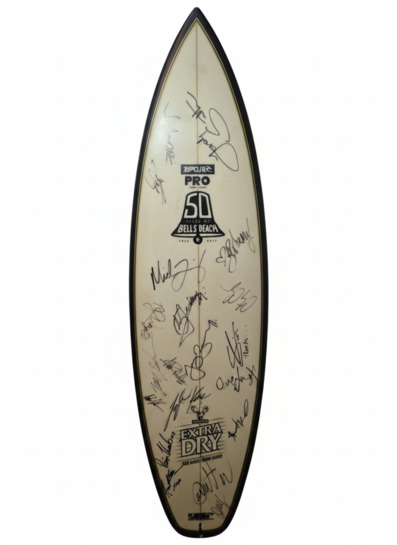
“I spent that day on the sand, in queues witnessing the ink hit the board in real-time. It is a living time capsule,” Johnson said.
“While the tribe gathered, Sally Fitzgibbons was busy charging toward her first Bell and Kelly Slater was playing his usual game of hide-and-seek with the fans.”
It sparked a broader mission: to track down items that captured the spirit of Bells’ half-century milestone.
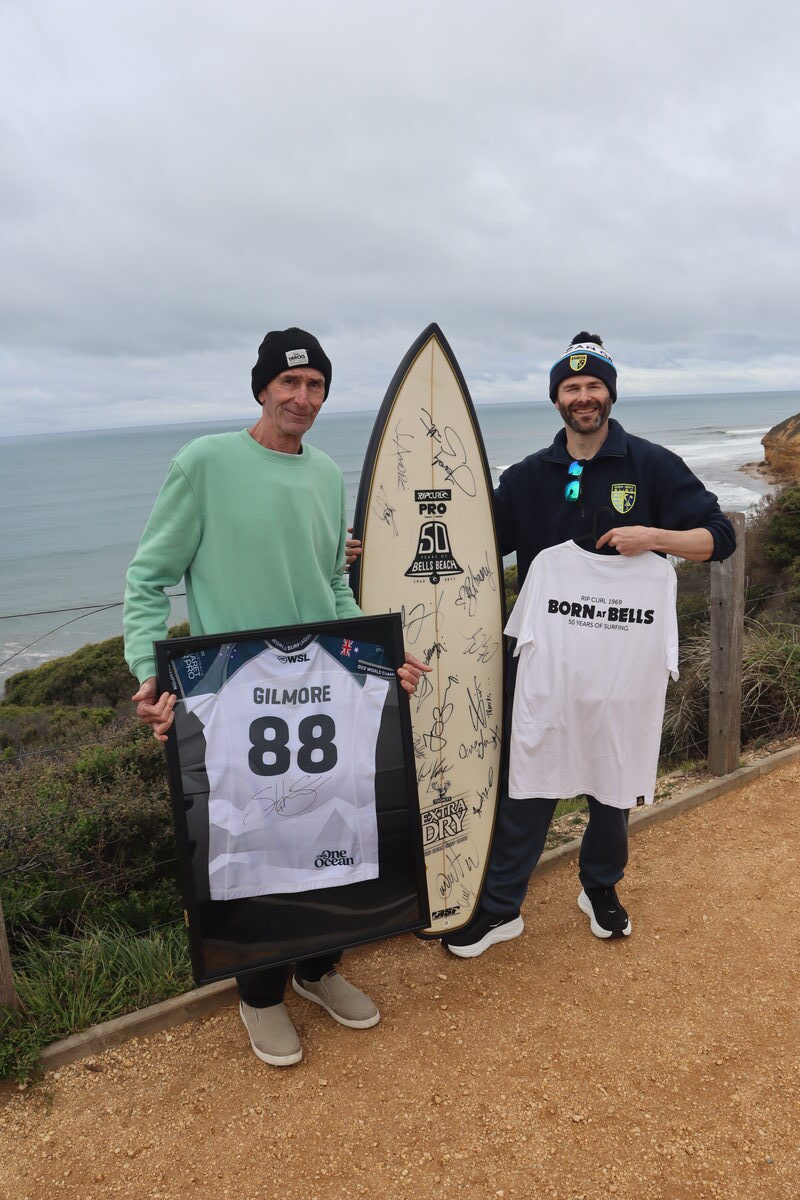
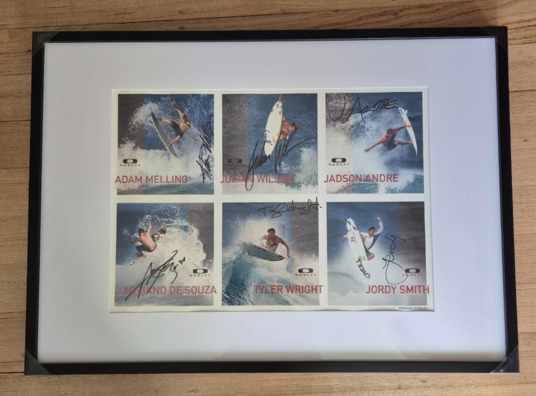
The archive now includes signed pieces from seven-time world champion Layne Beachley, vintage items tied to Wayne Lynch, Nat Young and Barton Lynch, as well as memorabilia bearing the signatures of Stephanie Gilmore and Kelly Slater.
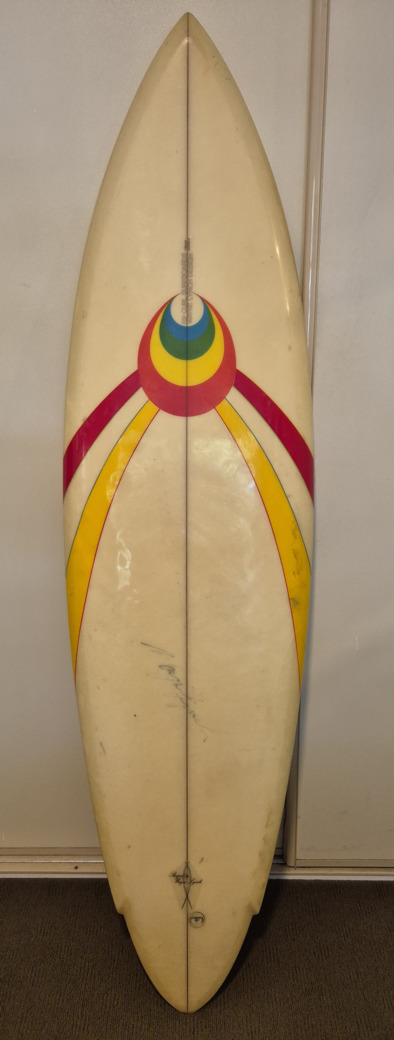
Among the most personal pieces is what Johnson calls the archive’s “soul” – a Wayne Lynch x Rip Curl hand-shaped surfboard.
“It was my very first surfboard, lent to me by my father,” Johnson said.
“A signature remains visible on the foam – a birth certificate from one of surfing’s master craftsmen – hand signed for my dad by Wayne at Ocean Grove Surf Life Saving Club’s 50th anniversary.
“To have the board I learned on be a genuine, hand-shaped piece of Australian surfing history is the foundation upon which this archive is built.”
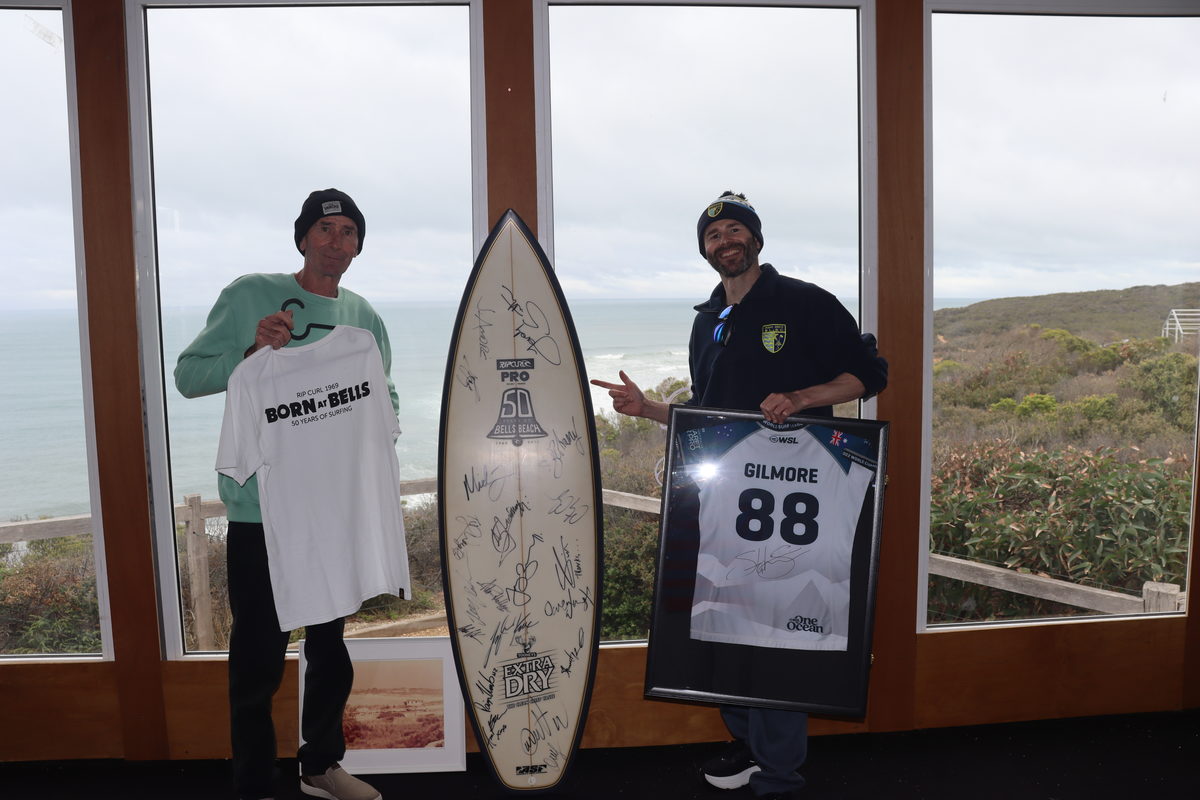
Following the success of the Rip Curl 2026 heritage campaign, there is a documented surge in demand for physical artefacts that bridge the gap between this golden era and the modern world tour.
For Johnson, the next step isn’t about the value of the collection, but what it can continue to represent.
“By partnering with a charity and the Ocean Grove Surf Life Saving Club, we are ensuring that the history of our coast continues to protect and support its future,” he said.
Share


Related Articles
The little golfer finding joy between hospital stays
HARRY Duffy is an old soul. In his spare time,…
Committee for Geelong chief departs abruptly
Committee for Geelong chief executive Michael Johnston has abruptly resigned,…