ACL recovery and returnto play under microscope
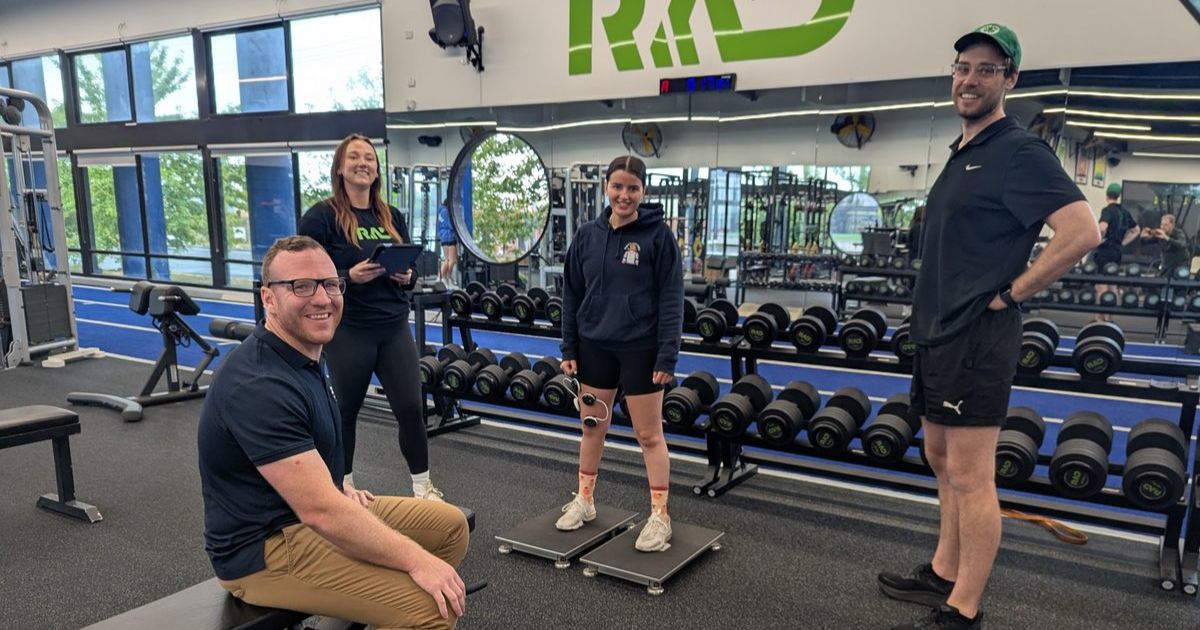
ANALYSIS: Federation University exercise and sport sciences lecturer Dr Mathew O'Grady, Federation University PhD student and RADCENTRE strength and conditioning coach Madison Sanford, Ballarat-based apprentice jockey Jaylah Kennedy, and RADCENTRE head of performance and education Tim Welsh. Photo: SUPPLIED


A BALLARAT-based study is shedding new light on one of the most problematic injuries in elite sport.
Researchers from Federation University and RADCENTRE are collaborating on a project aimed at better understanding the function and treatment of the anterior cruciate ligament (ACL), one of the most commonly injured ligaments among athletes.
PhD student Madison Sanford, who will work at RADCENTRE on the project, said ACL injuries continue to have wide-reaching impacts across sport.
“There’s certainly a financial aspect that goes along with this injury,” she said. “If a professional athlete tears their ACL, they could be out for a full season if not longer, so that would cost the club quite a bit.
“For the general population or recreational athletes, there could be time away from work post-surgery, the cost of physiotherapy appointments, rehab programs, gym memberships or equipment that go along with a long recovery like this.”
She said the rehabilitation process can keep athletes sidelined for extended periods.
“The rehab process is extensive, with some athletes being out for 12-14 months from the time they sustain the injury, have surgery, go through rehab and then return to sport, so anything that can be done to make that process more time efficient and effective is worth looking into,” Ms Sanford said.
“Due to the nature of many sports, the ACLs take a lot of impact and play an important role in stopping, changing direction and landing jumps, which also leads to the high injury rates that we’ve been seeing.”
The study will analyse force plate data – generated from a platform that measures a person’s exerted force during activities – symmetries between injured and non-injured knees, and biomechanical examinations of techniques. Researchers hope this will reveal new measures that have not been widely considered.
Federation University exercise and sport sciences lecturer Mathew O’Grady said the research aimed to build on existing knowledge.
“That’s where we want to explore a little bit more – seeing how athletes are actually recovering by doing different tests with the force plates,” Dr O’Grady said. “There hasn’t been much research looking at athletes when they return to play, and we want to know what happens to their performance. These projects will relate to one another, giving us a more holistic view.”
Share


Related Articles
Teachers walk off the job for second time as AEU pushes government for deal
Victorian public school teachers will strike for the second time…
Nominate green thumbs for caring efforts
LANDCARE Australia is calling on communities to highlight grassroots people…