Microforest draft concept plan launched
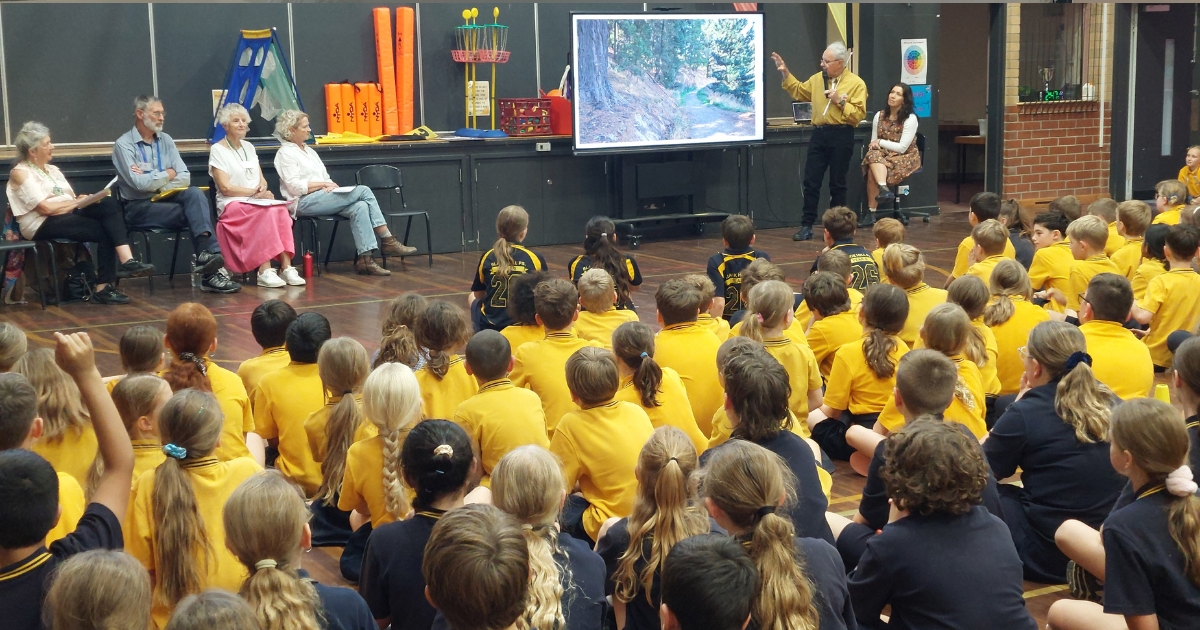
Clissold Street resident and lead proponent Stuart Porteous explains how the microforest will look. Photo: Darren McLean.


It’s official. The Black Hill Microforest is happening.
The multi-year project, which will transform a vacant Peel Street North block into a green-tinged wonderland, was launched at the Black Hill Primary School today.
And according to its lead proponent, the young students could not be more enthusiastic about it.
“Michael (Fortescue) who is the environmental coordinator, a teacher, has said he hasn’t seen them so excited about any other project; they’re very excited about it,” Clissold Street resident Stuart Porteous said.
“And they’ve gone home and told their parents about it – and dragged their parents to the site over the weekends.”
The children will be heavily involved in the planting of trees for the microforest, with at least 500 to be planted in each of the three years of its development starting this year.
They have already been involved as the plan has developed, with many visiting the block for site tours and 10 ‘environmental monitors’ contributing to planning and ideas.
“They’re also going to be integrating the learning across their curriculum,” Porteous said.
Today’s launch took place at a general assembly and involved explanations of how the project has progressed and the next steps.
What happens now is a week-long display of the draft, with residents and others able to contribute feedback and more ideas.
The draft will be on display at the school from 3pm to 4pm each weekday and also tomorrow (Saturday) from 9am to noon.
A final master plan is expected to be released in June.
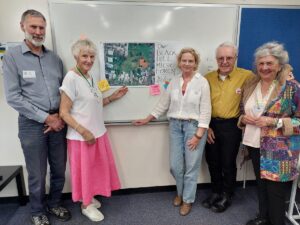
A microforest is a small, dense, biodiverse woodland planted in urban areas using a method developed by Japanese botanist Akira Miyawaki in the 1970s.
Microforests feature native species planted closely together to rapidly grow into self-sustaining ecosystems that combat climate change, create wildlife habitats, cool their host areas and enhance mental wellbeing.
Porteous, a retired landscape architect, took the idea from his Canberra-based son Mitch, who is heavily involved with the Microforest Collective, which champions similar greening projects.
He founded the original working group with Ballarat-based Fifteen Trees founder Colleen Filippa and Neil and Kaye Leckie, whose property adjoins the block.
When it is finished, the microforest will also feature an amphitheatre and a stage, a market space and an open link to Napier Street.
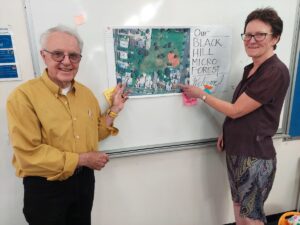
The block measures about 1.6ha and separates the post office and residential development.
It was a builders’ tip in the 1950s – which is why it remains undeveloped – and is known as the Peel Street Water Reserve, under management of the City of Ballarat.
There will be working bees on the site as the project progresses, along with a possible fundraising drive to help meet costs of materials – particularly soil.
The city, the Wadawurrung Traditional Owners Aboriginal Corporation and Central Highlands Water have all been consulted in the planning work and all are supporting the project.
The best place to learn more is the project’s Facebook page, which is simply called BLACK HILL MICROFOREST.
Share


Related Articles
Teachers walk off the job for second time as AEU pushes government for deal
Victorian public school teachers will strike for the second time…
Nominate green thumbs for caring efforts
LANDCARE Australia is calling on communities to highlight grassroots people…