Drones now watching for sharks from dawn to dusk on NSW North Coast
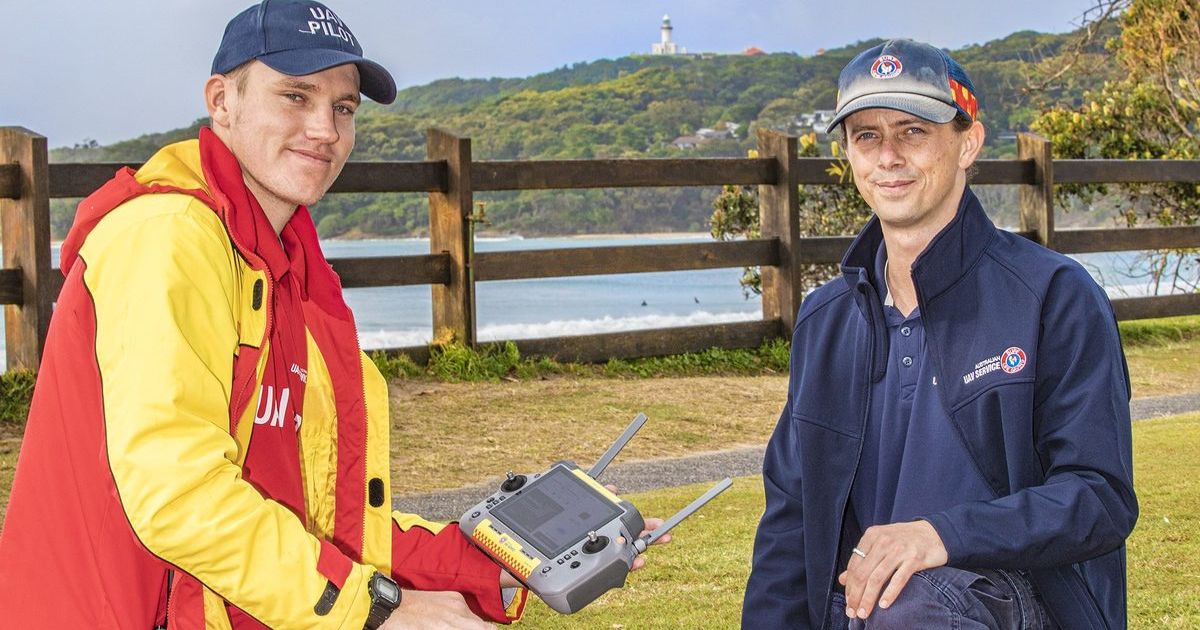
Drone pilot Samuel Callahan and Australian UAV Service Far North Coast supervisor Gabriel Roxburgh. Photo: David Cope.


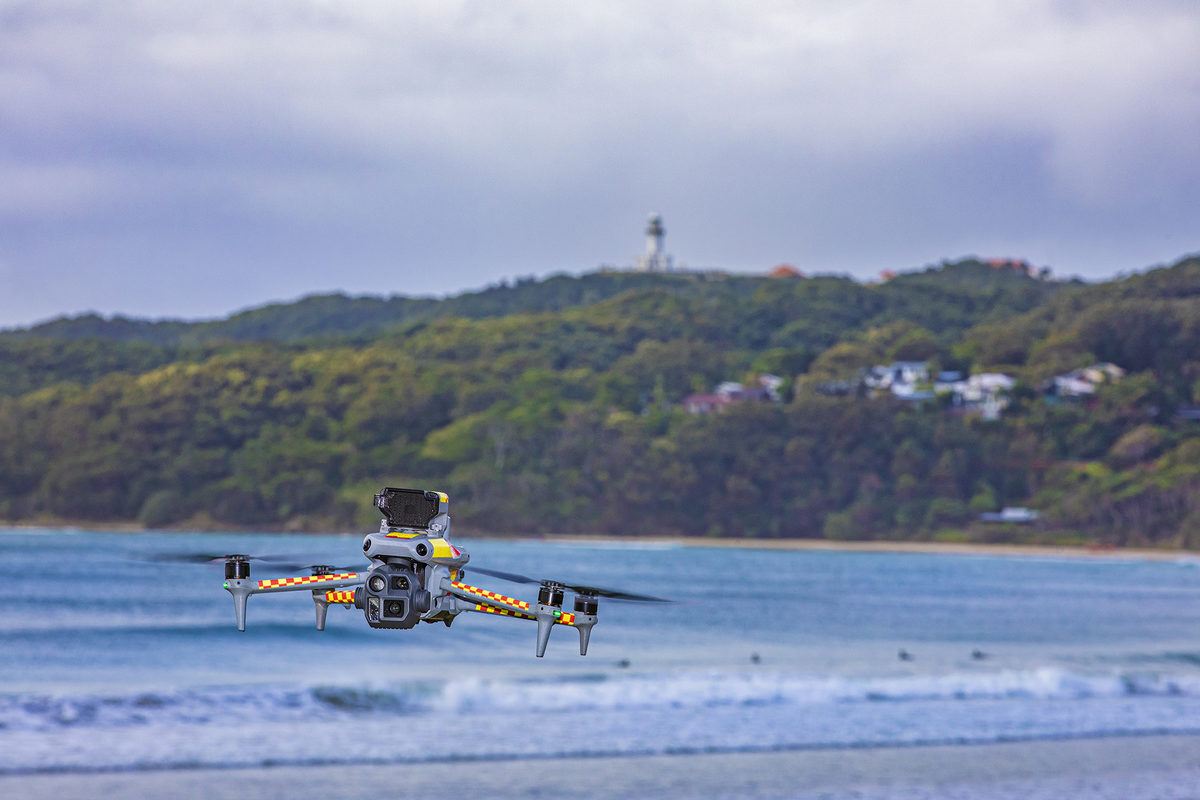
DRONES are now monitoring for sharks 365 days a year on the Far North Coast as part of Surf Life Saving NSW’s expanded shark management program, which began on 1 July.
Around 60 drone operators are currently working across the region, which stretches from Yamba to the Queensland border, with plans to recruit another 30 to 50 pilots ahead of summer.
Lennox Head-based Mark Atkins, the NSW shark management program lead for the Australian UAV Service, which is a subsidiary of Surf Life Saving NSW, said the expansion represented a major step forward.
The program previously operated from 8.45am to 4.15pm but is now running in every Local Government Area (LGA) in the region from dawn until dusk following an additional $34m investment from the NSW government.
“It’s massive for our region,” Atkins said.
“We previously flew every day of the school holidays on the NSW North Coast, with volunteer patrols on weekends, but they weren’t always available.
“Because of the warmer weather up here we do have people who swim at our beaches year-round.
“It’s great for regional employment. We had 650 applications across the state over the weekend.”
While having a Remote Pilot Licence, which allows operators to legally fly drones for commercial purposes or beyond standard recreational rules, or an Aeronautical Remote Operator Certificate is an advantage, it is not essential as training is provided.
The drones operate at Main Beach Byron Bay in the Byron Shire, Kingscliff in the Tweed Shire and Lennox Head, Sharpes Beach, Shelly Beach and Lighthouse Beach in the Ballina Shire, where the Richmond River flushes out baitfish that may attract predatory sharks.
“We would encourage people to go to the beach that has lifeguards and a drone,” Atkins said.
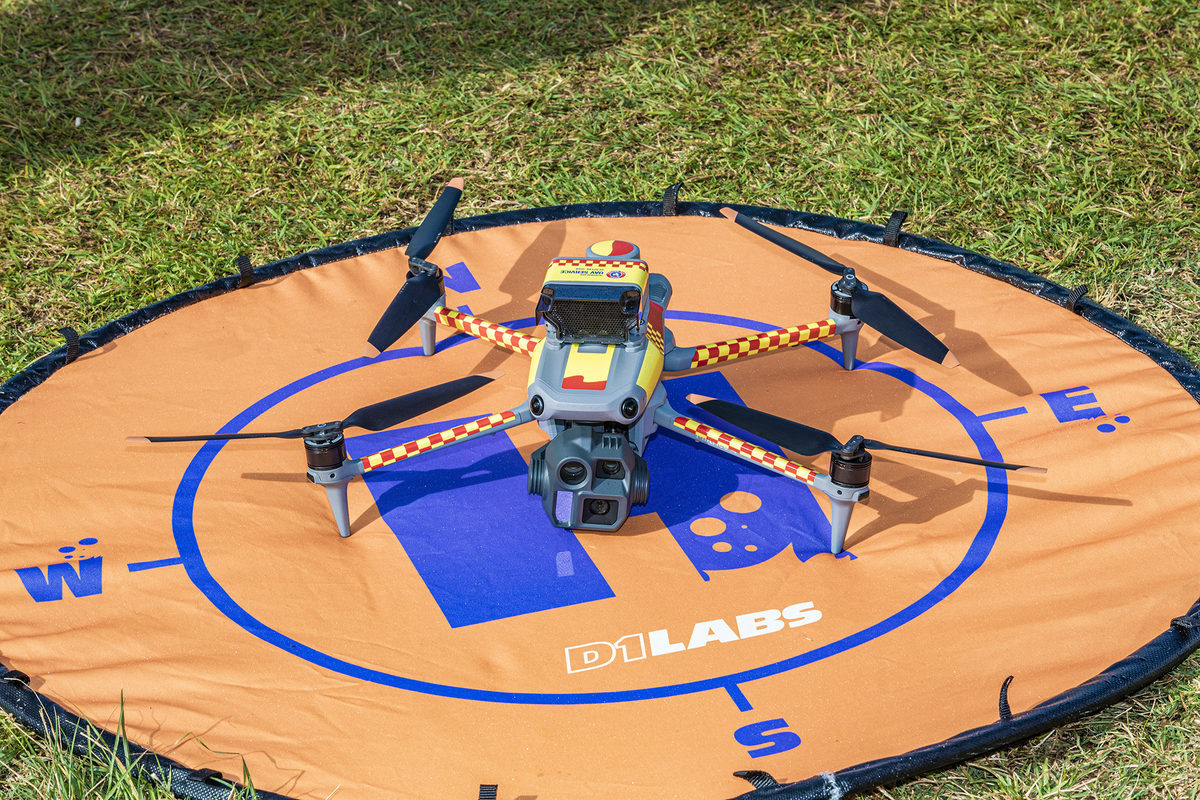
“The drones can cover a 1.2 to 1.5km stretch of beach from above and we’re out there flying two 20-minute flights an hour.
“That top-down view has the ability to see into the water column (vertical dimension of the ocean from the surface down to the seabed), so we can easily see the shark that can’t be seen from eye level from the beach and sound the alarm.
“The beaches are decided by the Department of Primary Industries, and I think the philosophy is that if you wish to swim at a beach that has a drone at least you don’t have to go outside your LGA.”
Atkins said around 500 sharks had been recorded off beaches on the Far North Coast over the past five months, but most were leopard sharks, whaler sharks and hammerheads, which do not pose a threat to humans.
But the region also sees sharks that have been responsible for unprovoked attacks on humans, including bull sharks and white sharks, as well as occasional tiger sharks.
The shark-spotting drone program in NSW officially began as a trial in 2017.
Atkins, who has a background in finance, said he moved into the role through a combination of his interests as a surfer, a photographer who used drones, and a trained lifesaver.
“It started initially with lifeguards flying drones but we quickly pivoted into having specialised drone operators,” he said.
“I don’t believe we can cover the entire coastline in the current format but I think longer term as we look into autonomous systems and AI, which we are looking at over the coming year, we can use longer range drones to do shark patrols.”
For more information, visit australianuavs.com.au
Share


Related Articles
Retirement living trends shift towards ‘right-sizing’ in lifestyle locations
A growing number of Australians are rethinking retirement, with “right-sizing”…
50 years of NAIDOC
THE NAIDOC Week Celebration Walk in Ballina marked an important…