Hand-shaped boards keep old surf craft alive
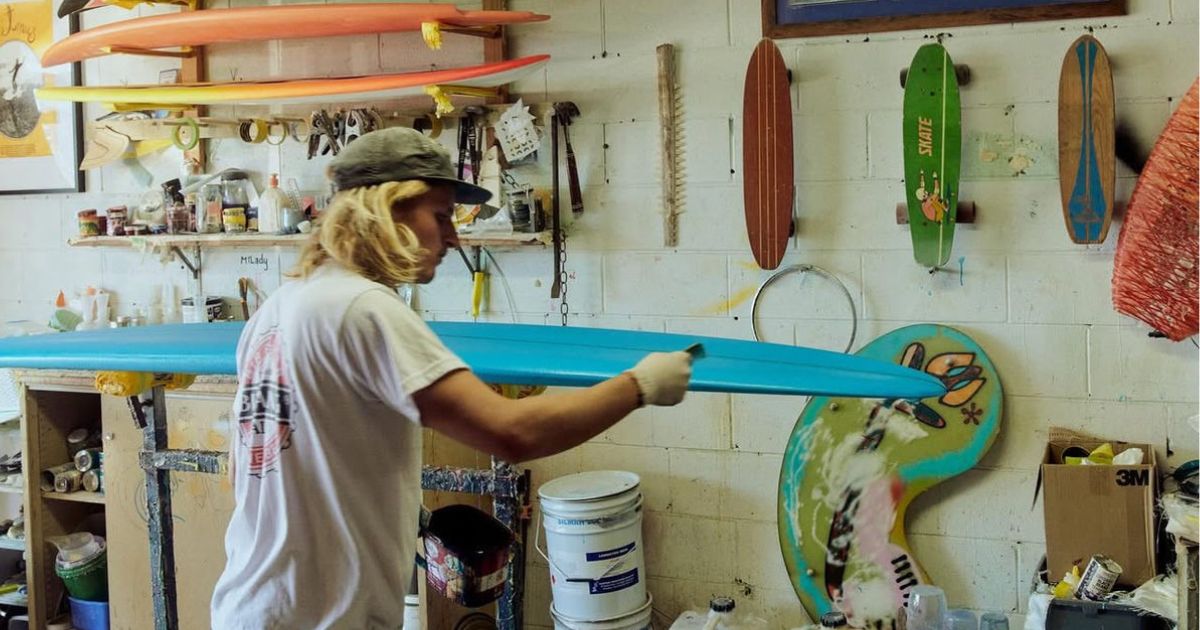
Murwillumbah surfboard shaper Flynn Larsson putting the finishing touches on one of his creations. Photo: SONNY WITTON


A YOUNG Murwillumbah surfer is keeping one of surfing’s oldest traditions alive, hand-shaping vintage-style surfboards at a time when most boards are produced by machines.
Flynn Larsson says hand-shaping is a niche but rewarding pursuit.
“I surf almost every day, and it’s always fun and rewarding to ride waves on something I made,” he said.
Larsson started his hand-shaping business Dreams in 2022 and has since crafted about 80 boards for himself and paying customers.
“The experiences you have on your boards give them a special place with you,” he said.
“You might travel with them, they might get you out of serious situations in the ocean, they might viciously attack you underwater, or they might give you the best experience of your life.”
Larsson says each board has its own personality.
“They’re my babies,” he said.
“Some of them are deformed and strange, but I love them all.”
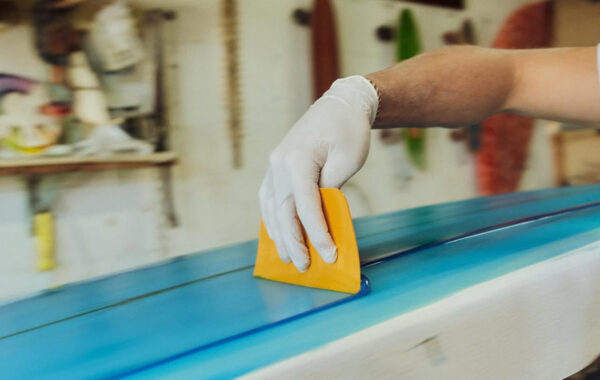
He focuses on vintage designs inspired by the 1970s, which he says are becoming harder to find.
“I like to make and ride old designs because no one else is going to do it for me,” he said.
“Old designs provide feelings that new designs don’t, and vice versa.”
Larsson is critical of modern factory-made boards, saying individuality is central to good design.
“These modern boards aren’t personalised — just popped out to make money,” he said.
Hand-shaped surfboards are crafted using tools such as planers, sanding blocks and handsaws, while factory boards are typically cut by computer-controlled machines using digital templates.
Larsson said working directly with a shaper offers surfers a more personal experience.
“It’s a cool experience personally talking to a professional shaper to have a board made to suit your own needs, rather than simply picking one out from the 100 replicated boards made for the modern pro surfer in a store,” he said.
He said the shaping process begins with a feeling.
“Technically, I’m riding my imagination,” he said.
“You imagine and design what you want to ride and feel with the board.”
Larsson describes hand-shaping as a labour of love despite the time and effort involved.
“After a long day getting foam dust in your eyes, it’s incredibly satisfying to finally see your imagination come to life,” he said.
He said one of the most rewarding moments was watching a close friend surf Hawaii’s Pipeline on one of his boards.
“That wave is seriously consequential — not the place for a board you can’t trust,” he said.
“It was so fulfilling to see my friend ride waves he’ll probably never forget, on something I made with my hands.”
Larsson said shaping is a lifelong learning process and credits fellow shapers for helping him develop his craft.
“Adam Lane first showed me the ropes, and I’ve since drawn great inspiration from people like Andrew Kidman, Wayne Deane, Glen Winton and Ralph Riddell,” he said.
“Surfing is an artistic sport, and it so follows that local hand-shapers should be supported in their crafts.”
Share


Related Articles
Press Council celebrates 50 years
The Australian Press Council is marking its 50th anniversary by…
Community memorial honours lives lost in marine rescue tragedy
MARINE Rescue NSW hosted a community memorial service honouring boat…