How Bertie the one-eyed miniature schnauzer is helping people heal
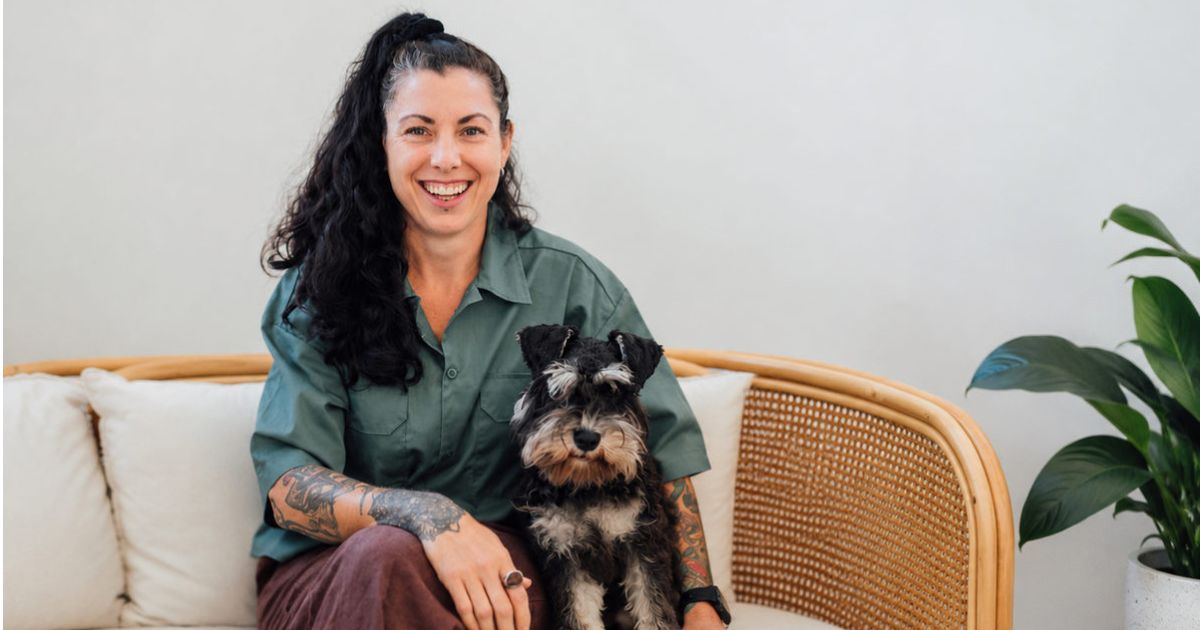
Ursula Adams and Bertie the miniature schnauzer. Photo: Philippa Bartley.


WITH his wagging tail, gentle nature and one bright eye, Bertie the miniature schnauzer has become an integral part of a Murwillumbah counselling practice.
Bertie accompanies owner and counsellor Ursula Adams during sessions with individuals and couples, offering quiet companionship that helps many clients feel at ease before difficult conversations begin.
“Starting counselling can feel intimidating,” Adams said.
“You’re often walking into a room with someone you’ve only just met and being asked to talk about some of the most vulnerable parts of your life. That’s a big ask.
“When Bertie is present, the atmosphere seems to soften.
“Clients naturally reach down to pat him, smile, or laugh as he quietly wanders over for a cuddle.
“It gives them something comforting to focus on, rather than feeling like they have to maintain constant eye contact with their therapist which can feel overwhelming when you’re opening up emotionally.”
Adams said Bertie entered her world around the same time she began her counselling practice, and the pair had since formed a close bond.
“Fast forward nearly two years, and Bertie has completely stolen my heart,” she said.
“He’s a playful, affectionate, sociable and incredibly calm one-eyed miniature schnauzer.”
“Although he only sees the world through one eye, you’d never know it.
“His missing eye certainly doesn’t stop him from living life to the fullest or greeting every person he meets as though they’re his new best friend.”
Adams said Bertie’s calming presence has quietly transformed the atmosphere of the counselling room.
“While Bertie certainly isn’t the therapist, he complements the counselling process beautifully,” she said.
“His presence helps many clients feel calmer and more connected, allowing them to engage more openly in therapy and access difficult emotions with greater confidence.”
The experience, Adams said, aligns with growing research into animal-assisted therapy, which has found interactions with calm, well-trained animals can help reduce stress and anxiety, support emotional regulation and create a greater sense of safety alongside traditional counselling.
“Research continues to show that animal-assisted therapy can reduce anxiety, lower stress, increase feelings of safety and support emotional regulation,” Adams said.
“Dogs have an incredible ability to reduce feelings of isolation, increase a sense of safety and provide unconditional companionship, particularly for those who have experienced adversity or trauma.”
Adams said a dog’s unconditional companionship and acceptance can be especially meaningful for people experiencing anxiety, depression, grief, trauma or loneliness.
“They don’t care what job you have, what mistakes you’ve made, what you’re wearing, or what kind of day you’ve had,” she said.
“There’s something profoundly healing about being loved without needing to earn it.”
For clients who struggle with vulnerability, Bertie also helps break down barriers.
“His quiet, gentle presence creates an atmosphere that feels less formal and more human,” Adams said.
“Sometimes Bertie says more without saying anything at all.”
Watching those interactions has also reshaped Adams’s understanding of healing.
“One of the greatest lessons Bertie has taught me is just how healing safe relationships can be,” she said.
“I’ve watched people smile on days they thought they couldn’t. I’ve watched anxious bodies soften. I’ve watched children find their confidence and adults find moments of peace.
“Healing doesn’t always happen through big breakthroughs.”
“Sometimes it begins with something much simpler – a quiet moment, a gentle paw, a wagging tail, and the comforting reminder that you’re not alone.”
Share


Related Articles
Scholarship helps carpentry student in ongoing struggle to rebuild flood-damaged home
NIMBIN resident Hamish Webster has been rebuilding his flood-damaged home…
Lismore community encouraged to nominate for 2027 NSW Women of the Year Awards
RESIDENTS across the Lismore electorate are being encouraged to recognise…