Invasion of the bots: Humanoid surprises tourists at Cape Byron
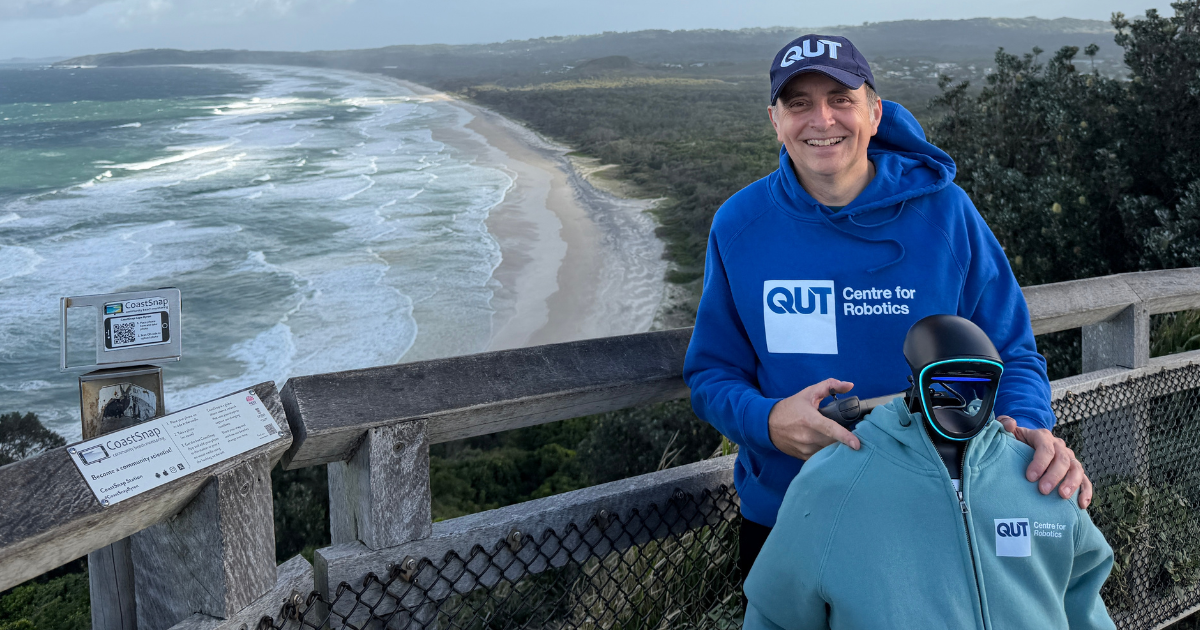
Professor Jonathan Roberts with QUTie at Cape Byron. Photo: QUT


Tourists and joggers at Cape Byron Lighthouse got more than just scenic views on Thursday afternoon when they encountered a robot on site.
The small humanoid robot, known as QUTie, is the newest member of Queensland University of Technology Centre for Robotics and is designed to help researchers better understand human-robot interactions.
Robotics professor Jonathan Roberts said he had been attending the Metricon 2026 Love of Design Summit at Elements of Byron resort with his colleague associate professor Müge Belek Fialho Teixeira.
“She had never been to Cape Byron Lighthouse before and the robot was in the back seat of the car so we took it to the lighthouse to have a look and take some photos,” he said.
“When we were at the lighthouse there were probably around 20 people up there. Of course they were all taking photos. The national parks ranger said they think it’s the first robot at the lighthouse and they might write it up in their newsletter.”

QUTie is a 130cm tall Unitree G1 robot with impressive agility that enables researchers to program it to mimic human movements ranging from walking and running to dancing and rolling.
It arrived in Brisbane late last year as a blank canvas, and researchers at Queensland University of Technology have been busy preparing it for community deployment as part of their human-robot interaction research.
“At the conference my colleague was talking about digital fabrication techniques and the future of building and I was there to show off humanoid robots that might potentially build houses but also for people to think about if these things start living in our houses how we need to build them,” professor Roberts said.
“The bottom line is that these robots aren’t useful yet but in they will be in maybe five years, definitely ten years. It’s a good time for people to start thinking about how they want to use them. Everybody seems to want them to help do the housework but they could also be used to do domestic chores in aged care homes and industries like health and manufacturing.”
Professor Roberts said that when researchers take QUTie out into the community, it is fascinating to observe public reactions. Young children are often scared and hide behind their parents’ legs, while older people tend to be the most accepting.
“Some people will be excited to see a humanoid robot and will want to meet QUTie and take a quick selfie and ask questions,” he said.
“Other people will be cautious and only observe from a distance. And some will just keep scrolling on their phones and pay no attention. All of these reactions are part of why we take QUTie out into the world. Every interaction, whether it’s excitement or apprehension, will guide our future research.”
QUTie will also be a special guest at this year’s QUT Open Day on 26 July.
Share


Related Articles
Scholarship helps carpentry student in ongoing struggle to rebuild flood-damaged home
NIMBIN resident Hamish Webster has been rebuilding his flood-damaged home…
Lismore community encouraged to nominate for 2027 NSW Women of the Year Awards
RESIDENTS across the Lismore electorate are being encouraged to recognise…