New lung cancer treatment in Tweed
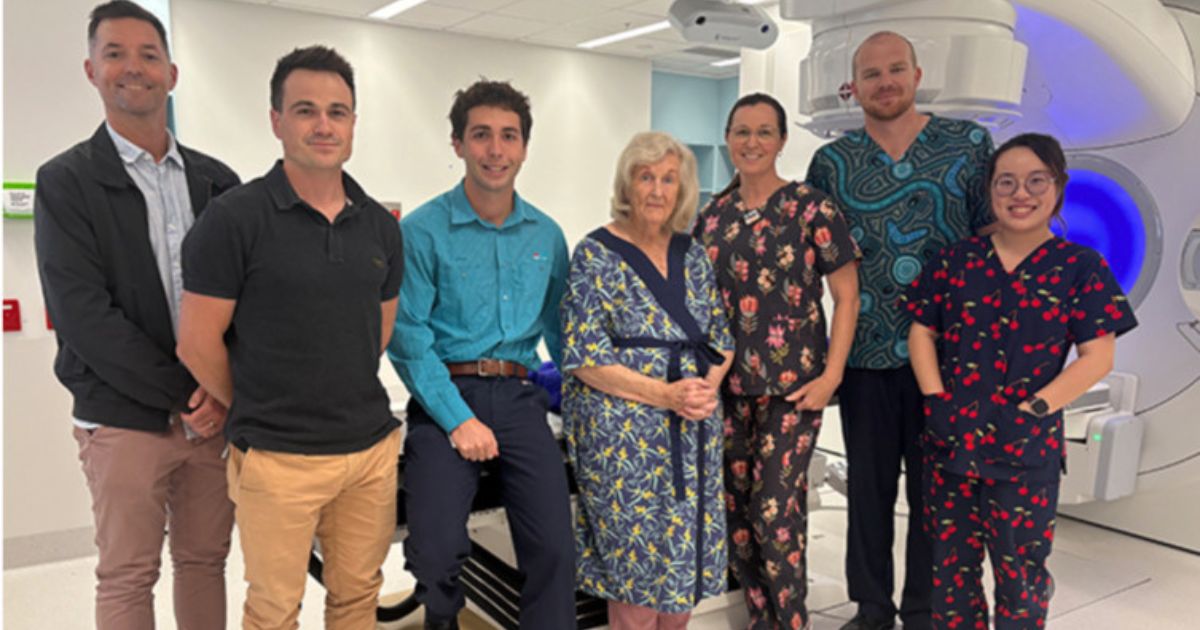
Members of Tweed Valley Hospital's Radiation Oncology team with Adrienne Ablett, the first patient to undergo SABR lung treatment at the hospital. (L-R) Pete Neville, Myles Spalding, Chase Hadenham, Adrienne Ablett, Michelle Kay, Dean Robb and Vanessa Pang. Photo: SUPPLIED


NEW cancer care has begun at Tweed Valley Hospital, reducing selected lung cancer patients’ radiation sessions from around 30 to just a few.
The radiation oncology team, led by senior radiation therapist Siobhan Burke, medical physicist Myles Spalding, and radiation oncologist Dr Carmen Hansen, successfully treated its first patient with Stereotactic Ablative Body Radiotherapy (SABR) in September.
The treatment is now considered standard care in many radiation oncology departments, and the Tweed Valley Hospital’s advancement significantly reduces treatment time while maintaining positive outcomes.
Director of cancer services and innovation Stephen Manley said the team’s efforts were strongly supported by many other staff and colleagues at Lismore Base Hospital.
“This is a huge achievement by the team across the district to enable safe, high-quality radiotherapy at TVH with a single linear accelerator (LINAC),” Manley said.
“This type of therapy has been flagged for huge growth with the commencement of the National Lung Cancer Screening Program.
“This projects a higher rate of referrals for curative lung cancer therapy as the screening program grows.”
Single LINAC sites are challenged by delivering SABR due to the clinical expertise required to safely complete the planning and independent quality assurance activities.
The quality assurance requirement processes also limit normal clinical operations within the working day.
Manley thanked all involved and said the program reflected the calibre of the team.
“The multidisciplinary team across TVH and Lismore has demonstrated an excellent commitment to innovation and optimal service provision to our communities by providing a broad suite of services to reduce unnecessary outflow to SEQ that impacts patient experiences, outcomes, and out-of-pocket expenses,” he said.
“This achievement marks another step forward in delivering high-class cancer care closer to home for our patients.”
Share


Related Articles
Gordon Ramsay-trained chef Elizabeth O’Brien takes over at refurbished Crystalbrook Resort restaurant
SHE honed her skills at the local RSL and worked…
Tumbulgum’s century-old hall stands strong after repeated floods
MORE than a century after locals built Tumbulgum Hall, the…