Tumbulgum’s century-old hall stands strong after repeated floods
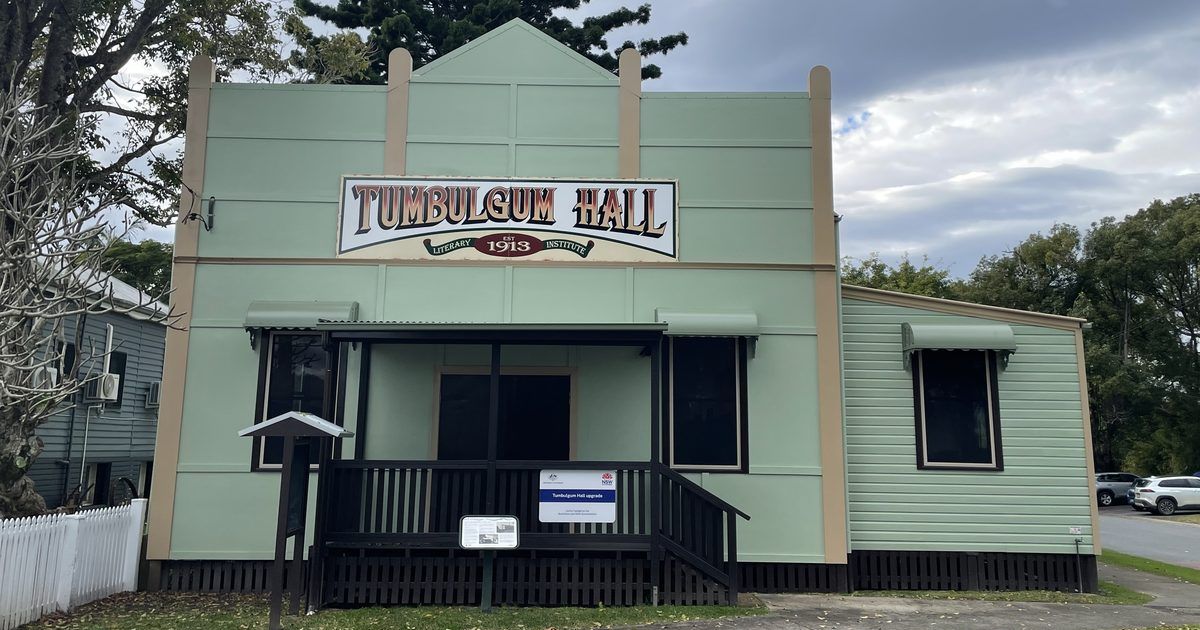
The historic Tumbulgum Hall. Photo: Pancho Symes.


MORE than a century after locals built Tumbulgum Hall, the historic building is once again bringing the community together after the 2022 floods, highlighting the resilience of both its traditional craftsmanship and the generations of memories it holds.
Chapter three of Tweed Shire Council’s seven-week flood resilience media series, Facing the River, highlights the restoration journey of Tumbulgum Hall as part of a focus on community hubs across the Tweed. The building is one of a network of halls and centres strengthened and made more accessible through the Community Assets Program, jointly funded by the Australian and NSW governments.
Opened in 1913 after residents raised the funds and built it themselves from local hardwood, the hall has weathered multiple floods, including the 2022 disaster when 1.2 metres of floodwater swept through the building.
For Tumbulgum Hall Committee president Jennifer Kidd, the survival of the hall speaks to both its construction and the community’s enduring connection to it, as she recalled the damage left behind after floodwaters receded.
“Even though it’s an inside space, the flood water deposits lots of silt inside the hall and the furniture, in the last two floods that I’m aware of, got picked up and the bench seating was stacked on itself like pick-up sticks,” she said.
“So the water is powerful, even though it’s in the hall, which shows an old timber building made out of good local hardwood can be very resilient.”
Despite repeated inundation, she said the original hardwood floor never buckled during the last two floods.
“This is very dense local hardwood and because it’s old hardwood and it’s dense, we’ve had no cupping of the floors – I think the planks themselves are quite thick – but we’ve never had any cupping of the floor in the last two floods that I’m aware of,” she said.
For Jennifer, the hall remains a living record of the community it has served for generations.
“I think when we talk to the community, as well as being able to look forward and want to look forward to a better life, we don’t want to give up everything,” she said.
“I have people ringing me up to tell their stories and why they’re going to hire the hall, because they’ve got memories of school events here, weddings, children’s parties…”
The resilience of the hall also proved vital to the community’s immediate recovery after floodwaters receded.
Tumbulgum Recovery Centre coordinator David Kidd said volunteers cleaned large volumes of mud from the building, dried the century-old timber floors with industrial fans and transformed the hall into the village’s recovery hub within about 24 hours.
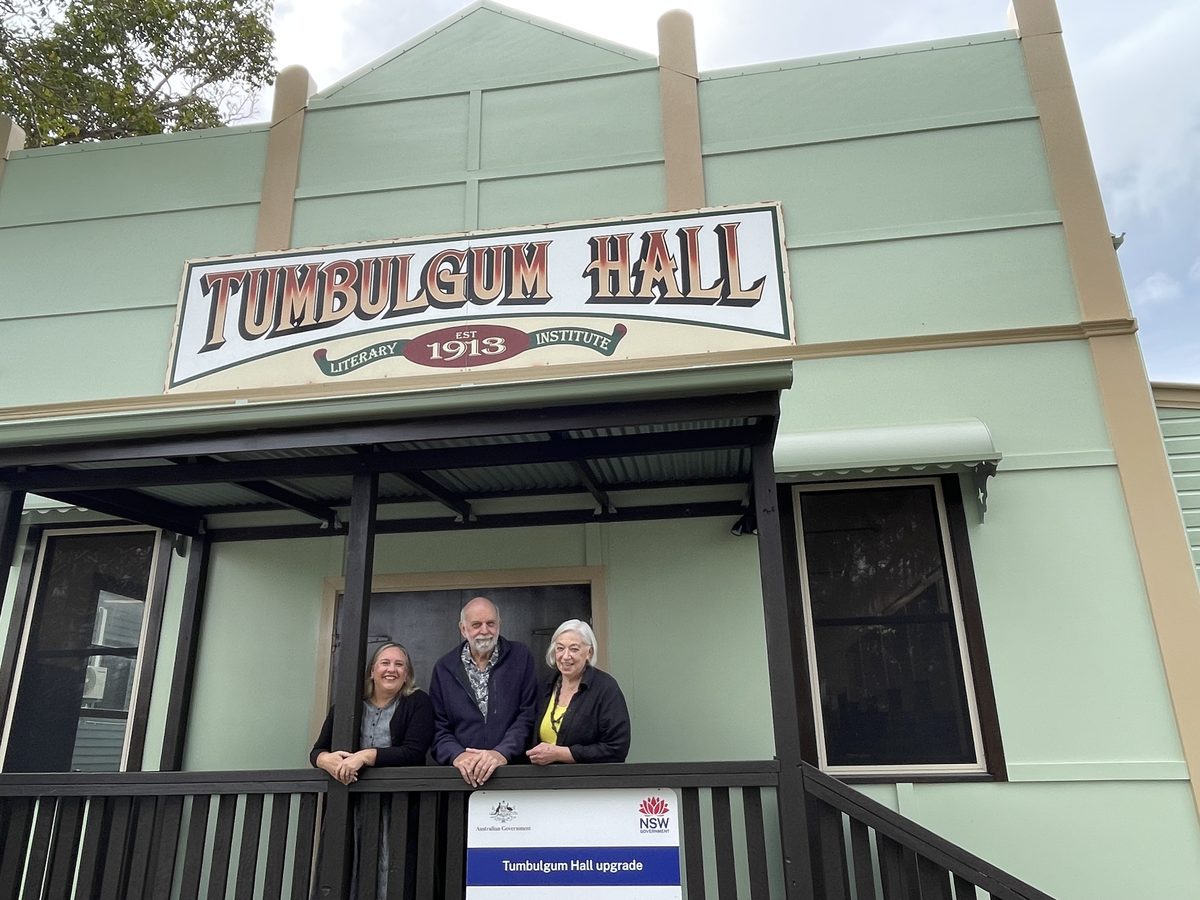
“We managed it in pretty much 24 hours with a whole group of volunteers, including putting big fans in to dry the floor,” David said.
“Once the hall was in suitable condition, we could bring the donations in.”
Rows of tables quickly filled with donated cleaning products, household goods, bottled water and other essential items, while residents also came in simply to spend time with others in the same situation.
“It meant that if someone needed something for their clean-up, or just needed a break, they could come along,” he said.
“Part of it was having a chat with other people in the same boat.”
Living beside the river, he said, can present the Tumbulgum community with two very different realities.
“Living on the river is a scenic thing – people see it as a positive, having their homes right there,” he said.
“Most of the time it’s calm and soothing. But it has a hidden edge.
“The river can rise at different times and at different rates, and that causes real anxiety, and real flooding.”
While the recent restoration included a new roof, gutters and windows, as well as upgraded lighting and repairs to some structural timber, the project was designed to preserve the hall’s heritage while preparing it for the future.
The council’s manager of inclusive and creative communities, Shannon Carruth, said community halls hold generations of local history that must be protected.
“The history of this particular building, from 1913, there’s a lot of family stories and community stories in these buildings and it’s important that we preserve that,” she said.
“These halls are a great testament to the longevity of the old ways and I think it is a metaphor for the resilience of the community too.”
Carruth said the restoration also focused on strengthening resilience and improving accessibility.
“Two key elements that we’ve been considering across all of our community hall upgrades is first making it more resilient to future weather events, and secondly making it more accessible to more people,” she said.
Share


Related Articles
Children’s Ward receives new phototherapy lights
LISMORE Base Hospital’s Children’s Ward has received two new phototherapy…
Art exhibition to highlight end of an era at town and gown event
THE annual Lennox Head Lions Town and Gown Art Exhibition…