SCU researcher helps uncover air-cleaning microbes in tree bark
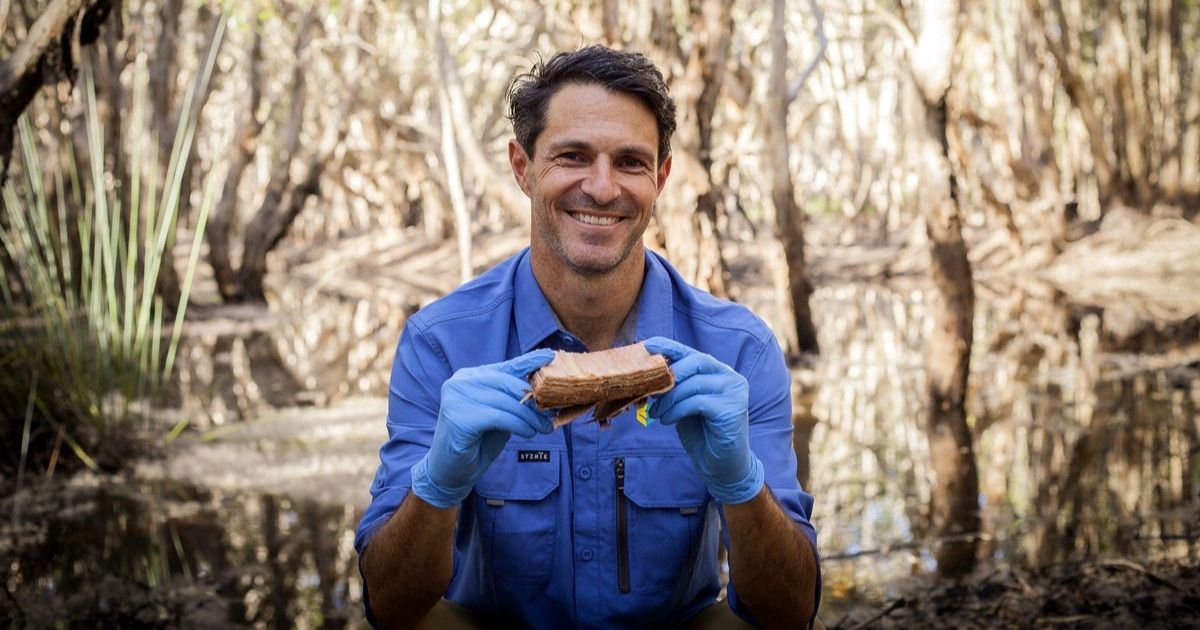
Dr Luke Jeffrey of Southern Cross University holds a bark cut-out from a wetland tree in the Tweed region. Photo: L JEFFERY


SOUTHERN Cross University researcher Dr Luke Jeffrey is part of a team that has discovered microbes living in the bark of trees that help remove greenhouse and toxic gases from the air.
The researchers spent five years sampling trees across eastern Australia, including wetland, upland and mangrove forests between Cabarita and Pottsville.
Using advanced genomic and biogeochemical techniques, the team was able to identify, for the first time, the types of microbes living in tree bark and determine their capabilities and activities.
It found the bark of trees host diverse and abundant microbial communities capable of modulating climatically important gases, including methane, hydrogen, carbon monoxide, and multiple volatile organic compounds.
The study was conducted primarily by Dr Bob Leung from Monash University’s Biomedicine Discovery Institute, with Dr Jeffrey working in Southern Cross University’s Faculty of Science and Engineering.
“Each tree hosts trillions of microbial cells in its bark,” Dr Leung said.
“Yet their existence and roles have been overlooked for many decades until now.
“Remarkably, most of these microbes are tree-adapted specialists that feed on climate-active gases.
“They consume methane, hydrogen, carbon monoxide, and even volatile compounds released by the trees themselves.”
Professors Chris Greening and Damien Maher were also involved in the research and said the findings had significant long-term potential for climate action, with benefits for both environmental and human health.
Dr Jeffrey said the scale of the hidden process was staggering.
“Counting all trees on Earth, the total global surface area of bark covers an area roughly the same as all seven continents combined,” he said.
“This microbial activity across this massive ‘bark continent’ is potentially removing millions of tonnes of climate-active gases every year.
“These gases can come from the atmosphere or from within tree stems.
“By consuming these unwanted gases, microbes in bark are essentially cleansing our air and enhancing the benefits of trees in multiple ways.”
Share


Related Articles
Children’s Ward receives new phototherapy lights
LISMORE Base Hospital’s Children’s Ward has received two new phototherapy…
Art exhibition to highlight end of an era at town and gown event
THE annual Lennox Head Lions Town and Gown Art Exhibition…