Understanding ADHD and autism in women
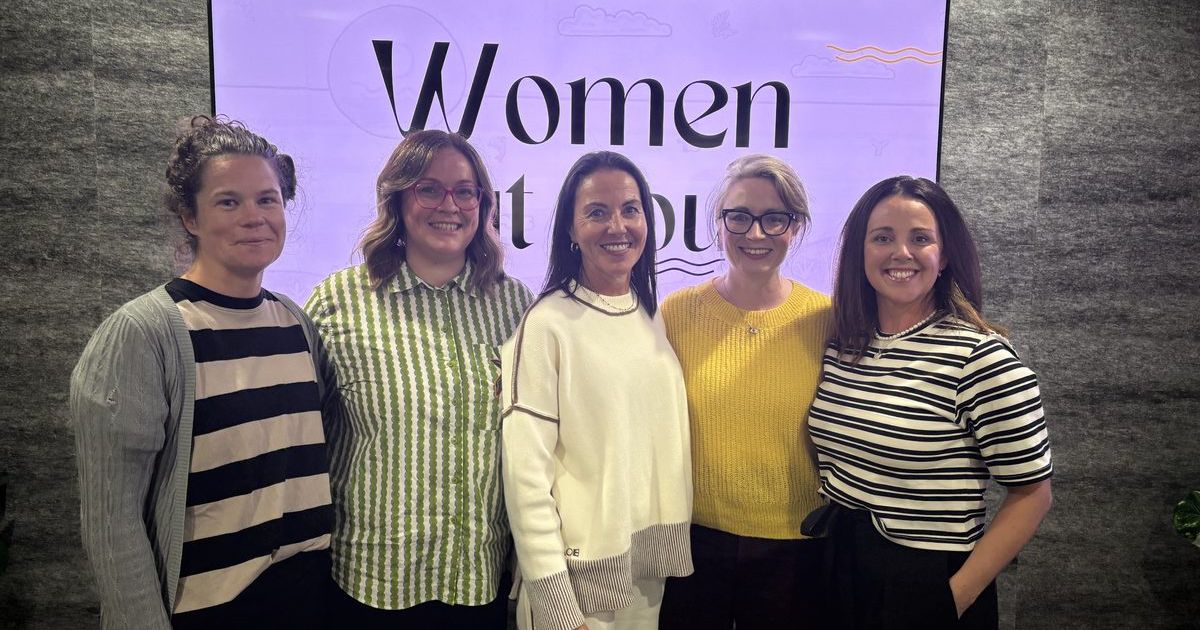
Courtney Weybury, Wren Wilson, Melissa McKeegan, Dr Niamh Logue and Amy McElgunn discussed the realities of neurodivergence in women.


MORE women are learning what it means to be “wired a little differently,” and they’re ready to be heard.
In a recent episode of Women Out Loud, podcast hosts Dr Niamh Logue and Amy McElgunn sat down with counsellor Melissa McKeegan and teacher Wren Wilson to unpack the realities of neurodivergence in women, particularly around ADHD and autism.
Wilson, a mother of two and a passionate educator, was diagnosed with autism as an adult, after her children and other family members were also identified as neurodivergent.
“I was the last to be diagnosed in my family,” she said.
“It was like the walls were coming in around me. I was doing all the things — teaching, parenting, performing — and just burning out.”
Wilson shared her experience of growing up undiagnosed, using humour and honesty to explain how she learned to mask her traits to fit in.
“I remember feeling so lost in my 20s. Your whole life you’re told you’re not good enough. Getting the diagnosis gave me permission to be kinder to myself. I wasn’t lazy. I was burnt out.”
McKeegan, a counsellor with Surf Coast Women’s Health Group, said Wilson’s story was familiar.
“Wren’s experience would encapsulate nearly every neurodiverse woman I’ve worked with,” she said.
“They come in with anxiety, overwhelm, and a sense that they’re failing. But when we start unpacking their stories, neurodivergence becomes clear. It’s often been there all along, just unrecognised.”
Dr Logue, a GP with a special interest in women’s health and neurodivergence, said the perception that ADHD is a “bandwagon” is not just wrong, but harmful.
“There’s no such thing as a bandwagon,” she said.
“Neurodivergence is a natural variation in how humans process information. It’s not a fad. It’s not new. It’s humans.”
The episode also explored the challenges of parenting neurodivergent children, the stigma around behavioural labels, and the impact of late diagnosis.
Wilson spoke about the pressures on women to appear capable and calm, despite what’s happening internally.
“We’re constantly reflecting on how to regulate, how to communicate, how to survive in a world that wasn’t designed for us,” she said.
For many women, diagnosis brings a mix of relief and grief — relief at finally understanding themselves, and grief for the years spent struggling without support.
“It’s freeing,” McKeegan said. “But it’s also emotional. It means going back and looking at your life with new eyes. It’s not about what was wrong with you. It’s about finally seeing what was always true.”
Women Out Loud is available now on Spotify, Apple Podcasts and all major podcast platforms. Follow @women_outloud for new episode alerts, resources and local events.
//SPONSORED CONTENT
Share


Related Articles
Hughes headed to Geelong to laugh off near-death experiences and ‘cooked’ injuries
ONE of Australia’s best-known comedians, Dave Hughes, will wrap up…
The next best thing
ON my continued hunt for fresh wasabi sold in Geelong,…