Enhancing Local Impact Through Strategic Community Development in Australia
Discover how community development in Australia supports social inclusion, economic growth, and sustainable local communities.


Community development in Australia has evolved into a sophisticated framework aimed at empowering local populations to improve their social, economic, and environmental well-being. This article explores the core pillars of community engagement, the role of government and non-profit sectors, and practical strategies for fostering sustainable local growth. We will examine how infrastructure, social inclusion, and economic diversification work in tandem to create resilient Australian neighborhoods. By understanding the intersection of policy and grassroots action, stakeholders can better navigate the complexities of regional and urban development to ensure long-term prosperity and social cohesion across the continent.
Understanding the Landscape of Australian Community Initiatives
The Australian approach to community development is grounded in the principle of self-determination and collective action. Whether in bustling metropolitan hubs like Sydney or remote regional towns in Western Australia, the focus remains on identifying local assets and leveraging them to address specific challenges. Effective development is not merely about top-down funding; it requires an intricate understanding of the demographic fabric and the unique historical context of the area. For instance, initiatives in Indigenous communities often prioritize cultural preservation alongside economic opportunities, ensuring that growth does not come at the cost of heritage.
- Asset-Based Recovery: Focusing on existing community strengths rather than just deficiencies.
- Stakeholder Engagement: Involving local councils, businesses, and residents in the decision-making process.
- Sustainability Goals: Ensuring projects have the longevity to support future generations without depleting current resources.
Strategic Frameworks for Regional Growth
To achieve meaningful progress, community leaders must implement frameworks that balance immediate needs with long-term aspirations. In Australia, this often involves the “bottom-up” approach where local residents drive the agenda. This methodology ensures that the community feels ownership over new projects, leading to higher engagement rates and better maintenance of public assets.
At the same time, modern communities are increasingly influenced by digital environments, particularly the rise of online platforms and services. These digital ecosystems can shape local economies, influence social behaviour, and affect overall community well-being. As a result, community leaders must factor in both the opportunities—such as increased connectivity and economic participation—and the risks, including social isolation or economic displacement, when planning future development strategies.
For those looking to better understand how to harness these dynamics, practical guidance on community-led development can be invaluable. One such resource outlines clear steps for initiating meaningful change at a suburban level, helping leaders translate grassroots engagement into structured, sustainable outcomes.
The Role of Local Government in Facilitating Change
Local councils serve as the primary bridge between state-level policy and everyday implementation. They are responsible for zoning, public spaces, and essential services that form the bedrock of a thriving community. By fostering partnerships with private enterprises and community groups, councils can stretch their budgets further and deliver more innovative solutions to housing shortages or unemployment.
- Grant Allocation: Distributing funds to local non-profits and community-led startups.
- Urban Planning: Designing spaces that encourage social interaction and physical activity.
- Crisis Management: Developing resilience plans for environmental factors like bushfires or floods.
Economic Diversification and Social Inclusion
A community’s strength is often measured by its ability to provide opportunities for all members, regardless of their background. In Australia, social inclusion is a vital part of the Community development landscape, ensuring that marginalized groups have equal access to education, healthcare, and employment. Economic diversification plays a crucial role here; a town that relies solely on a single industry, such as mining or agriculture, is vulnerable to market fluctuations. By investing in tech hubs, tourism, and local manufacturing, communities can build a “safety net” that protects residents during economic downturns.
Practical Examples of Successful Inclusion Programs
Consider the “Men’s Shed” movement across Australia, which has become a global model for social inclusion and mental health support. By providing a space for men to gather, work on projects, and socialize, these sheds reduce isolation and improve community bonds. Similarly, youth mentorship programs in urban centers help bridge the gap between education and employment, providing young Australians with the skills needed to thrive in a modern economy.
- Multicultural Festivals: Celebrating diversity to build social bridges between different ethnic groups.
- Shared Workspaces: Providing affordable offices for local entrepreneurs to collaborate.
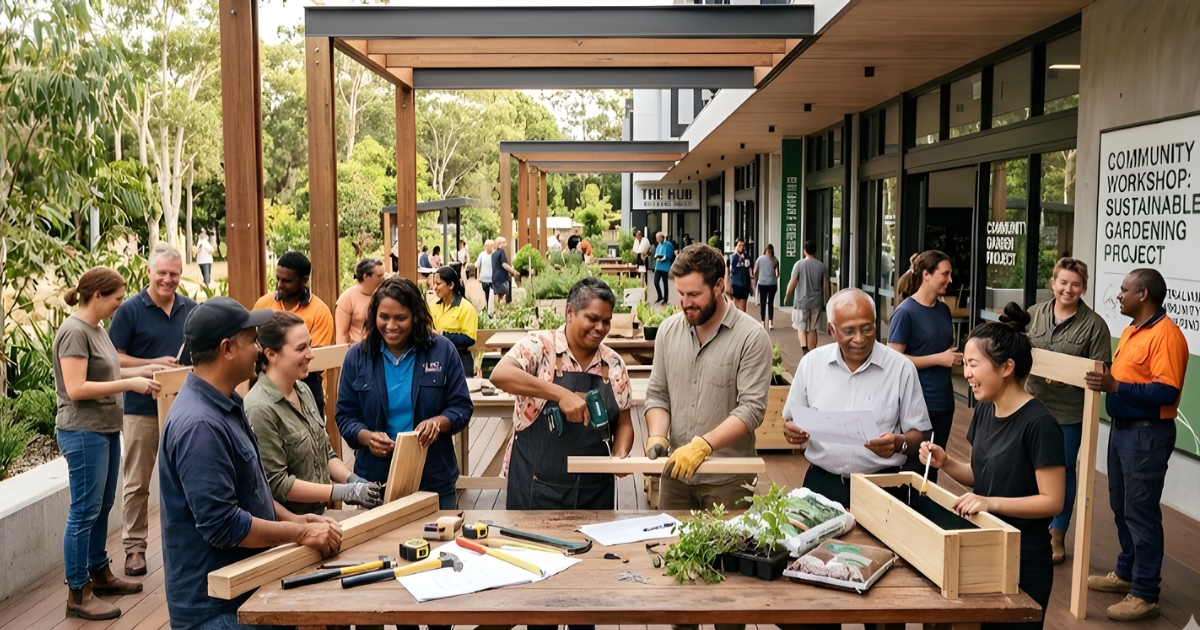
- Green Initiatives: Community gardens and solar cooperatives that lower costs and improve the environment.
Final Thoughts
Community development in Australia is an ongoing journey that requires patience, funding, and, most importantly, the active participation of its citizens. By focusing on both the “hard” infrastructure of buildings and roads and the “soft” infrastructure of human relationships and social networks, we can create environments where everyone has the chance to succeed. As we look toward 2026 and beyond, the integration of digital tools and sustainable practices will be paramount in keeping our communities vibrant and resilient.
FAQ
- What is the most important factor in community development? While funding is critical, active community engagement and “buy-in” from local residents are generally considered the most important factors for long-term success.
- How do local councils support these initiatives? Councils provide the regulatory framework, essential infrastructure, and often the initial seed funding or grants required to get community projects off the ground.
- Can individual citizens start a development project? Yes, most successful Australian community projects begin as grassroots ideas. Citizens can work with local progress associations or submit proposals to their local council to gain support.
//SPONSORED CONTENT
Share


Related Articles

Global aviation giant backs Avalon’s freight ambitions
AVALON Airport has signed a partnership with a global aviation…
Parallax performers chase grand final glory at Australia’s biggest singing competition
THREE of Geelong’s best young voices will take the stage…