Multiplicity’s beach house redefines the modern shack
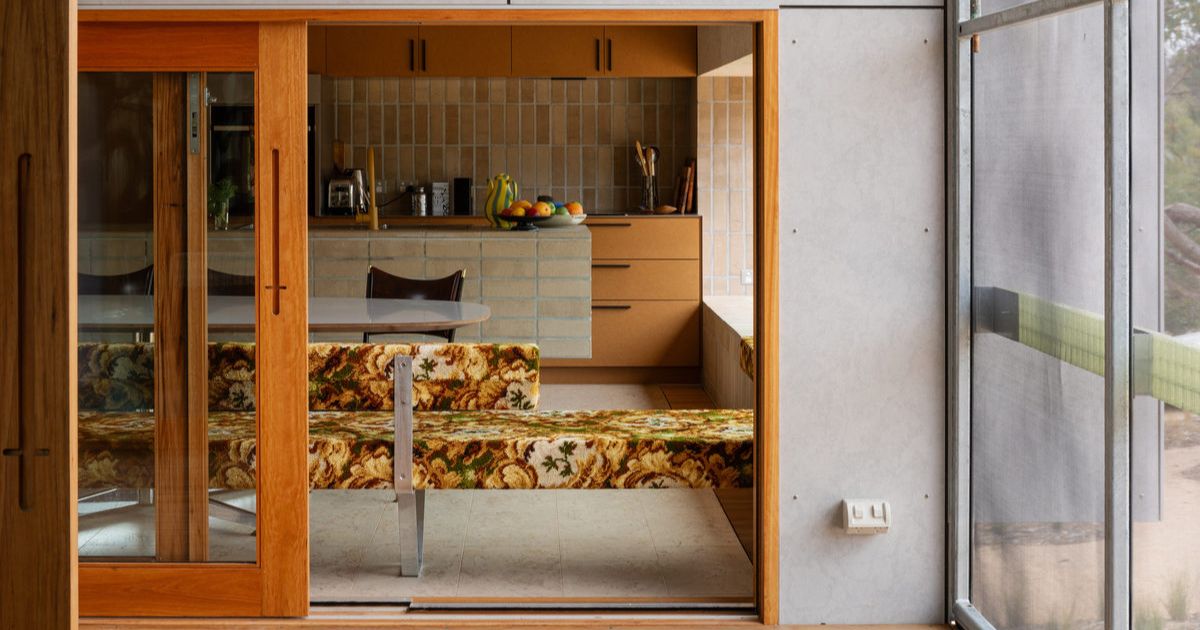
Walls have been lined with salvaged carpet, while bench seating has been wrapped in carpet designs reminiscent of the time period. RIGHT: A shell encrusted mirrored cabinet is suspended from the ceiling above a clam shell vanity in the ensuite. Photos: TREVOR MEIN


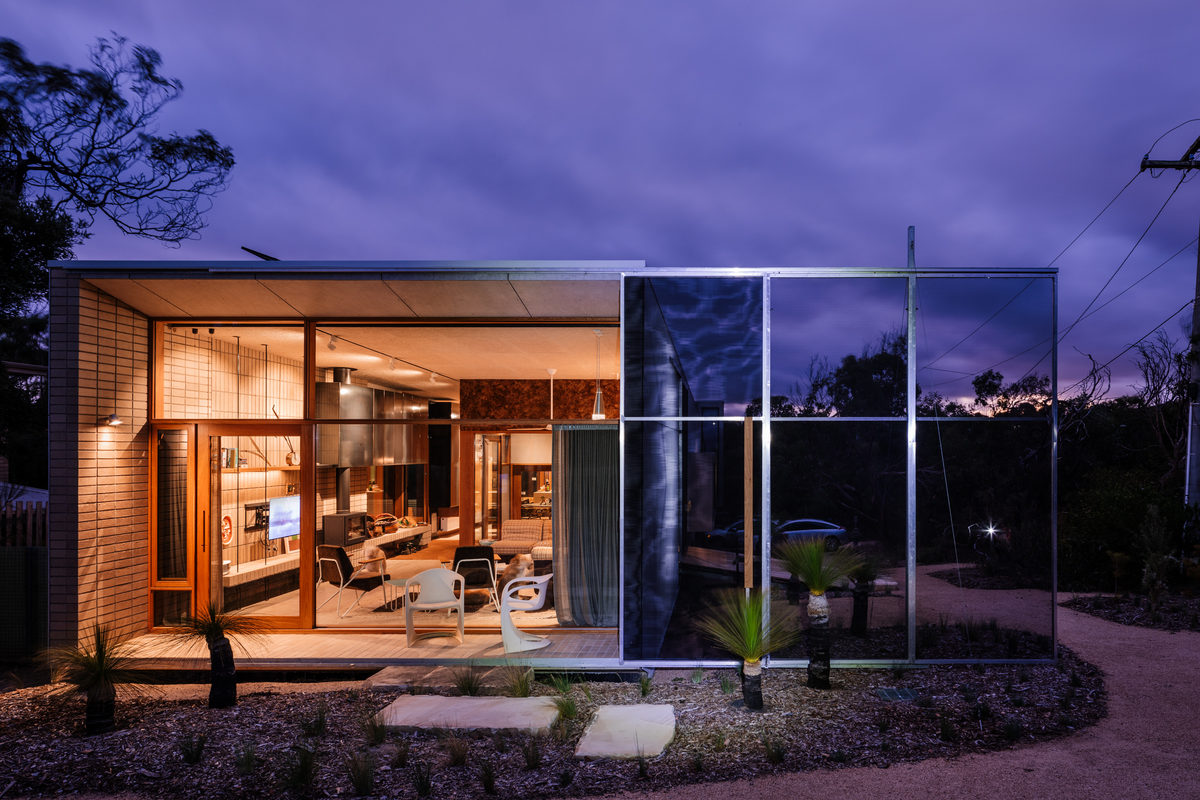
AT a five-way intersection in Aireys Inlet, She Sells Seashells meets the street with warmth and humility. It is a house conceived as a gesture of welcome.
Designed by partners in life and in work, architect Tim O’Sullivan and interior designer Sioux Clark of Melbourne firm Multiplicity, the home sits gently on its corner site, without fencing or formality, allowing the native landscape to flow uninterrupted to the street.

From a 4.5m long picture window in the kitchen, the heart of the home, you can wave to passers-by, while an associated deck, facing the street, invites conversation.
“Quite often, a house like this…they’ll try to pull it back from the street, they’ll try to be getting privacy,” O’Sullivan said.

“This house does the opposite — it embraces the street. It’s all about being friendly to your neighbours.”
The block had been undeveloped since its subdivision in the 1970s and demanded restraint.
“We didn’t want to construct something that was going to be, ‘Look at me, look at me’, and to the detriment of everybody else,” O’Sullivan said.

As much of the natural landscape was preserved as possible, with the site’s mature trees informing the design and ultimate location of the home, while a bird flight pattern, running over the block, was protected.
The surrounding landscaping, created by Mel Ogden, was also designed to avoid disturbing native wildlife and to augment the home’s natural bush setting.
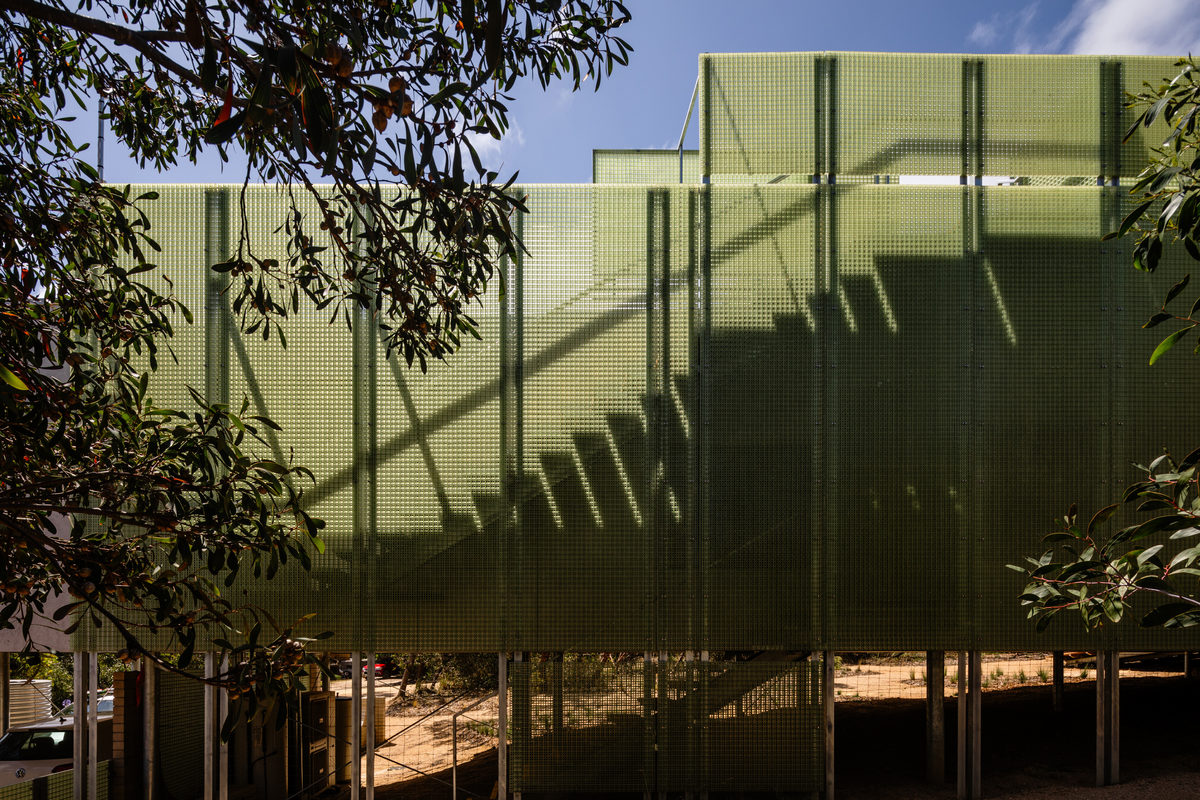
“It’s not a garden per se, it’s pulling the landscape into some sort of structure,” Clark said. “It’s about creating pathways through to the shops and through to the beach and just setting the house gently on the site.”
O’Sullivan and Clark designed the home for a long-time friend, Gabby.
The brief was simple: Gabby wanted a toilet — O’Sullivan and Clark took that as a given — a dog door and three bedrooms.
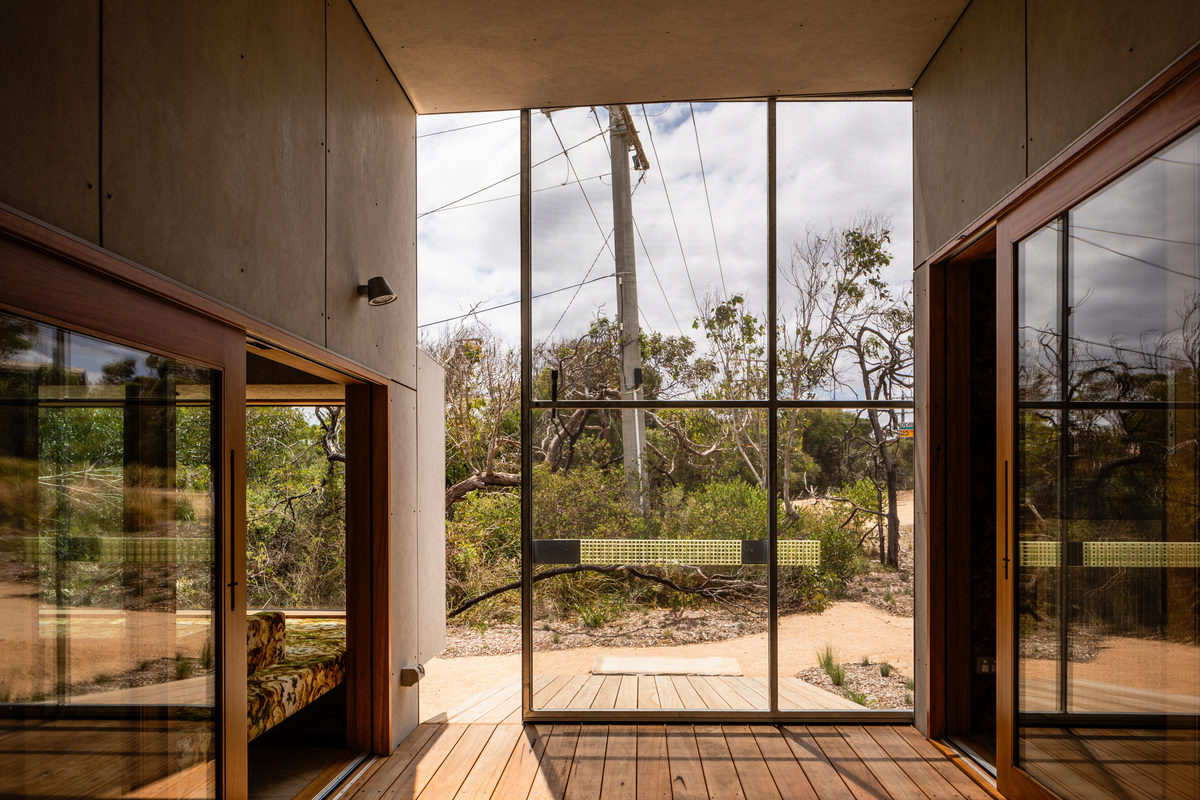
The outcome is a long, single level home. Sitting horizontal on a sloping block, the main living space rests on the high point of the site, while at the back of the block, the fall of the land allows for car parking underneath the home.
Inside, the plan revolves around a generous corridor that doubles as the home’s social spine. It runs the length of the home, pulling out in different directions.
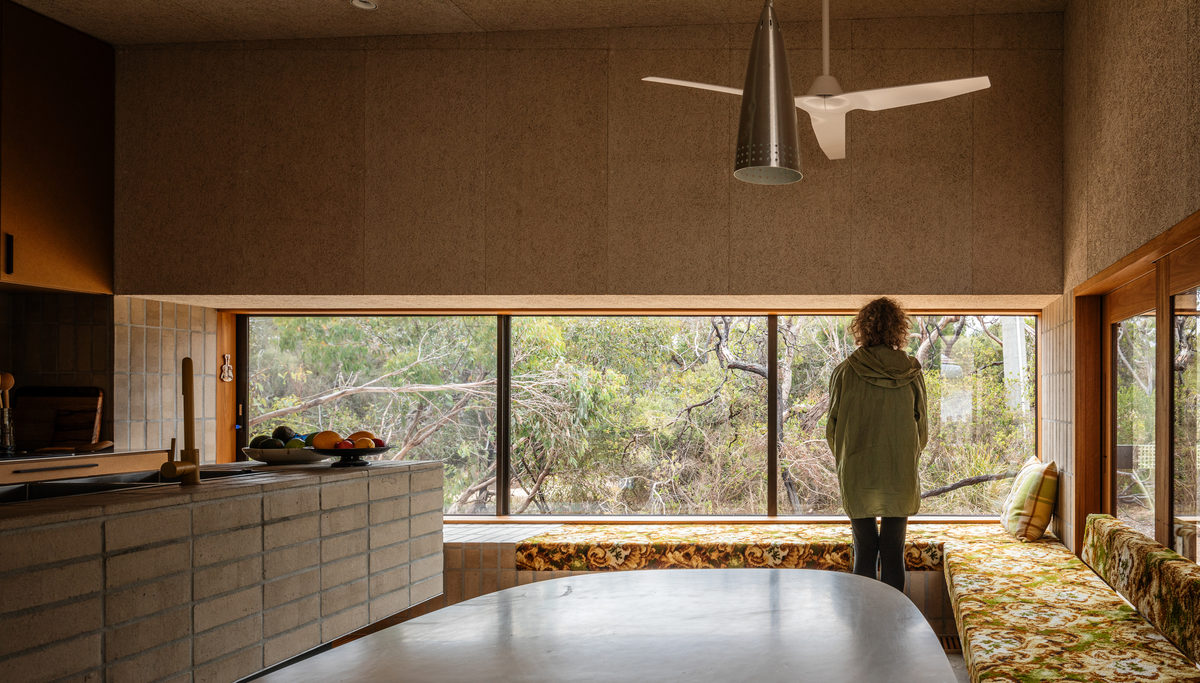
“When we say corridor, don’t think a little narrow hallway — it’s 1.3m wide at its smallest,” O’Sullivan explained.
Spaces to sit and read a book, or watch the passing clouds and shadows, have been provided for along the corridor, offering a variety of retreats that are removed from the fray but still feel close to the action.
Its long walls now form a quiet gallery, lined with the art and eclectic treasures Gabby finds in galleries and op shops.
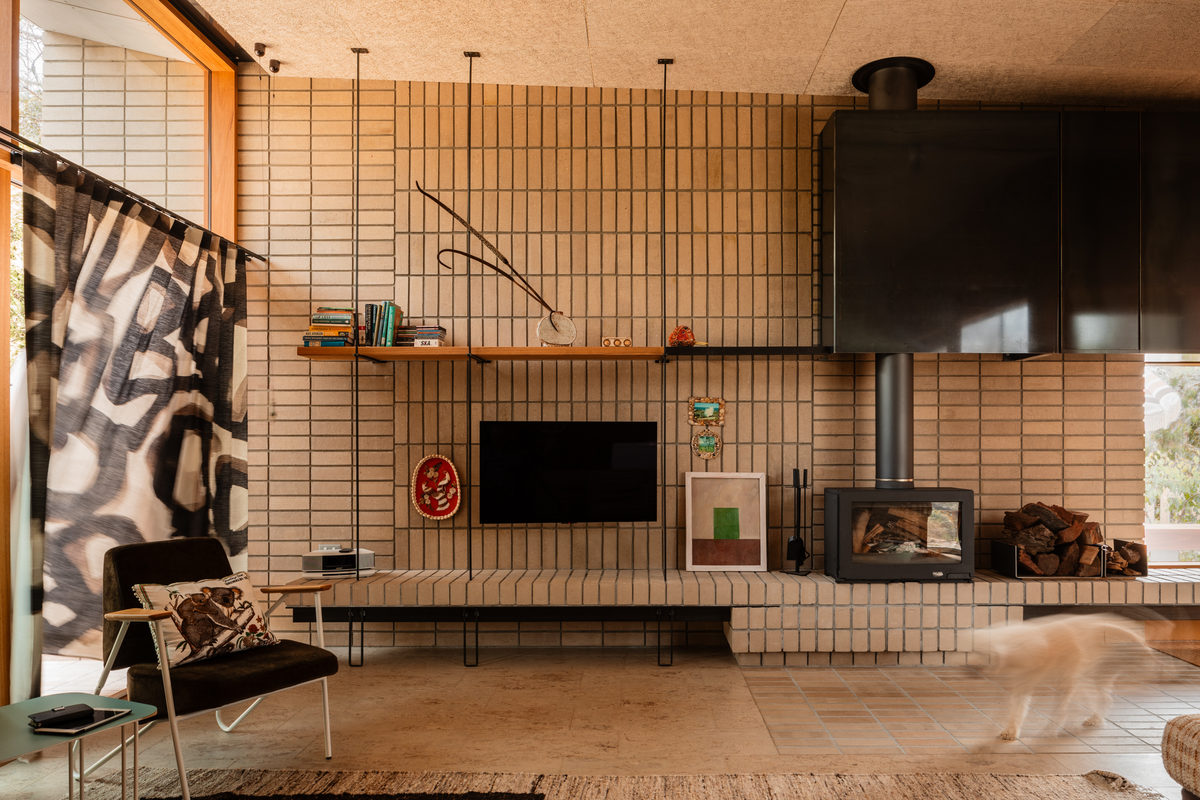
“The circulation, both pedestrian and airflow, is really important to this house, and how the corridor acts as you come and go from the house,” Clark said.
“It’s an engaging space; it’s somewhere you move through.”
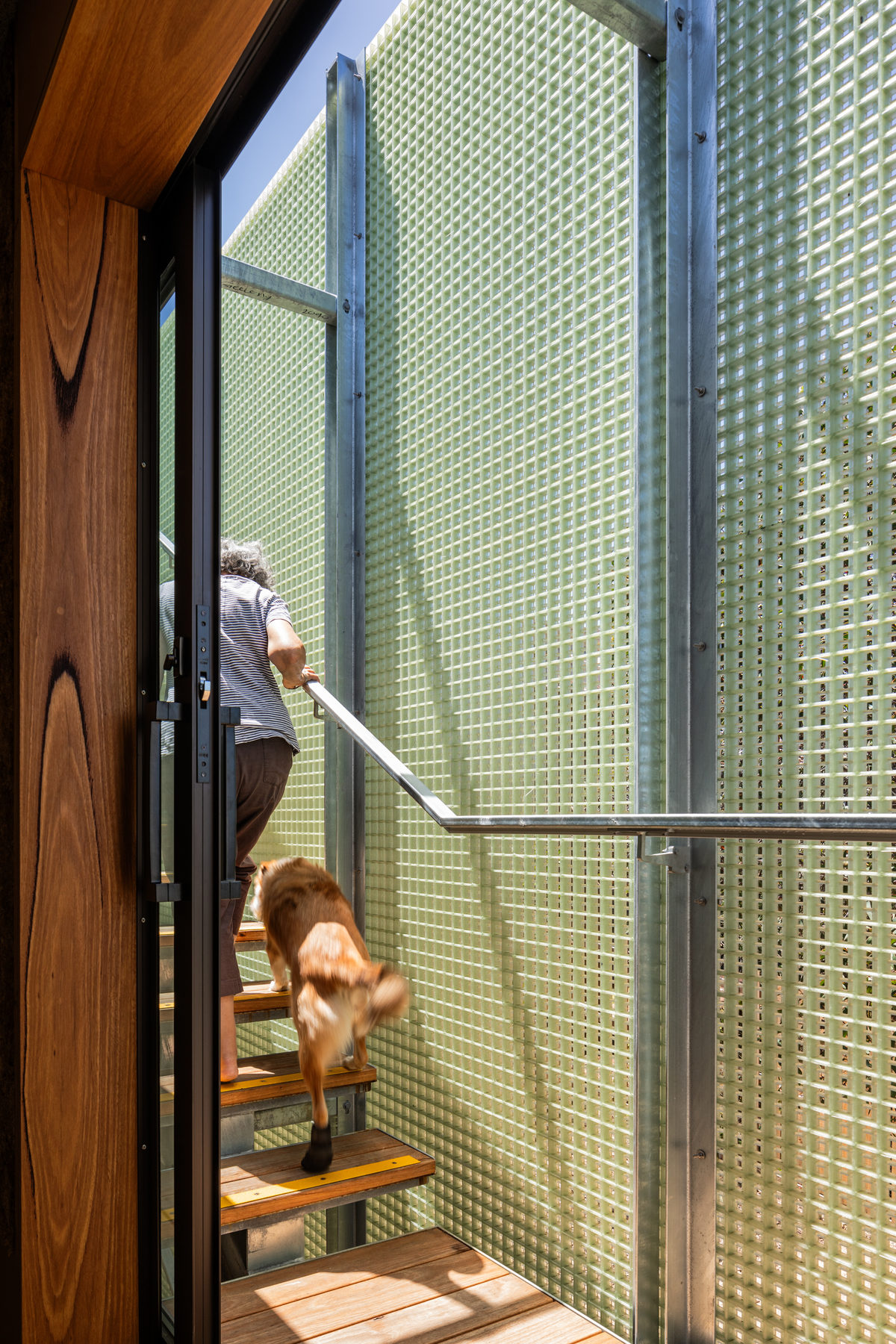
Created as a communal house, the bedrooms are intentionally small, and only the owner’s bedroom, which sits to the west of the home, at the end of the corridor, has its own ensuite.
“She wanted to create spaces so people could have privacy, but she wanted it to be an interactive house, to be fun,” O’Sullivan said. “You come down here to engage with each other.
“We don’t want people staying in their bedrooms.”
The design takes its cues from the modest fibro shacks of the 1950s and 1960s — simple, functional beach houses that defined an era of coastal living — with a distinctly modern reinterpretation.
“The nature of a beach house is somewhere other than your city house. It’s to have a different personality and character, and it’s really to force you to relax and engage with the weather and the sky, the beach and the wind,” Clark said.
Playful and unexpected details fill the home, from bedheads comprised of recycled cupboard doors to walls and bench seating covered with carpet salvaged from Facebook Marketplace.
A periscope, installed to frame the view of Split Point Lighthouse, was an experiment that went awry — the view is unintentionally upside down and is now considered an art installation.
Meanwhile, a shell encrusted mirrored cabinet is suspended from the ceiling above a clam shell vanity in the ensuite.
“The shells came into the design early,” O’Sullivan explained.
“As a young girl, [Gabby] used to collect shells, and she still had a substantial amount of her collection.”
Clark praised the work of builder David Kett and his team, based in Geelong, who were “up for everything” despite the home’s design quirks.
The home picked up two awards earlier this year at the Victorian Architecture Awards, with the judging panel praising its “immediately immersive interior”.
“Layered spaces are augmented by a supercharged palette of materials, stitched together with a looseness that is deliberate and dynamic,” the jury’s citation reads.
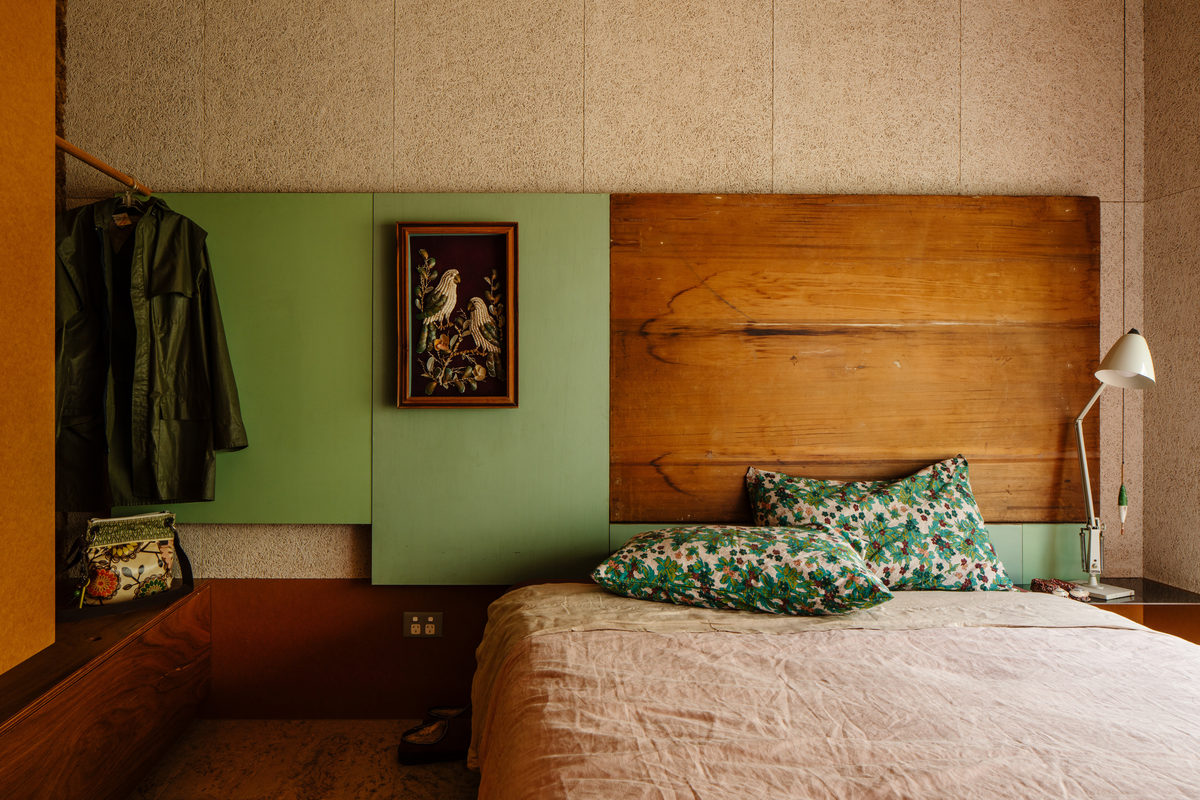
“Creative outlet is found in the most mundane moments. There is fun, care and joy in every interior detail in this experimental house.”
For Multiplicity, the recognition serves as validation it is on the right track.
“We’re a design-based architectural practice, so we’re throwing ourselves into problems and difficulties all the time,” Clark said. “We’re trying to get outcomes in all our projects that are really heartfelt, and over and above just a commission.
“We’re supposed to be not just doing a job; we’re supposed to be giving something back. I think, in the Institute Awards, it’s actually recognising projects that try to give something back to the conversation of what a house could be, and we’re proud of that.”
Share


Related Articles

Plug in and power up: how EV charging could boost your property value
WITH THE UFINANCIAL TEAM A few years ago, asking about…
All genuine offers considered: 40 Wood Road, Bellbrae
THE owners are committed to selling, presenting an exceptional chance…