Cam Mooney: Cats’ connection issues laid bare in Port Adelaide reality check.
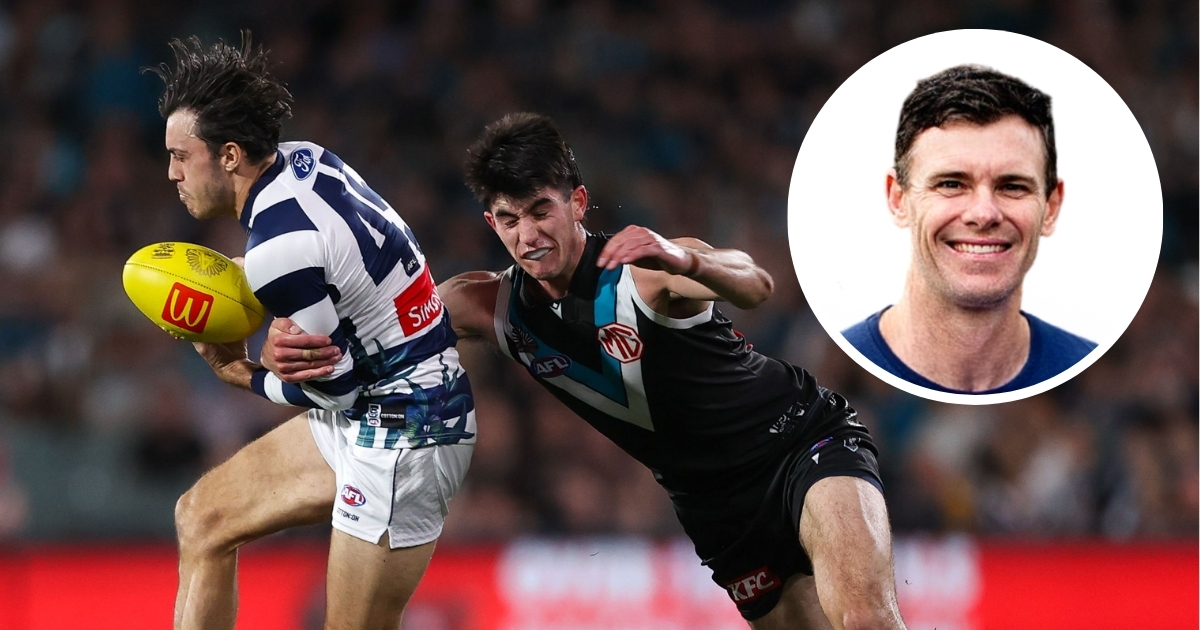
Photo Caption: Brad Close under pressure as Geelong’s forward connection faltered against Port Adelaide. Photo: (AAP Image/Matt Turner)


Geelong don’t usually let one problem turn into three. On the weekend, they did.
They came out exactly how a good side should. Clean ball movement, early control, and for 20 minutes it looked like they were about to put Port Adelaide away. Then Mark Blicavs goes down and everything starts to shift.
That’s not an excuse, it’s the reality of how this side is built.
From that point on, Port kicked 11 of the next 14 goals and the game was played almost entirely in their front half. Geelong finished with just 35 inside 50s. When the ball lives down there for that long, you’re not winning too many games of footy.
Blicavs is the piece that holds a lot of that together. He’s not just playing one role. He’s your backup ruck, your defensive cover, your aerial support and at times another midfielder. When he goes out, it’s not a clean replacement. It forces multiple changes across the ground, and that’s where it got messy.
You could see it behind the ball. Port moved it easier, found space and gave Georgiades repeat looks. Without that flexibility, Geelong couldn’t reset quick enough. That’s where the absence of Sam De Koning hurt as well. You can’t plan for injuries, but strong sides need to be able to absorb them better than that.
There’s been some focus on Patrick Dangerfield, but that’s not where I’d be looking. He played predominantly forward, he’s building back into match fitness, and when your midfield is getting beaten and you’re only going inside 50 sparingly, forwards get starved. Four touches isn’t great, but it’s a byproduct of what was happening up the ground, not the cause of it.
The bigger issue sits with connection, particularly at ground level.
Tyson Stengle hasn’t been there. Gryan Miers is now out with a knee and you’re not sure how much footy he’s going to miss. Brad Close is out of form and has already been dropped once. That’s a group that, at their best, brings pressure, creativity and connection between midfield and forward.
Right now, it’s not there.
And that matters more than people think. Those players are the link in the chain. When the ball comes in, they keep it in. When it hits the deck, they create something. When they’re not functioning, the ball comes straight back out and your midfield gets exposed again.
That’s exactly what happened.
I also thought Port coached it well. They adjusted the way they used Butters, got him a bit more outside the contest, and Geelong didn’t handle that shift. That’s a credit to them, but it also shows how quickly things can unravel when your system is under pressure.
Chris Scott won’t overreact, and he shouldn’t. This group has earned that trust. But internally, they’ll know this wasn’t just a bad quarter or a bad patch. It was a game where a few issues stacked up quickly and they couldn’t stop it.
That’s the part that wouldn’t sit well.
This week becomes important, especially if Blicavs misses time. They need to find a way to steady the system, whether that’s through personnel or role changes. Because if one disruption is going to keep turning into two or three, it puts a lot of pressure on the rest of your game.
Geelong have been one of the best at preventing that over a long period.
On the weekend, they weren’t.
And that’s what they’ll be looking to fix first.
Listen to The Run Home with Worlo & Moons on SEN Geelong, Mondays and Fridays from 3–5pm, via the SEN App.
Share


Related Articles
A ‘Roo through and through: Smith reaches 500-game milestone
SINCE first stepping onto the court in 1993 to reaching…
Jamieson demands more as ladder-leading Coutas eye finals redemption
QUEENSCLIFF are just two wins away from securing their 2026…