14 days cut off: Byrrill Creek Road community’s path to flood recovery
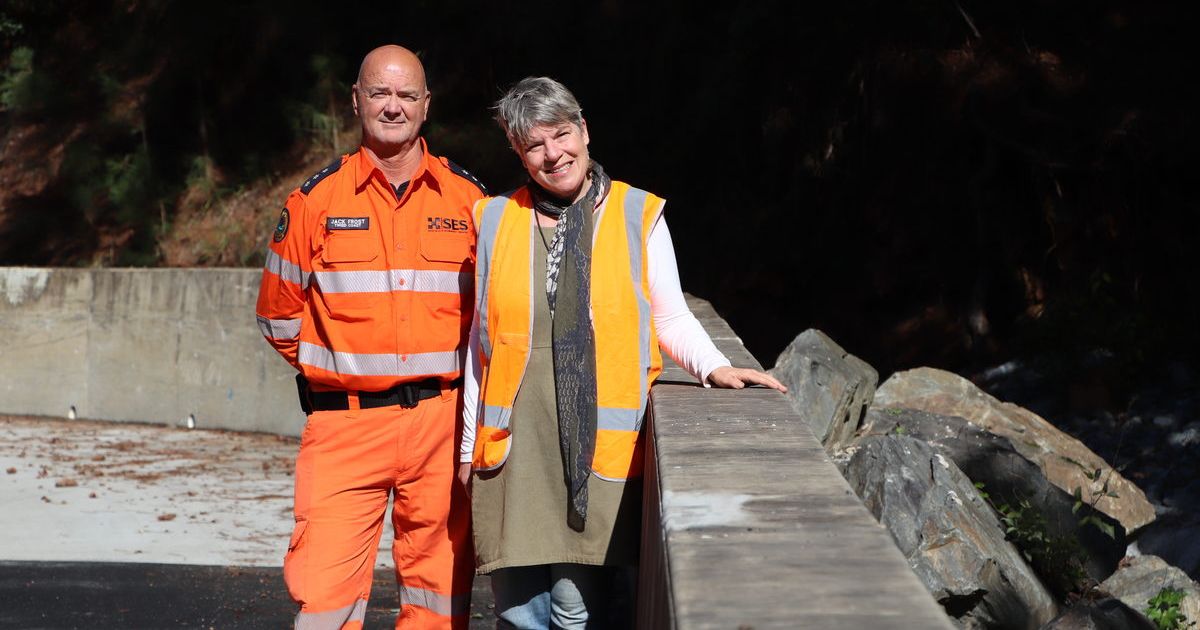
Tweed Coast SES unit commander Grant 'Jack' Frost and Byrrill Creek Community Resilience Team leader Natascha Wernick at the restored bridge site on Byrrill Creek Road. Photo: supplied by Tweed Shire Council.


BRIDGE restoration and a major landslip stabilisation project on Byrrill Creek Road have reopened memories of the 2022 floods, when residents were cut off for 14 days and relied on community resilience to get by.
The projects feature in chapter four of Tweed Shire Council’s Facing the River flood resilience series, highlighting the importance of roads and bridges in keeping isolated communities connected during disasters.
The works are being carried out in one of the Tweed’s most flood-prone catchments, where floodwaters and debris caused extensive damage in 2022.
Tweed Coast SES unit commander Grant ‘Jack’ Frost said emergency services faced enormous challenges reaching isolated communities after roads and bridges failed.
“For these more outlying communities, they were completely isolated,” he said.
“We couldn’t even get out here. We couldn’t even get to Uki.”
Frost said reliable transport infrastructure was essential in rural areas because damaged roads could leave residents without outside assistance.
“In these more rural communities, roads and bridges are their only access, so when they’re cut, those communities become isolated,” he said.
“The bottom line is, when that happens, are they prepared to look after themselves? That’s what we try and encourage, for communities to be self-resilient.”
Byrrill Creek Community Resilience Team leader Natascha Wernick vividly remembers walking outside after the floodwaters subsided.
“How scary was it? Very, very, because we didn’t know what we were going to see when we walked out the door,” she said.
“What we did see… there was a massive landslide over our driveway, so to get out to the first bridge, we had to get the tractor out and clear all that.”
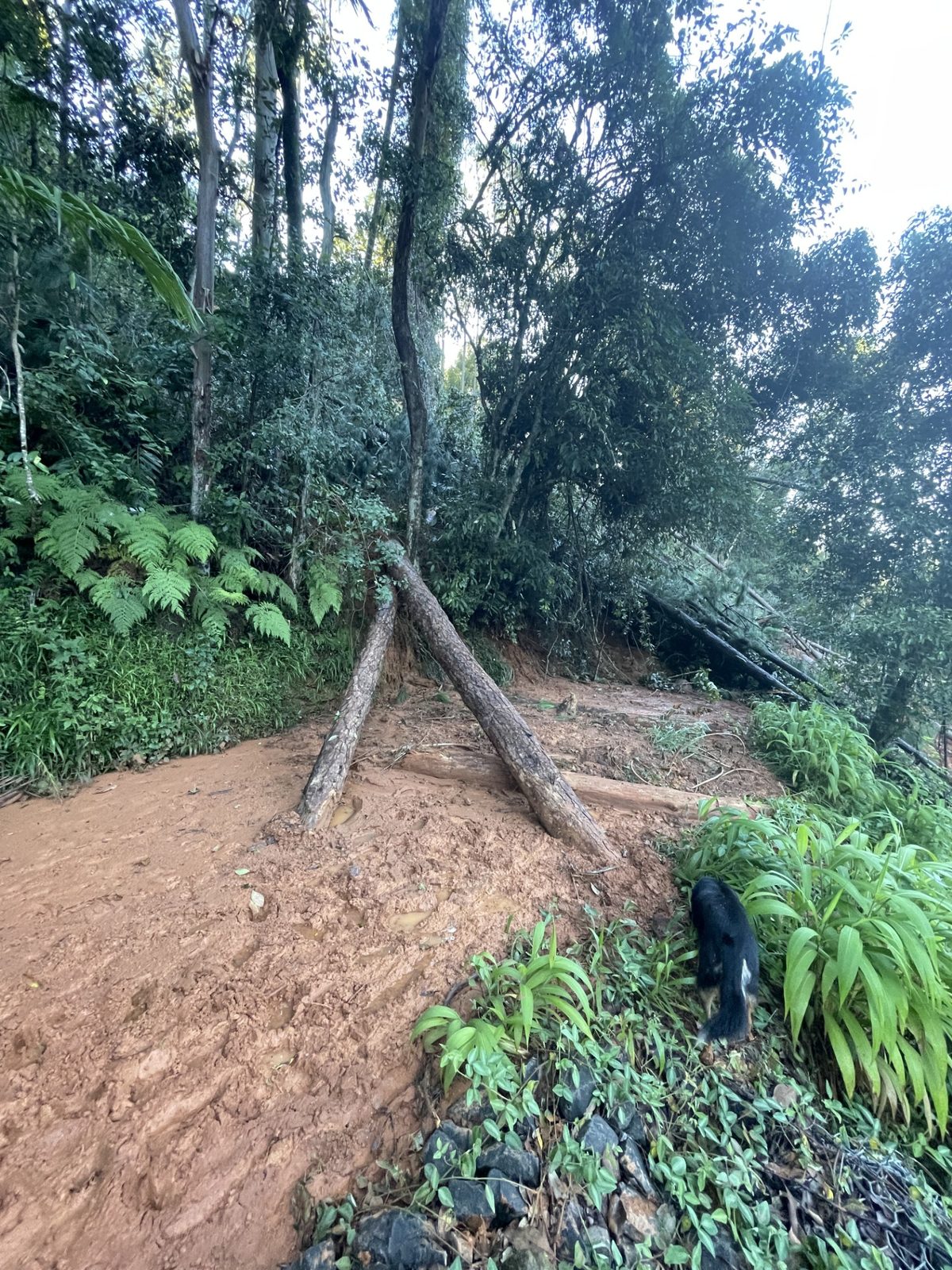
Wernick established the Byrrill Creek Community Resilience Team in 2020 following the Black Summer bushfires, using the Australian Red Cross Community-led Resilience Team framework to connect neighbours and emergency services.
Although residents were used to periodic flooding, she said the scale of the 2022 disaster was unlike anything the community had experienced.
“Byrrill Creek has been flooded in many times,” she said.
“We know how to look after ourselves and each other, that’s been built over decades.
“But 2022 was different. The scale was beyond anything anyone had experienced, and it exposed how much everything depends on the roads.”
The disaster also claimed the life of a community member attempting to cross the river before being cut off.
“We’re quite flood resilient, however, people make mistakes,” Wernick said.
“We lost a community member who was trying desperately to cross the river to take groceries over because he knew he’d be locked in.”
Despite the devastation, she said the experience reinforced the strength of the local community as neighbours worked together to organise supplies, fuel and medicines during the fortnight they were isolated.
“We’re used to being flooded in for four or five days, but 14 days is a whole new level of medications
and fuel and food and livestock feed,” she said.
“Everybody was helping get the supplies and the petrol across.”
Byrrill Creek Road is one of thousands of flood-damaged sites being restored across the Tweed.
Across three flood events, 3,989 road sites have been completed and 386 roads, bridges and culverts restored. Work is continuing at Dulguigan Road, Tyalgum Road, Doon Doon Road and Rowlands Creek Road, where a causeway is being replaced with a permanent bridge.
The flood restoration works are funded through the Disaster Recovery Funding Arrangements, jointly funded by the Australian and NSW governments, with projects requiring approval from the NSW Reconstruction Authority before construction begins.
Share


Related Articles
Rous secures significant funding to tackle invasive weed projects
ROUS County Council has secured just over $88,000 for weed…
NAB Darrel Chapman Fun Run returns to Lismore
THE NAB Darrel Chapman Fun Run will return to Lismore…