From the office of ROLAND ROCCHICCIOLI
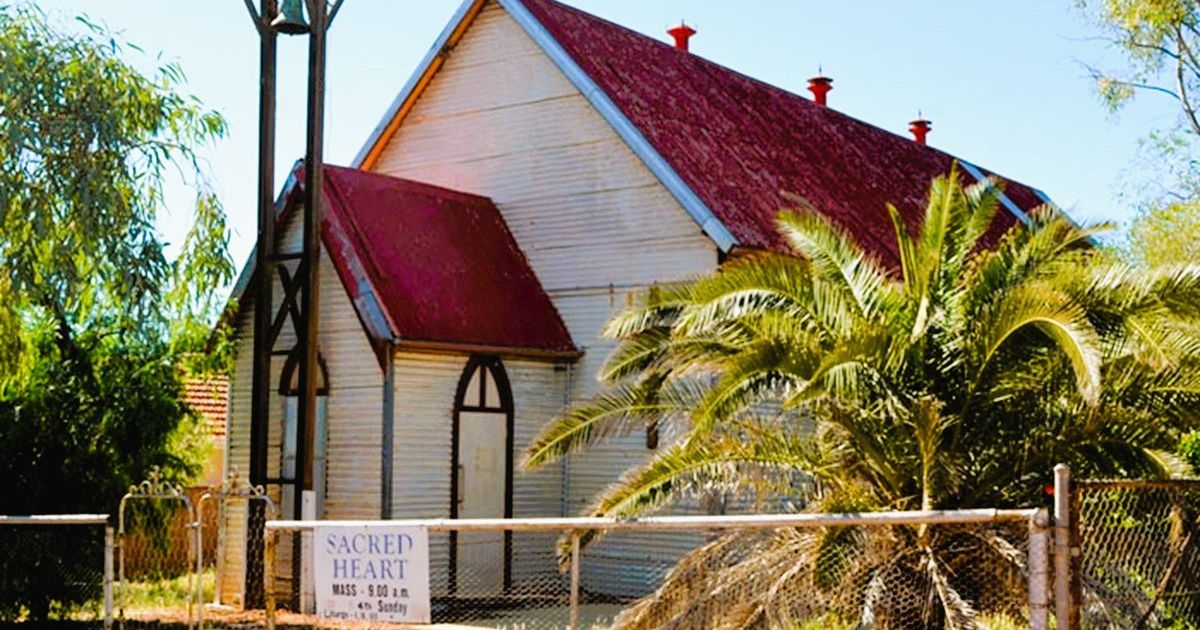
Leonora — the Priory Church: The quality of your life is determined by the quality of your thinking — not 24/7 access. Photo: Roland Rocchiccioli.


IT is difficult to understand the degree of surprise — even shock — when published reports reveal a decline in societal attitudes — a lack of confidence in our institutions. If we take time to cogitate on the changes we have embraced — even encouraged — the results are as plain as the nose on your face.
We have been so implacably determined to provide ourselves with immediate access to every aspect of our lives we have not paused for a single Planck time to consider ramifications.
A landmark Longitudinal Study of 10,000 Gen Z Australians, conducted over 20 years, has revealed their lack of faith in politics, the media, and religion. Politicians and social media were deemed least trustworthy with a score of just 15 percent. Churches and religious institutions rated as the next least trustworthy at 24 percent.
We have been conditioned — brainwashed — to believe we cannot survive without supermarkets operating 24/7. We live in a world rent asunder by constant noise. Televisions and radios blare. Sporting commentators and television hosts deliver a barrage of inane chatter — scarcely stopping to draw breath. We have come to believe everything be available at every literal second, lest the world spin off its axis.
The modern consumer — looking into a dark shop window at 2AM — is overwhelmed by hysteria. We are afeared if we cannot buy bread or a packet of biscuits at midnight, we might die of starvation.
The consequence of this frantic, manufactured urgency has deprived us of any tranquillity in our lives. There was a time when the world possessed a natural, dignified rhythm. We moved at a measured pace. It was that broadcasting stations closed down at 11PM — playing the National Anthem before fading into static. Now, there are generations who do not understand the phrase “test pattern.” Television remained dark until the following morning; the ABC, until midday. In those hours, the country went beautifully, deeply silent. It was a secular “silence in heaven for the space of half an hour” — a collective pause providing the opportunity to catch our breath, gather our fragmented thoughts, and to engage in critical thought. We sat at dinner tables to eat — roast chook on Sunday — free of pinging phones. We came together as a community over weekend sport without being pulled in a thousand electronic directions. We are so tech enabled we are tech dependent.
It is lightyears from a childhood where the commercial town stopped at Saturday midday with the ringing of the Angelus at the Dominican Priory. The tintinnabulation of a single church bell marked the start of thirty-six hours of unmapped, sacred time entirely dedicated to ourselves — and to each other. This unceasing, 24/7 culture is not a triumph of convenience — it is a monument to rapacious, corporate greed. A supermarket profit of $1 billion is obscene. Demanding constant access is not a liberation. We have traded our peace of mind for a receipt. We created it and now we are aghast.
Politicians are not inherently more unethical than 50 years ago; however, modern technology has gifted a raft of tools to deliberately manipulate information, evade accountability, and obsess over polling in real time.
Gen Z’s disenchantment is a visceral reaction to a system explicitly employing modern applications to harvest their energy and votes, only to discard their priorities immediately election day is over: the exploitation of hope for electoral gain.
Little wonder they are distrusting.
Contact: [email protected]
Share


Related Articles
From the office of ROLAND ROCCHICCIOLI
A DOG is our best friend! Their love is unconditional.…
The from office of ROLAND ROCCHICCIOLI
I was alarmed to read of the serious assault charge…