Tackling a serious subject
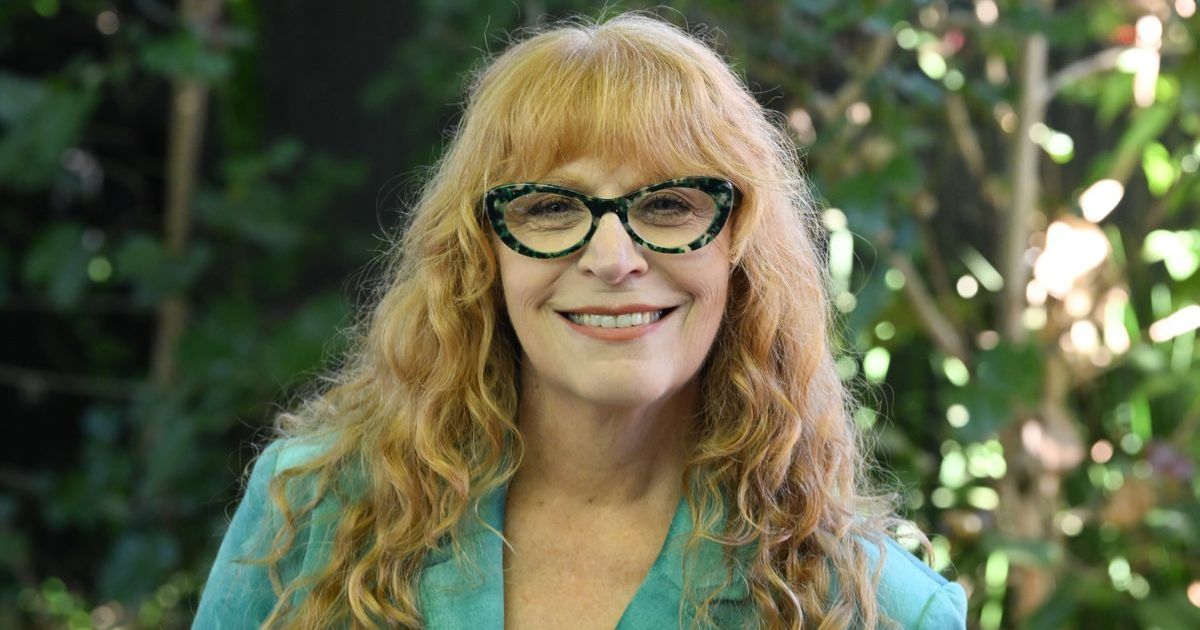
Victoria Purnam is headed to Mount Gambier to unveil her latest book


POPULAR author Victoria Purnam is headed to Mount Gambier early next month to unveil her latest novel – The Marriage Trap.
It is a story aimed at shining a light on a serious subject, inspired by renewed efforts around the world that continue to this day to ban contraception, even condoms in some countries.
“It made me reflect on the easy road I had in the 1980s when I went on the Pill to make sure I could control my body and decided if—and when—my partner (now husband) and I would have children and how many,” Victoria said.
That saw Victoria dive headlong into a research campaign to delve more deeply into the history of contraception with a focus on the 1960s.
“What I found was a story of women taking control of their bodies and their lives in defiance of societal pressure, the all-powerful Catholic church and sometimes even the government,” Victoria said.
“This is my love letter to women who grew up in the sixties (in Australia), women who – for the first time – could see a world in which they could make their own decisions about the size of their families. Or, indeed, whether to have a family at all.”
The Marriage Trap is set in the 1960s and is told through the eyes of three women from one family – 62-year-old Olive and two of her daughters, 20-year-old Cathy and 10-year-old Evelyn.
Cathy has big dreams for her life that don’t involve being trapped at home like her mother was with five children.
She wants to be the first in her family to go to university to become a teacher and she’s seen first-hand that women’s lives can be tough.
Little Evelyn is too young to think about what being a woman might be like but as we watch her grow through the decade, we see her horizons expanding about the choices she will be able to make for her own body and her own life.
As for their mother, Olive, she thinks she’s too old for social change but when the church reiterates its position on contraception in 1968, she finds herself at a crossroads.
It is no coincidence that this book, which explores the importance of motherhood as a choice, is hitting shelves in time for Mother’s Day.
“I’m privileged to be the mother of three: one daughter and two sons,” Victoria said. “And I’m privileged to have started a family in a country that enabled my husband and I to have a family at a time of our choosing, when it suited us as a couple and in terms of our careers.
“I wasn’t forced to marry someone simply because I had fallen pregnant. I wasn’t forced to make the choice of being a single mother or putting a child up for adoption. And if I had fallen pregnant before I wanted to have a child, an abortion would have been available to me.
“I went into motherhood with my eyes open (or as open as they can be before you actually have children!) and it was still hard at times. The lack of sleep, the loss of personal space, the breaks I had to have in my career.
“None of that is easy but I can’t imagine doing that when it wasn’t your choice to have a child in the first place and let’s not forget the women who don’t want to be mothers, whether they have partner or not, and those who want to be mothers but don’t have partners. The most important thing is the choice.”
Victoria believes her latest book will appeal to readers across the generations.
“I hope older readers might be able to reminisce about the era in which they grew up and reflect on just how far we’ve come,” she said. “And I hope younger readers might realise who difficult things were for women back in the 1960s and ‘70s and be inspired to be vigilant about any moves to curtail the rights we have as women to control our own bodies.
“We might think the rights we have are safe, but experiences from other parts of the world have shown us that sometimes hard fought for rights are being would back. We must never take them for granted.”
The Marriage Trap is the latest offering in a catalogue that has seen Victoria focus on telling the extraordinary stories of ordinary women.
“Whether it’s migrant women who came to Australia after WWII in The Last of the Bonegilla Girls, the role of women in the heyday of radio drama in the 1950s in The Radio Hour, or the extraordinary role Australian nurses played in repatriation hospitals in England during WWI in The Nurses’ War,” she said.
“I’m a firm believer in the adage that every person has a story and I love bringing those stories to life. As a woman born in the 1960s, I do feel an enormous debt of gratitude to the women who went before me, who quietly fought for change, who lived their lives constrained by society, convention, the church and by laws which discriminated against them and kept them out of the corridors of power. How can we learn from history if we don’t know it?”
EVENT DETAILS:
Mount Gambier Library – Wednesday, May 6
https://mountgambier-events.bookable.net.au/#!/event-detail/ev_36ec4fa6dd6c4e78b265d62ea5cd546c
Share


Related Articles

Journalist turned teacher unveils debut novel
MOUNT Gambier Library will host former journalist turned teacher Ralph…
Community to have their say on re-establishing toy library
UNITED Way Glenelg is exploring the possibility of re-establishing a…