Cause confirmed but Fairhaven landslip fix waits on funding

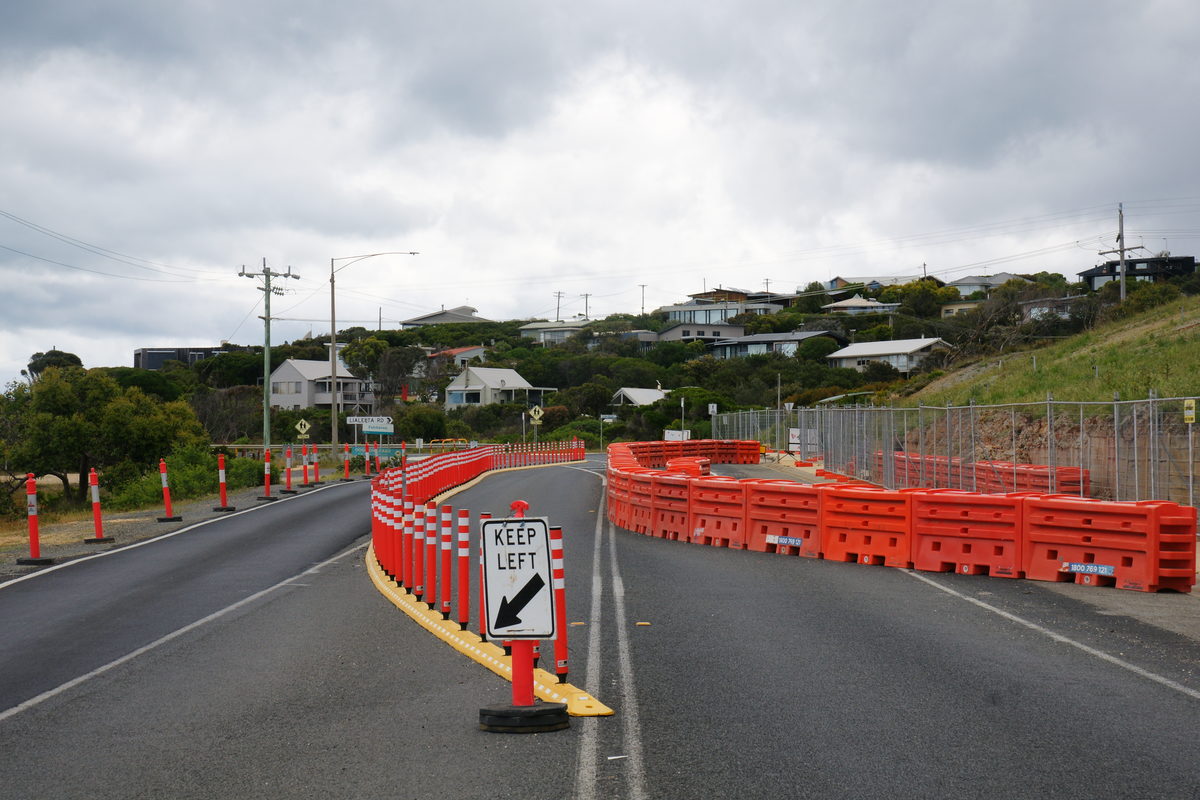
The Fairhaven landslip site on the Great Ocean Road, where remediation works are now unlikely to begin before late 2026. Photo: ELLIE CLARINGBOLD


A PERMANENT fix for a landslip-affected slope in Fairhaven is now unlikely to begin before late 2026, even after a long-awaited geotechnical report confirmed the cause of the embankment’s instability.
According to the Surf Coast Shire, the report has confirmed the area, on the Great Ocean Road just west of the Painkalac Creek Bridge, has experienced slumping and ground moment dating back to at least 1975.
The findings also confirm the existing crack in the slope predates vegetation removal carried out by Forest Fire Management Victoria in 2020 to create a strategic fuel break.
Locals have long believed the clearing of vegetation from the embankment has contributed to ongoing collapses and landslips at the site.
The report outlines three possible long-term remediation options, and the shire is now seeking further detail on each, including full cost estimates. Early indications suggest the works could cost about $3 million.
Acting Surf Coast Shire chief executive, Chris Pike, said the findings had finally provided clarity on the cause of the slip.
“The embankment’s structure is complex, and it makes it challenging to implement a safe, long-term fix,” he said.
“This investigation has required the expertise of specialist geotechnical engineers to gather information and observe the site over several months to get a clearer view of all the factors.”
Mr Pike said it was now clear that any permanent solution would be expensive and time-consuming, but necessary given the risk the landslip poses to the Great Ocean Road.
“We’re working through the remediation options outlined in the report to work out the most suitable one,” he said.
“It’s becoming clearer that it will be costly and take time to implement. It’s also a significant risk to the Great Ocean Road so we’re looking into options for government assistance.
“We’d like to get the funding lined up as soon as we can after the summer break so we can get the detailed designs done and put the work out to tender.”
According to the report, the landslip is being driven by a combination of unstable subsurface soil conditions, trapped groundwater increasing pressure within the slop, and surface and stormwater flows entering the embankment from rainfall and upstream properties.
The findings also confirm replanting the slope alone will not resolve the issue, with groundwater management identified as a critical first step.
Council officers are preparing a simplified public summary of the technical report, which will be published online along with the three remediation options.
While concerns remain about the visual impact of the site, Mr Pike said safety would be the priority.
“We know people care deeply about the appearance of the slop due to its prominence,” he said. “Once the best technical solution has been identified, we’ll get some local input into how the works can be blended into the surrounding landscape.
“It’s vital that the remediation works ensure the long-term stability and safety of the slope.”
Monitoring of the broader area, including the properties above the landslip, is ongoing. The shire says no ground movement has been detected beyond the existing cracks, and there is currently no risk to nearby homes.
The two-way traffic diversions on the Great Ocean Road will remain in place through the peak holiday period and until remediation works are completed.
Share


Related Articles
Liberals defend safety of 110kmh freeway plan
The Liberals have dismissed concerns their proposed 110kmh speed limit…
Teachers walk off the job for second time as AEU pushes government for deal
Victorian public school teachers will strike for the second time…