Cliff Safety Month returns amid coastal collapses
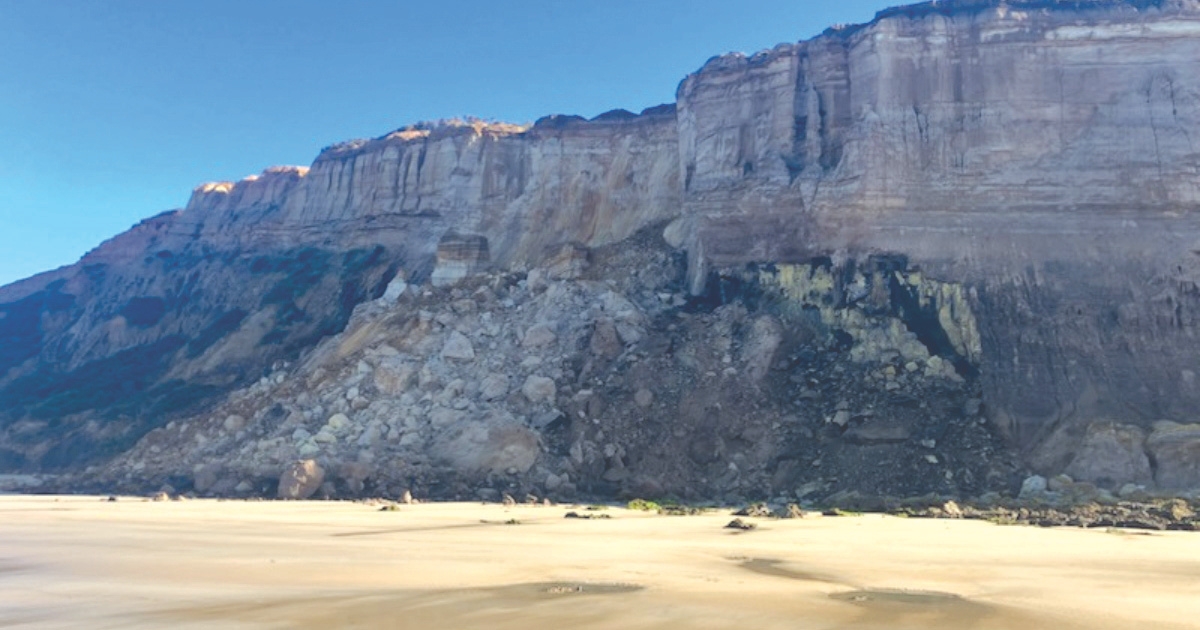
Recent cliff moments include this collapse at Addiscot Beach (Jarosite Point) in August.


DECEMBER marks the return of the Great Ocean Road Coast and Parks Authority’s (GORCAPA) Cliff Safety Month, which the organisation promotes annually as a reminder for locals and visitors to slow down, look up, and give the Great Ocean Road’s cliffs the space they need.
Cliffs make up almost half of Victoria’s coastline, and are constantly changing. Wind, waves, rain and time are always reshaping the landscape – sometimes subtly, sometimes suddenly and often dangerously.
Throughout December, GORCAPA is putting extra focus on the simple things everyone can do to stay safe. Whether you are a local out for a walk or a family exploring the coast on holidays, a few small choices make a big difference.
There have been several significant cliff collapses along the coast this year, including one at Addiscot Beach, a major collapse near the Anglesea Surf Life Saving Club in January, and a collapse of about 20ms of cliff face at Demons Bluff in June captured by GORCAPA during a routine drone assessment.
GORCAPA says these incidents illustrate just how dynamic the coastline is, and how collapses can occur without any visible warning at all, even when conditions appear calm. The authority’s teams carry out regular geotechnical assessments, drone flights and on-ground inspections to track how cliffs are shifting over time. This guides decisions such as updating signage, maintaining fencing, moving tracks and closing high-risk areas when needed.
GORCAPA suggests four easy ways to stay safe around cliffs this summer:
- Stay clear of cliffs and caves – even calm-looking cliffs can collapse without warning. Loose rock, unstable faces and hidden voids all pose real risks
- Stick to established paths – tracks, rails and fences are placed where they are for a reason: to keep people away from unstable ground
- Follow warning signs – they are based on expert advice and ongoing monitoring, not guesswork
- Spread the word – remind your mates, children, or family with a simple ‘hey, maybe step back a bit’; it can go a long way.
“These landscapes are beautiful, but they’re also alive. We’re seeing big movements and tiny ones, both can be dangerous,” GORCAPA coastal reserves manager Caleb Hurrell said.
“Giving cliffs a bit of space and following the signs makes a huge difference. We want everyone to enjoy the coast and get home safely. Just remember: the coastline is always changing, and a few extra steps back from the edge (or the base) can keep everyone safe.”
The authority continues to urge visitors to take care around unstable cliffs, just as previous campaigns have warned in years past.
For more information on cliff risk and monitoring, head to greatoceanroadauthority.vic.gov.au/Environment/Coastal-Operations/Cliff-Risk
Share


Related Articles
Missing man found safe more than 125km from home
A missing Indented Head man with Alzheimer’s disease has been…
Urgent search for missing Indented Head man
A 77-year-old Indented Head man with Alzheimer’s disease has gone…