Conservation win secures 30ha of Painkalac Valley
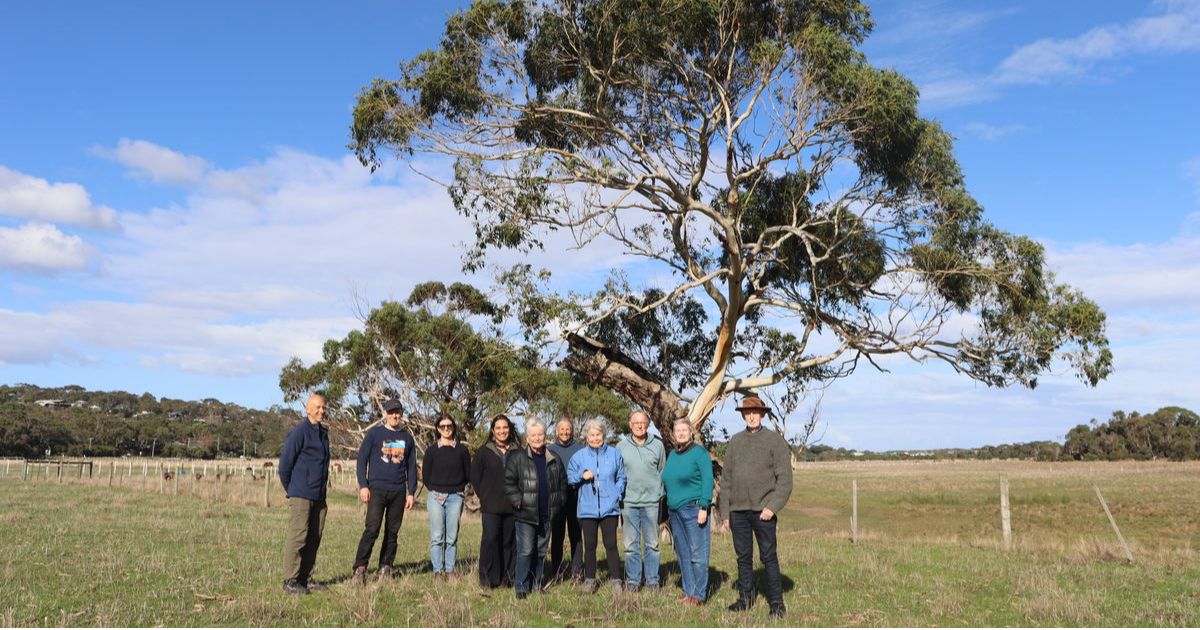
Members of AIDA, Angair and BioDiversity Legacy stand in front of the land that will be restored in Aireys Inlet. Photo: James Taylor.


AFTER decades of community efforts to protect the Painkalac Valley, a landmark agreement has secured the largest remaining section of the floodplain for conservation and ecological restoration.
The deal protects almost 30ha of the valley floor at Aireys Inlet, paving the way for the return of wetlands, native wildlife and a continuous ecological corridor linking the coast with the Great Otway National Park.
Community organisation The Painkalac Project and environmental charity BioDiversity Legacy worked with landholders to secure a 99-year lease over the site, after previous attempts to purchase the land were unsuccessful.
The Painkalac Valley is regarded as the largest and most significant estuarine wetland along the Great Ocean Road, despite much of the floodplain being cleared for grazing in the mid-19th century.
Under the agreement, the land will be managed for ecological restoration, with the long-term aim of returning the site to a functioning floodplain.
The restoration is expected to improve habitat for indigenous plants and animals, reduce downstream flood risk and lessen the need for artificial openings of the estuary.
A local stewardship group will oversee the site, while the next stage of the project will involve developing a science-based masterplan to guide the valley’s restoration.
Painkalac Project president Mick Loughnan said the agreement protected a landscape that generations of local conservationists had fought to preserve.
The project brings together members of the Aireys Inlet and District Association and Angair.
“This is a real biodiversity hotspot,” Loughnan said. “These floodplains have been cleared across a lot of the country because it’s such rich country, but it’s also a unique environment.”
“To get this back and connect through the coast way up into the national park is an almost unique opportunity to create a corridor for native animals and birds to re-establish themselves in an area where they’ve been missing for 200 years.
“It’s a real key to this jigsaw of fitting this landscape back together again.”
A nearby private restoration project further up the valley has already demonstrated the landscape’s capacity to recover.
Over the past six years, dormant wetland plants have re-emerged and a range of animals, insects and wetland-dependent bird species have returned to the site.
Loughnan said the results showed nature was capable of bouncing back remarkably quickly when given the opportunity.
“It’s such fertile soil that we don’t have to wait long periods of time,” he said
“There are gum trees that have been planted that are now 10m high; they were all seedlings.”
He said BioDiversity Legacy’s conservation model had been critical to securing the future of the land.
Share


Related Articles
Local favourite marks first birthday
Anderson’s Supermarket at APCO Mt Duneed will celebrate its first…
Cam Mooney: Geelong’s depth is being tested at the worst possible time
Geelong’s win over St Kilda came at a massive cost,…