Net-zero in practice: the home designed to stand up to its own ideas
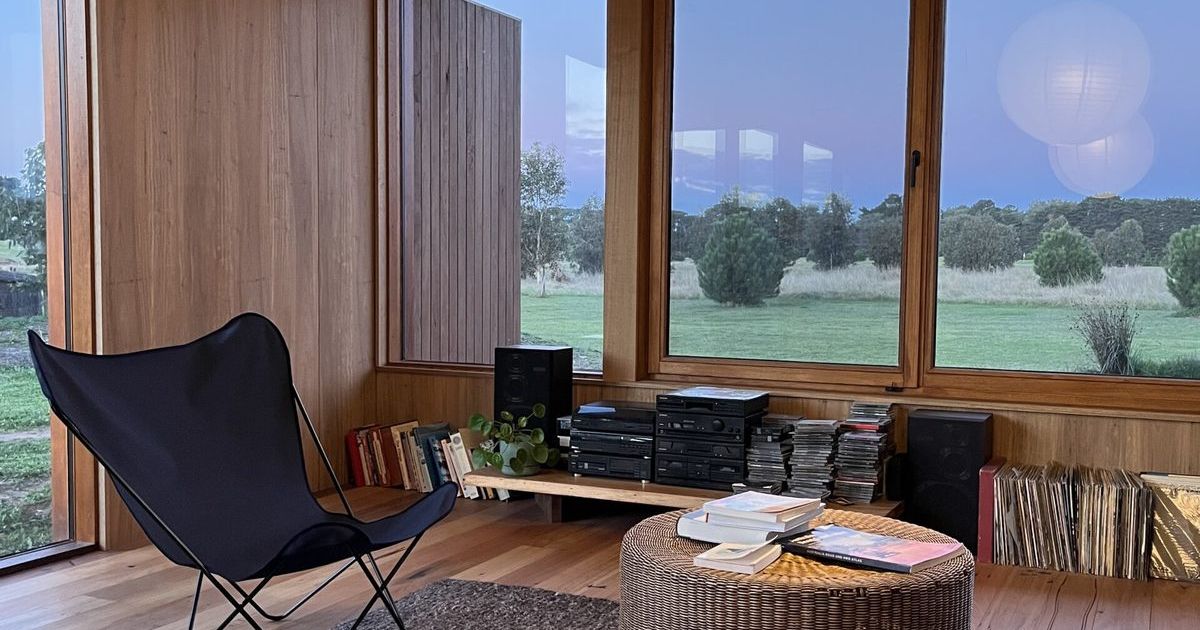
L-R: The three-bedroom house has an airtight, highly insulated envelope. Photo: Baker Drofenik Architects. Circular design principles influenced material choices, with recycled elements such as remilled timber flooring used throughout. Photo: Baker Drofenik Architects.


TWO architects have turned their Connewarre home into a full-scale test case for net-zero living, building from the ground up to prove what high-performance design can deliver.
Moonah House is the home and coastal studio office of Paul Baker and Sarah Drofenik of Baker Drofenik Architects.
Built on land once covered by moonah woodland – hence its name – the three-bedroom house has an airtight, highly insulated envelope and scores an 8.1 on the Nationwide House Energy Rating Scheme.
Drofenik said the firm’s architectural focus had always been climate-responsive sustainable design, with a previous house in Jan Juc sparking an interest in the passive house, or Passivhaus, building standard.
“I think what interested us about that is the idea you can actually quantify sustainable outcomes and energy,” she said. “Prior to that, it’s been harder to quantify the outcomes.”
The design process for Moonah House began in 2020, with a net-zero outcome a core objective from the outset.
“Part of it was really understanding what net-zero was in construction. Prior to that, it was all vague,” Drofenik said.
The pair brought in a life cycle assessment consultant early to measure the building’s total carbon footprint.
“That helps tells you what the energy requirements are to produce the building in terms of transporting the materials to actually making the materials,” Drofenik said.
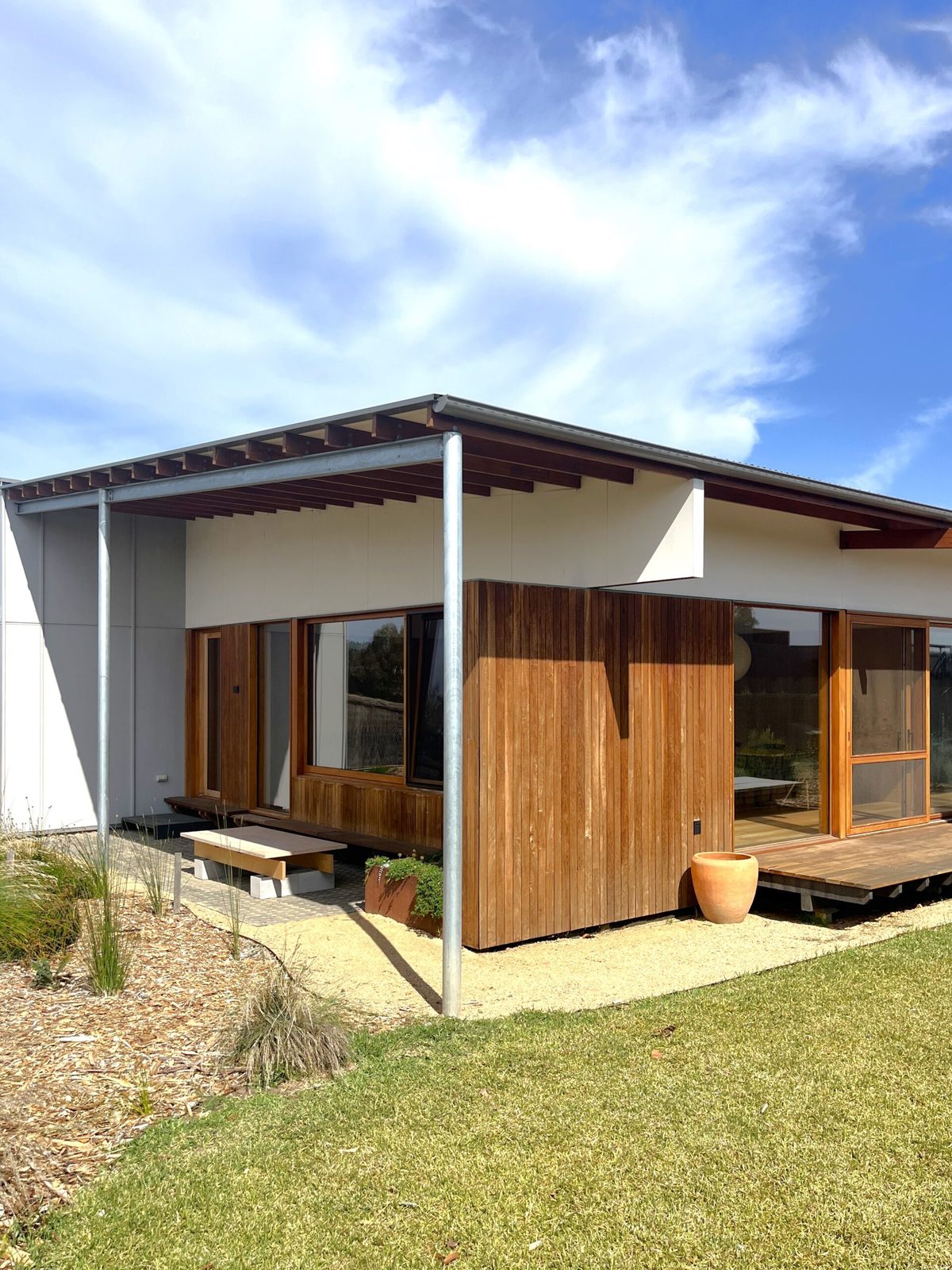
The house has lightweight foundations and a low-carbon concrete studio slab to reduce embodied energy, while timber is used extensively in both structure and finishes.
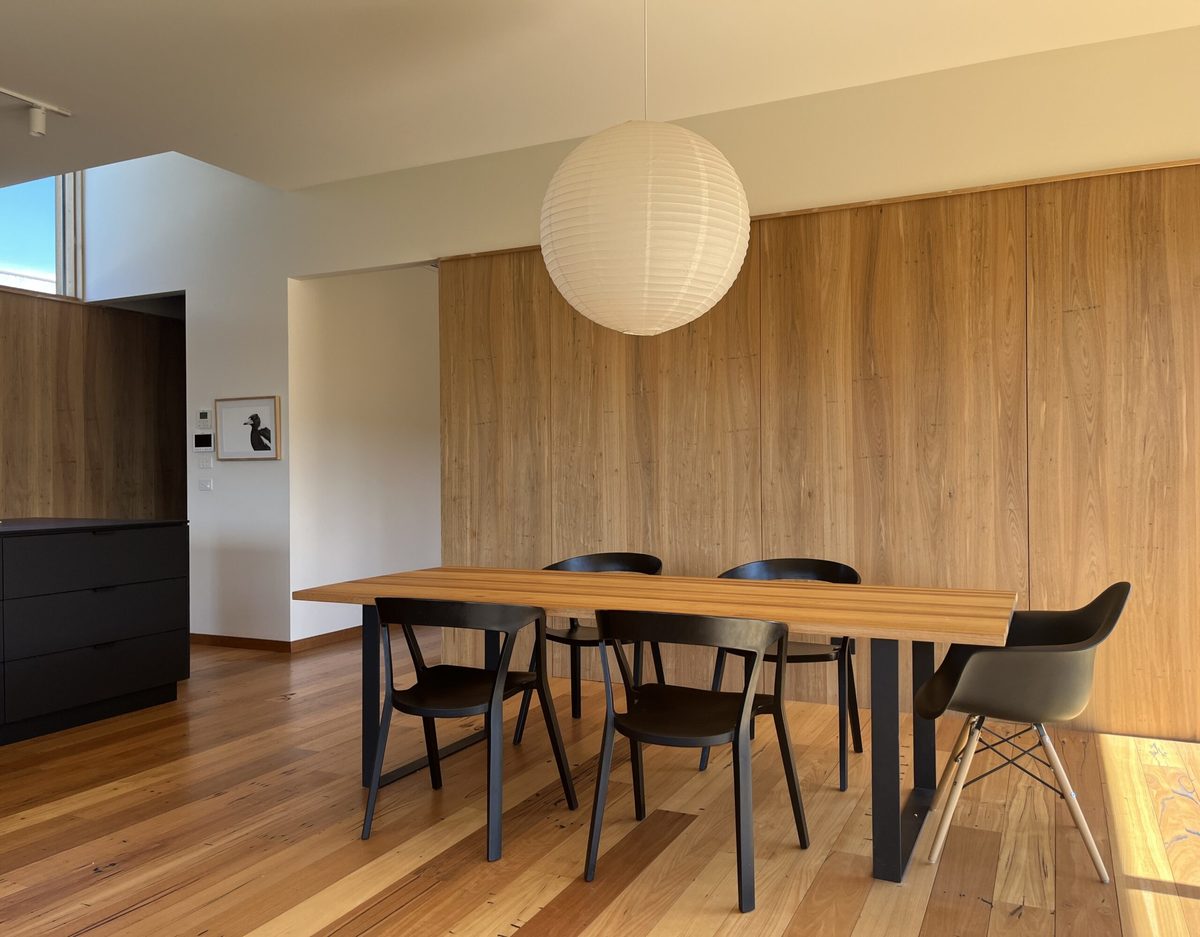
Circular design principles influenced material choices, with recycled elements such as remilled timber flooring used throughout.
Built-in joinery was minimised to allow flexibility over time.
Baker took two years off work to build the house, with construction stretching to about three years.
“Architecture practices build a model to test a theory in the office. Well, we’ve gone and built a whole house to prove our ideas,” he said.

“It’s putting theory into practice. It’s understanding carbon and its detrimental effect in the atmosphere, understanding how we reduce it in the building process, and then building it so we understand the actual building process.
“So when we speak to clients, we understand the process from the concept, because you have to get the concept right, all the way through the process of designing, building and now living in it.
“We would do it again tomorrow, but maybe I wouldn’t build it. It was a lot of work.”
The home’s simple rectangular form also contributes to its efficiency by minimising external surface area.
“A circle is a very efficient way of containing space and a rectangle’s fairly efficient,” Baker said.
“But if you do a house like you sometimes see that’s a letter E or a C, then you end up with a lot more external envelope, a lot more external walls, so that’s obviously a lot more opportunity to lose insulation.”
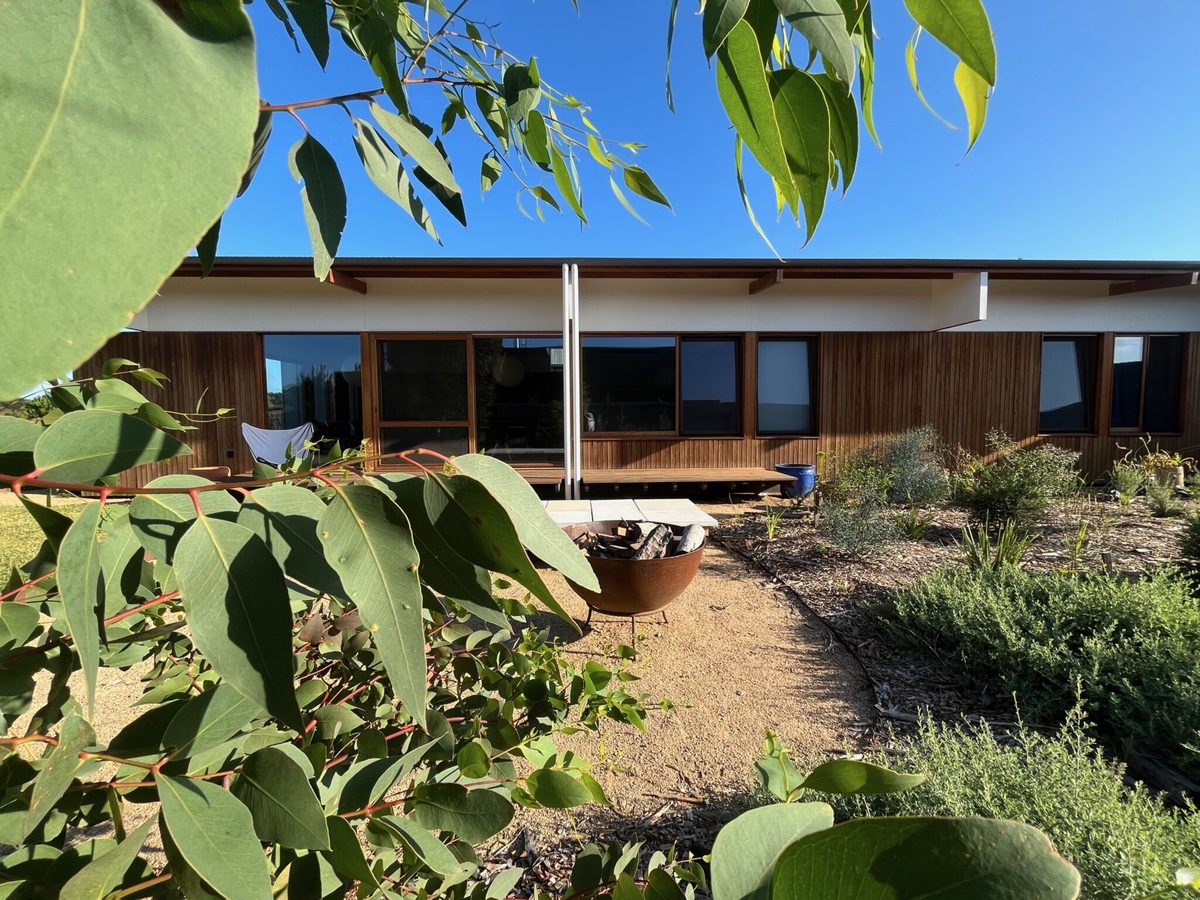
Drofenik said the thermal performance had been a standout, with the home requiring minimal heating in winter thanks to its insulation and double glazing.
“Living here completely changes the way you think about construction,” she said.
While more expensive than a conventional build, Baker said the cost gap was narrowing as standards improved.
“There’s extra insulation, there’s extra timber and the windows are probably more expensive, but the National Construction Code now demands more anyway, so I think that gap is decreasing,” he said.
Moonah House will be open for online tours as part of Sustainable House Day this Sunday 17 May.
For more information, head to sustainablehouseday.com
Share


Related Articles
Local favourite marks first birthday
Anderson’s Supermarket at APCO Mt Duneed will celebrate its first…
Cam Mooney: Geelong’s depth is being tested at the worst possible time
Geelong’s win over St Kilda came at a massive cost,…