Step-by-Step Curtain Installation Tips for Beginners
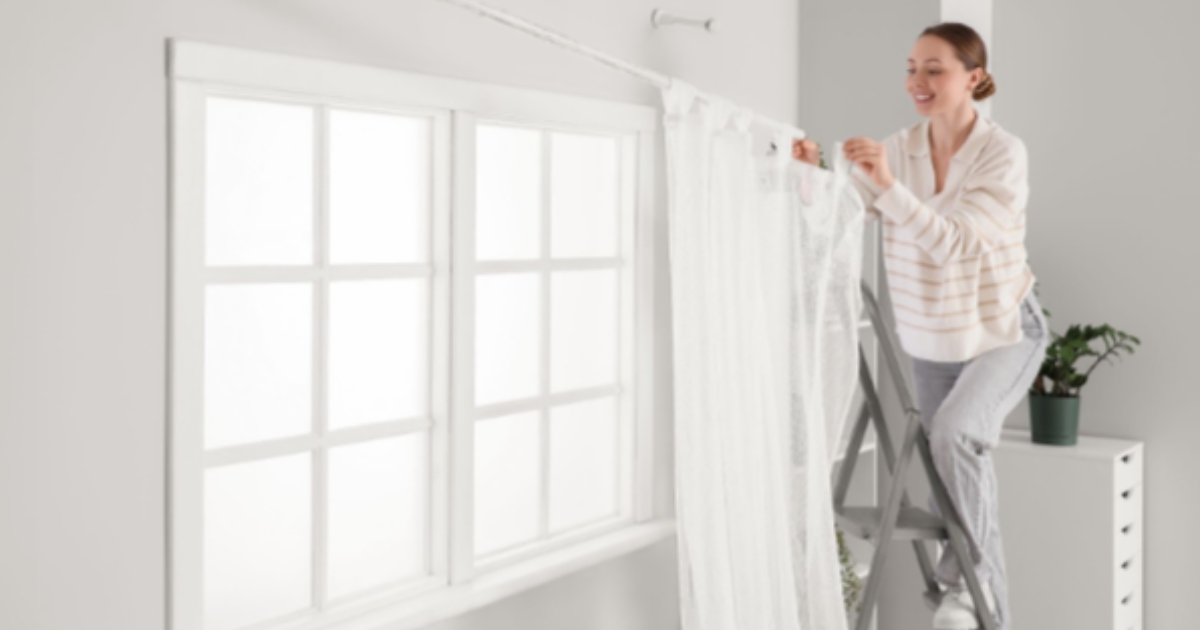
Learn step-by-step curtain installation tips for beginners. Measure correctly, place rods properly and hang curtains like a pro with this easy DIY guide.


Installing curtains is one of those household tasks that seem simple and straightforward. Until you get up on that chair, screwdriver in hand, cursing yourself because the wall brackets won’t line up, or your curtains look embarrassingly askew.
It’s daunting for beginners because it’s not overly complicated, but there are a lot of unexpected places you can go wrong. Add to that the fear that once you make a mistake, you can’t easily fix it (like drilling holes in your wall or eyeballing where ‘floor-length’ should fall) and hanging curtains can quickly become a stressful chore.
Things like rental restrictions, unfamiliar hardware or heavy drapes only compound the issue. So you avoid hanging curtains altogether. But it doesn’t have to be this way. Installing curtains can be a simple DIY project that most beginners can do with ease.
Here are a few helpful steps to make your curtain installation straightforward and stress-free from the get-go.
Why Proper Curtain Installation Matters
Curtains from Quickfit Blinds & Curtains are made specifically for your window, and when they’re hung correctly, you’ll notice. Even the nicest fabric will look cheap if curtains aren’t hung high enough, aren’t wide enough or aren’t plumb. It’s not just about hanging them on the wall. It’s about hanging them so they beautifully frame your windows and function as they should.
The placement of your curtain rod impacts light levels, privacy and even heat retention in your home. You can make your ceilings appear higher and your room larger by hanging your curtains above the window frame. You can let in more daylight when your curtains are open by extending your curtain rod beyond the sides of your window.
Well-placed blockout or thermal curtains can also prevent cold drafts and heat from escaping through your windows, a fact many homeowners don’t realise until the cold weather arrives. Moving your curtains just an inch or two can make a difference in how much light they block out at night and how much privacy they allow during the day.
Correctly hung curtains do more than just fill a space above your window. They add height and softness to a room. They frame windows and views. They enhance comfort and complete a space by adding that finished touch. Making sure everything is done right at installation will make sure your curtains look like they were made just for your home because they were.
Tools and Materials You’ll Need
Before you start drilling, it’s worth taking five minutes to gather all the tools you’ll need and understand what each one actually does. Hanging curtains is pretty straightforward but you do need to be accurate. Use a tape measure to help you position your brackets evenly across the window frame, and at the correct height from the floor.
A pencil helps mark where your drill holes should go (just in case you want to move them). Keep a level handy to check your brackets aren’t out by even a few millimetres — it’ll look crooked once your curtains are on. You’ll need a drill to securely fix the wall plugs and brackets (and please use a steady step ladder rather than standing on a dining chair).
The first decision is whether to use a curtain rod or track system, as this can affect your curtains’ function as well as the look. Curtain rods are more visible, and when used with eyelet or ring-top curtains can become part of your window’s style. Tracks are more hidden away, and are a great way to hang pinch pleat or S-fold curtains for a minimalist look. They can also allow the curtains to glide more easily across wide windows, which is ideal for heavier fabrics. And consider how the style of curtain header you’ve chosen will work with the hardware.
Wall plugs (sometimes known as anchors) and curtain brackets are where a lot of people run into problems. Brackets are what you’ll attach the rod/track to, so they need to be secure enough to hold the weight of your curtains. Heavier fabrics, such as blockout or lined styles, can be surprisingly heavy, so this is an important step. Wall plugs are inserted into the holes you’ve drilled to provide purchase within the wall cavity. There are different types of plugs for different walls, and using the wrong type could result in loose screws over time.
Finally, your wall fixings are dependent on what your wall is actually made of. For solid walls, like brick or concrete, you’ll need masonry drill bits as well as the correct type of plug. For plasterboard walls, you’ll need either specific hollow-wall anchors or locate a stud to drill into. If you’re not sure what’s behind your wall then try a stud finder first. It’s essential you use the right fixings for your walls to ensure your curtains aren’t falling down on you in the future.
Measure First: Getting the Right Dimensions
When measuring width, go beyond just the window frame. You’ll likely want your curtain rod to be slightly larger than your window, especially if you want to be able to push your curtains all the way back when they’re open. Aim to measure the entire area you want your curtains to cover — that’s usually about 15–30cm on either side of the window frame.
Once you know how wide you need your curtains to be, it’s time to measure height. You could mount your curtain rod at the top of your window frame, but going up can work wonders for making your room feel bigger. Try hanging your curtains anywhere from 10–20cm above the window frame, or even mounting your rod closer to the ceiling. While it might sound minor, this little tip is great for making your ceilings feel taller.
When it comes to the curtain length itself, there are plenty of options. Sill-length curtains are ideal for stopping above benches in kitchens or bathrooms, or grazing an electric heater. Below sill curtains have a softer finish but work just as well in spots that need to clear objects. The most popular option for lounge and bedroom curtains? Floor length. Tailoring your curtains to stop exactly at the floor creates a crisp, polished finish. If you’re going for a softer look, you can allow your curtains to ‘puddle’ slightly on the ground. So it’s worth noting that, depending on how often your curtains will be used, puddling might not be practical.
Fullness is another factor to consider when measuring for curtains. Ideally, your curtains should not be flat when they’re closed. To achieve that finished look, your curtain width should be anywhere from 1.5 to 2.5 times your window width. The fullness will depend on the type of fabric you choose. Sheer curtains generally look best with more fullness, while thicker fabrics can look good with less.
Choosing the Right Curtain Rod Placement
In addition to height and width, you’ll also need to decide where to place your curtain rod. There are three common options when it comes to installing curtain rods: in the recess, facing the window, or bracket style. If your curtains are going to be plain white or mounted inside the recess with minimal overlap, either option can work. However, many people find that curtains mounted outside the recess look nicer.
Going with the face mount lets you hang your curtain rod higher and wider than your window frame, allowing for more overlap when the curtains are closed. Speaking of overlap, you should ensure there’s enough space for curtains to overlap in the middle as well as at each side. It may sound excessive, but increasing the width of your curtain rod by 15–30cm can make all the difference. Not only will your windows look wider, but you’ll be able to open your curtains all the way, allowing for more natural light to come through.
On a similar note, consider how much daylight you want in your room. If you live in a house that gets gorgeous natural light, you’ll want to place your curtain rod higher and wider to really let that light shine. Height and width can also make a room feel more spacious. However, if you’re hanging curtains in a bedroom, you might want to focus less on letting light in and more on ensuring you’ve got solid coverage. For blockout curtains, it’s important to have enough overlap at the centre of your window to prevent light from filtering through the gaps.
Step-by-Step: How to Install Curtain Rod Brackets
1. Mark Your Bracket Placement
Firstly, pencil lightly where you want your brackets to sit on either side of the window frame. Measure from the ceiling or floor instead of from the window frame as they can sometimes be crooked. After measuring twice so they are the same height, ensure each side is equal distance from each side of the window so the rod hangs straight. You’ll also want to make sure you have enough clearance on each side for your curtains to open all the way.
2. Check Alignment with a Level
Hold a spirit level across the two pencil markings to check they’re even with one another. Walls aren’t always as straight as they look, so take your time to do this, especially if you have an older house. Once you’re happy, you can confidently move on to drilling.
3. Drill Pilot Holes
Next up, drill pilot holes where you’ve marked your brackets. A pilot hole not only guides your screw in at the right angle but prevents your wall from cracking and makes life easier when fitting your brackets. Go slowly when drilling pilot holes, as if the drill suddenly gives less resistance you have drilled into a hollow spot.
4. Insert Wall Anchors
If you have plasterboard, drywall or masonry walls you’ll need wall plugs. Tap your wall plugs into the pilot holes with a hammer until they are flush with the wall. Don’t push them in too far, you don’t want them to fall out. Ensure your wall plugs can handle the weight of your curtains if they are especially heavy like lined or blackout curtains.
5. Secure Brackets Firmly
Use the screws provided to secure your brackets into place and then test gently pull on them to ensure they’re secure. Do not overtighten the screws as this may strip them or damage the wall meaning the bracket won’t be as secure over time.
Finishing Touches That Elevate the Look
The final details are what turn newly hung curtains into great-looking window coverings rather than something that simply does the job. Right out of the package, curtains are likely to have factory folds or creases from being shipped in a box. One of the safest methods to get these out is to steam them. This is especially good for lightweight fabrics or fabrics with linings as you don’t have to apply direct heat.
If you choose to iron them, be sure to follow the instructions on the label, using a cool setting when possible. Ironing from the back of the fabric can help you avoid shine or crushing the texture of some fabrics.
Once you get the wrinkles out, take a few extra moments to ensure that the pleats or folds are distributed evenly. If your curtains are pinch pleat or S-fold, take the time to “train” your curtains by adjusting each fold with your hands. Space the folds evenly with each pinch, and they will be more likely to hold their position when hanging. Even curtains with eyelet holes can be ruffled out and evened up by hand.
Don’t forget about tie-backs and hold-backs. These are not only useful for keeping curtains open when you want to let light in, but can also serve as decorative elements that frame your windows. Holdbacks and tiebacks placed too low will make your curtains appear to droop; too high and it will look awkward.
Experiment with placing your tieback approximately 1/3 of the way up from the bottom of your curtain. Make adjustments depending on the length of your curtains and the height of your ceiling. Fabric tie backs give off a softer vibe whereas metal hold backs or non-fabric tie backs will seem more clean and crisp.
Consider adding sheers! Sheer curtains can be your “everyday” curtain while your thicker fabrics are used for the evenings. Sheers help diffuse sunlight during the day and allow you to keep your curtains drawn while still providing you privacy. Layering your windows also add depth and texture.
When to Consider Professional Installation
Many curtain installations are completely beginner-friendly, but there are times when getting help makes your DIY project doable instead of impossible. Extra-wide windows can pose problems if you’re hanging them by yourself. Long rods are heavier and more cumbersome to work with alone. They’ll need extra centre brackets to help support the weight and keep the curtains from sagging. Small measurement errors will be more apparent when spread out over a longer area.
Bay windows and odd configurations can also become complicated quickly. Angled walls will need exact measurements and special angled brackets. Multiple joins and track pieces that curve or angle will take careful measuring so your curtains move smoothly and fall evenly on each section instead of bunching up.
Hiring help doesn’t mean you can’t do it yourself. Sometimes it just makes sense to bring someone in when the project reaches a level of complexity you’re not comfortable with. Whether you DIY some windows and have professionals do the difficult ones or you want a second pair of experienced eyes on tricky spaces, knowing when to call for backup can save you time and avoid expensive do-overs.
Confidence Comes with Careful Planning
When hanging curtains for the first time it can seem like a difficult process. However, with proper planning it becomes simple. Measuring your space, planning the placement, and ensuring you finish your curtains correctly will allow you to achieve a tailored look.
Take your time planning out each step and you’ll hang curtains like a pro (and love sitting behind your stylish window treatments).
Share


Related Articles

Lara’s path back to senior competition revealed after review uncovers club-wide issues
Lara Football Netball Club has three months to prove it…
Opposition leader Jess Wilson makes her pitch to local voters
Opposition leader Jess Wilson says the Geelong region has been…