When celebration meets sensitivity: the changing face of Mother’s Day marketing

Steph Plant, who works as a nurse and a florist, said Mother's Day is one of mixed emotions for her. Photo: Nyah Barnes.


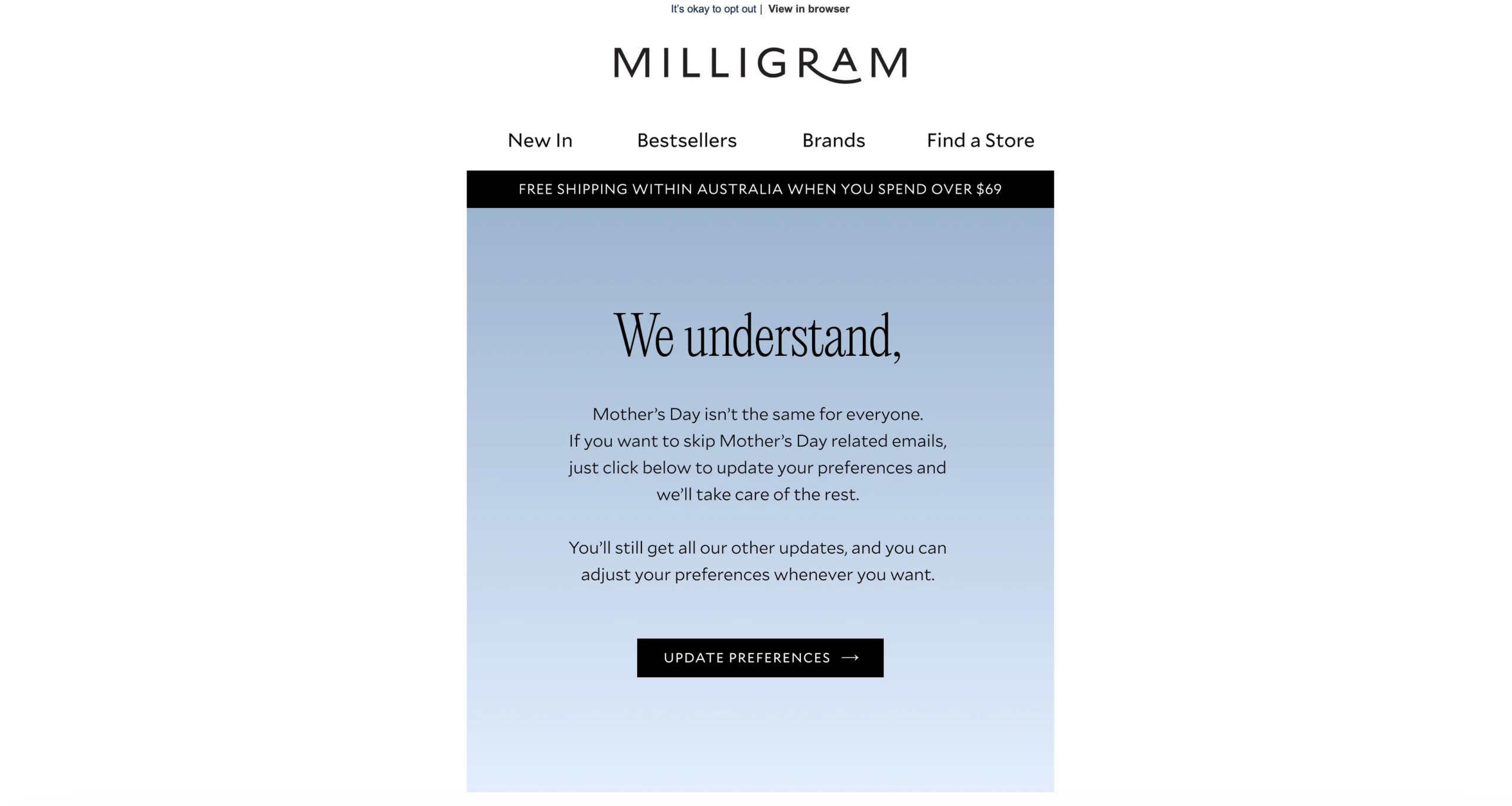
MOTHER’S Day is a time of celebration for some and sorrow for others, and as inboxes fill with gift ideas, floral offers and heartfelt reminders, some companies have turned to opt-out options in an effort to be more sensitive.
But is it a genuine act of compassion, or simply another marketing strategy? Does it have the desired impact on those whom it is targeting?
For Torquay mother Steph Plant, the answer is not entirely straightforward.
Four years ago, Steph experienced her first Mother’s Day without her mum, Helen. It was also Steph’s first Mother’s Day as a mum to her son, Freddie.
“It was kind of a day of mixed emotions,” she said. “I would have loved my mum to be around for my first Mother’s Day.”
Steph said the lead-up to the day can often be harder than the day itself, with marketing appearing everywhere from inboxes to shop displays and social media.
While she has used opt-out features in the past, she said the gesture does not always take away the emotional sting.
“It is still mentioning it,” she said. “So you’re still bringing it to the forefront – I’m still getting an email from you talking about Mother’s Day.”
Ahmed Ferdous, professor of marketing at Deakin University, said Mother’s Day evolved from much broader traditions of care, activism and memorial before becoming one of the most commercial occasions on the calendar.
“Mother’s Day started as a day of appreciation and memorial,” he said, noting its modern history is closely linked to American social activist Anna Jarvis.
Jarvis, who is often credited as the founder of Mother’s Day, advocated for a day of recognition for mothers to be observed around the anniversary of her own mother’s death.
In later years she pushed back against its commercialisation.
Florists, greeting card companies and retailers quickly shaped the day into a major shopping event, Professor Ferdous said, with the occasion now fitting the definition of a “ritualised consumption occasion”.
In his view, opt-out messaging reflects a broader shift in marketing towards personalisation and inclusion.
“It is a very timely perspective of ensuring that marketing is more inclusive,” Professor Ferdous said. “It takes into account the different range of emotional appeals.”

Steph agreed there is value in acknowledging that the day can be painful for people for a variety of reasons.
Although Mother’s Day content often floods social media platforms in May, Steph said seeing some of these more vulnerable conversations online can help people feel less alone.
“I think it’s nice to remind people that those around them, for whatever reason, it might not be the easiest day,” she said. “I appreciate when people share those sorts of things.”
Professor Ferdous said brands are increasingly trying to balance sales with credibility, authenticity and emotional storytelling, particularly in the digital age, where companies can better target messages to individual needs.
Whether companies are doing it purely to drive sales or genuinely responding to consumers’ needs is something consumers are increasingly questioning, he said.
Share


Related Articles

Liberals defend safety of 110kmh freeway plan
The Liberals have dismissed concerns their proposed 110kmh speed limit…
Teachers walk off the job for second time as AEU pushes government for deal
Victorian public school teachers will strike for the second time…