Record spend on road repairs and upgrades: Settle
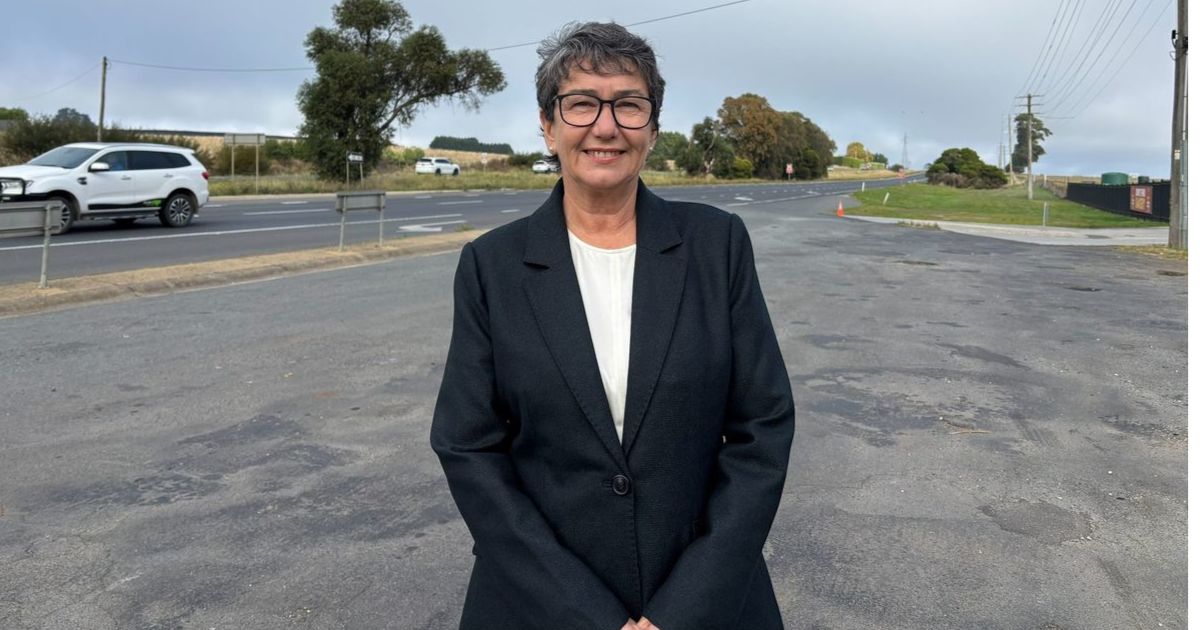
Eureka MP and Minister for Agriculture and Regional Development Michaela Settle said 70 per cent of the budget allocation would go to regional Victorian roads. Photo: Supplied.


EUREKA MP and new Minister for Agriculture and Regional Development Michaela Settle has hailed a state budget allocation of more than $1 billion for road improvements as a record spend.
“Today we’re announcing the biggest road blitz in the state’s history, and most of that is going to regional Victoria,” she said on Monday.
“Our road crews are already out working from last year’s then, already [a] record investment and that work will continue.”
Settle made the comments at Leigh Creek on the Western Freeway, just east of Ballarat.
The government announced that it would allocate $1.04b in the 2026-2027 budget to rebuild, repair and resurface roads throughout the state – enough to get rid of 200,000 potholes, 200,000 graffiti tags, and more.
“Seventy per cent of this money is going into regional Victoria, and that’s because we know the road network in regional Victoria is essential,” Settle said.
“Not only does it get us to work, home and school, but of course it carries our wonderful agricultural produce across the state.”
Settle said $36.9m of the overall allocation would go towards “cleaning up” 10 of the state’s busiest freeways through graffiti and rubbish removal, mowing and other works.
The Western Freeway is on the list of roads to be tackled, along with others including the Monash, West Gate, Calder and Hume freeways and the Western Ring Road.
Work will include rebuilding, repairing and resurfacing arterial roads; maintaining bridges and traffic lights; emergency roadworks; repairing or replacing signs; and mowing, slashing and spraying grass and weeds along roadsides.
According to the government, road crews have already repaired 187,000 potholes and cleaned up 127,000 square metres of graffiti.
They have also mowed 1.9m metres of roadsides and repaired or replaced 31,000 signs, and inspected 13,600 barriers.
Settle said the government would consider data-driven inspections and community feedback when pinpointing areas where work needed to continue.
Share


Related Articles
Preschool prepares for upgrade
A BACCHUS Marsh kindergarten is set to receive major improvements…
Liquid assets: project brings water benefits to Pentland Hills
IMPROVED water pressure and quality are among the positives for…