From bold, proud Ballarat beginnings, MRC marks 150 years since first meeting
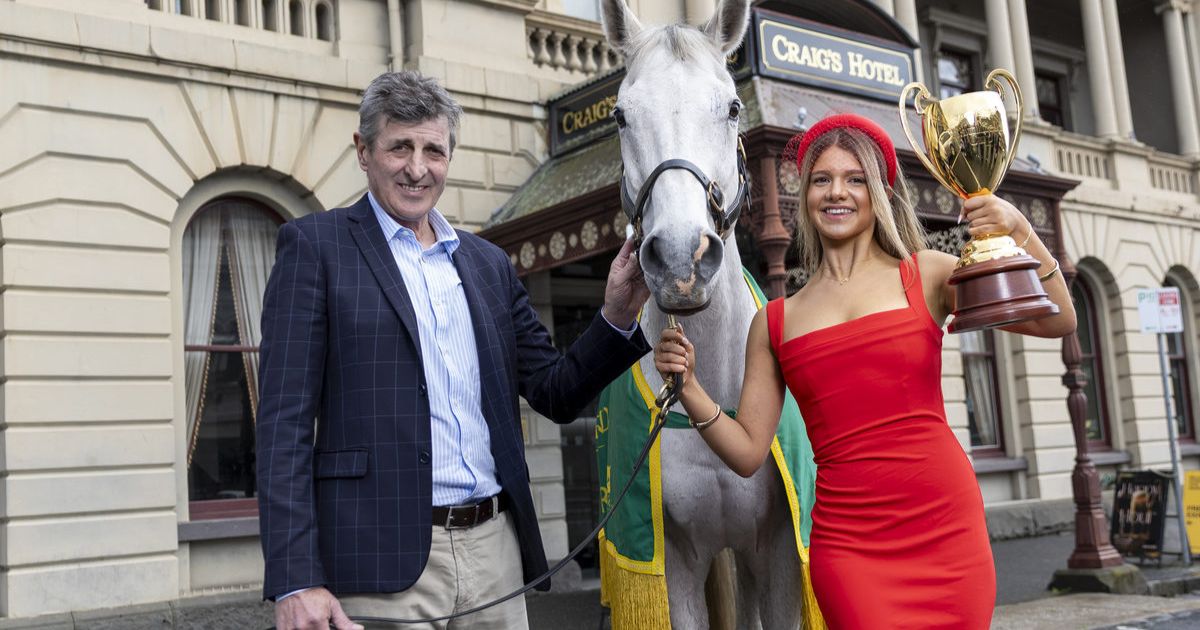
ABOVE: Ballarat trainer Robert Hickmott with his 2013 Caulfield Cup winner Fawkner and Paris Charisiou outside Craig's Royal Hotel. Photo: ALEX COPPEL


BALLARAT’S unique and pivotal contribution to the founding of the Melbourne Racing Club (MRC) will be celebrated at a race meeting at the Ballarat Turf Club at Sportsbet Ballarat this Friday 20 March.
The meeting comes nearly 150 years to the day since the MRC – formerly known as the Victoria Amateur Turf Club (VATC) – staged its first event at the Dowling Forest, Miners Rest racecourse on 24 March, 1876.
A ‘glorious’, well publicised and certainly well attended affair attracted more than 3000 spectators, boosted by an influx of visitors, who travelled from Melbourne and Geelong on specially commissioned trains.
Such was the prominence of the occasion, the Governor, His Excellency Sir George Bowen graced the meeting with his presence, bringing with him a party of 150 guests.
Only months later, the club would find its permanent home at Caulfield, but not before leaving a lasting Ballarat legacy.
From its humble beginnings, the MRC has continued to build a proud legacy of innovation and leadership, from establishing historic races to developing world-class racing and entertainment experiences.
MRC chairman Cameron Fisher said the first meeting had laid the foundations and ‘set the standard’ for everything that has followed.
“The connection to Ballarat is at the heart of our founding story and Ballarat played a significant supporting role by hosting our first race meeting,” he said.
“The Ballarat Turf Club secretary at the time, Edward Moore, was a founding member and a driving force in the establishment of the Victoria Amateur Turf Club.
“He was also key to ensuring the success of that first race meeting.
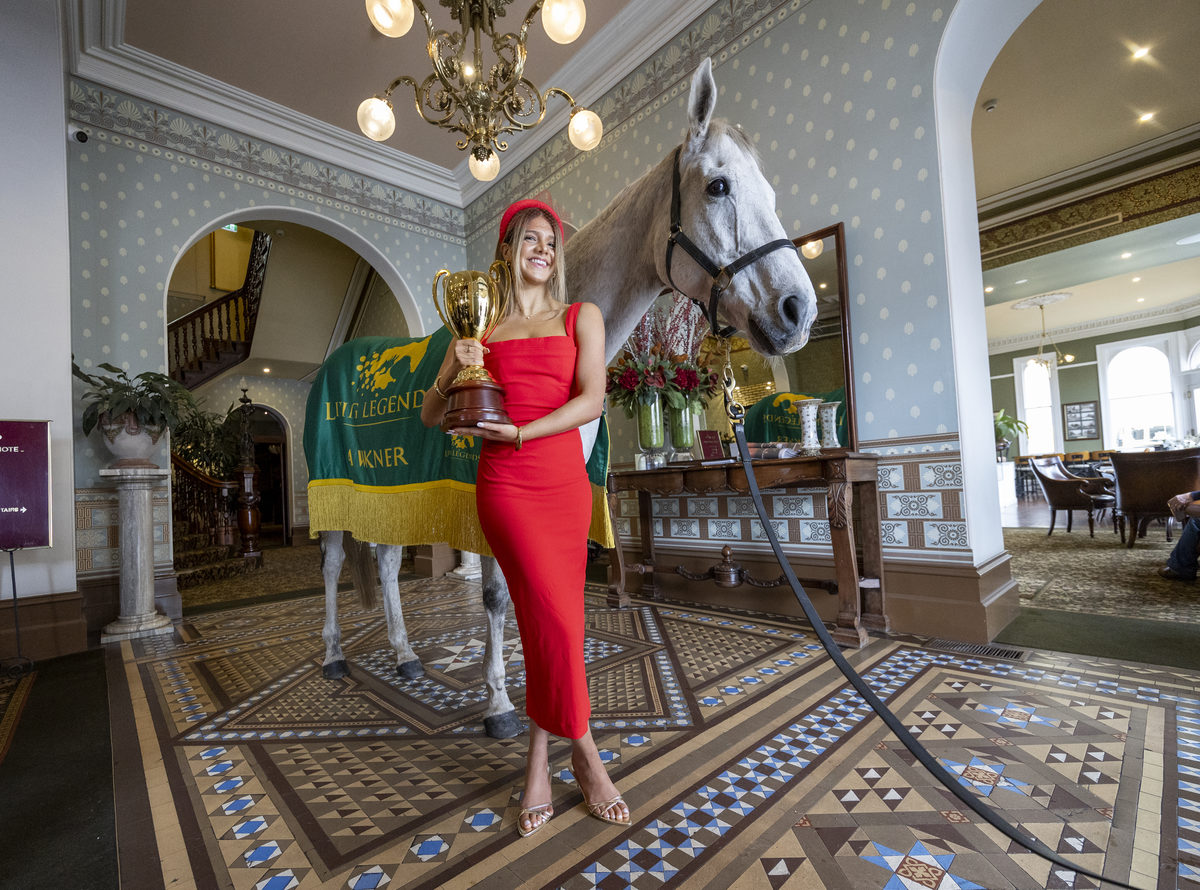
“It was no minor affair with 3000 people attending; and they had special trains from Melbourne and Geelong and the Governor was in attendance.
“It set the standard for everything else that has followed and it has carried on to where we’ve seen the 2025 Caulfield Cup winner Half Yours, trained by the McEvoys (Tony and Calvin), who have a Ballarat operation, continue the connection.”
The club’s story began with a small group of racing enthusiasts in Ballarat seeking to create opportunities for amateur riders.
As MRC racing heritage specialist Tanya Williams explained, the group comprised ‘well-to-do, mostly young gentlemen’ of pastoral families, among them the Chirnsides, Wilsons and Inglis’.
“They were passionate horsemen and also involved in a number of the hunt clubs, so they were very sporting families,” she said.
“As the professionalisation of racing emerged, it meant a lot of these skilful horsemen, who were amateurs, were kind of pushed out a bit by the professional ranks of jockeys and trainers, so they wanted to establish a club, for their own enjoyment and competition, where they could put on a gala racing event and members would ride their own horses in the races.”
In a gathering that would shape Victorian racing for generations to come, a group of six ardent racing men convened at about 7pm on the eve of the 1875 Ballarat Cup on Wednesday 17 October at Craig’s Royal Hotel.
Around the table were Ballarat Turf Club Secretary E.C. Moore, Norman Wilson, his brother Hector, Herbert Power, A.E. French and F.D. McLeod – men united by a shared ambition: to create a private racing club that would conduct meetings for the pleasure and sport of its members – skilled amateur riders, such as themselves, hungry for competition.
“Throughout 1875, Moore and Wilson had exchanged a flurry of letters, each encouraging the other as the idea took shape,” Williams explained.
“Wilson, just 26 years old, was already a well–known landowner — a figure who, depending on who you asked, embodied the rugged charm or the rough edges of Victoria’s squatter class.
“By the time the spirited discussions at Craig’s Hotel drew to a close eight hours later, the framework for the Victoria Amateur Turf Club had been laid. What started as an idea over dinner became a vision with momentum.
“Moore was appointed the club’s first secretary, and foundation members were asked to pay a hefty subscription of £25 to establish a healthy club account — later reduced to £10 in 1876 and £5 in 1877 as membership swelled.
Share


Related Articles
Fresh look for association board
THE Ballarat Basketball Association has welcomed six new members to…
Basketball nationals return to Selkirk Stadium
AUSTRALIA’S premier young basketball talent will again converge on Ballarat…