Locals rally over closure of Murwillumbah’s Safe Haven
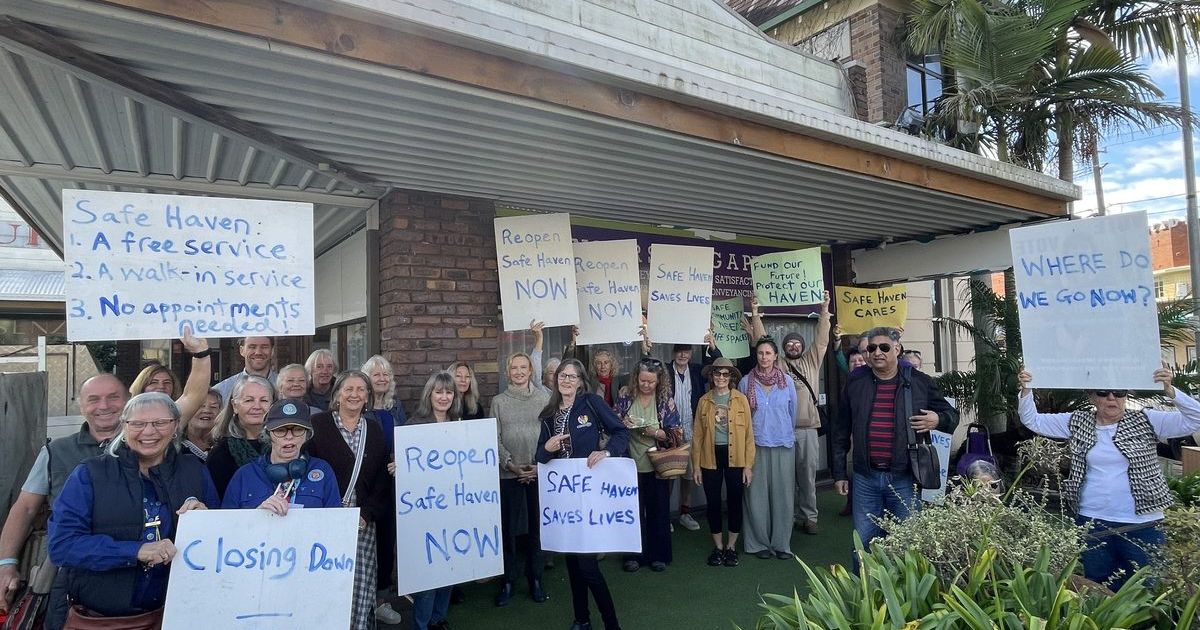
Residents gathered in Murwillumbah to voice their concern about the recent closure of Safe Haven. Photo: Pancho Symes.


RESIDENTS gathered in Murwillumbah last week to voice shared concern about the recent closure of the town’s Safe Haven – a free, non-clinical mental health and wellbeing centre established in response to the 2022 Northern Rivers floods.
Located on Murwillumbah Street, it provided a drop-in space where people could access immediate emotional support, trauma-informed counselling and referrals.
The service closed after temporary NSW Government flood recovery funding expired.
Its closure has raised concerns among locals about the availability of service support in the town, particularly following the closure of Nullum House earlier this year.
Speaking at the protest, local resident Michael Maloney said Safe Haven had played a critical role in his own recovery and he felt compelled to act when he learned the service would close.
“Basically, it saved my life during a period of dark and deep depression,” he said.
“So when they said that we’re closing down, I thought I really need to pay them back in terms of organising letters and petitions and organising the media to let people know.”
He said the drop-in model allowed people who were experiencing mental health problems to drop in and be seen straight away.
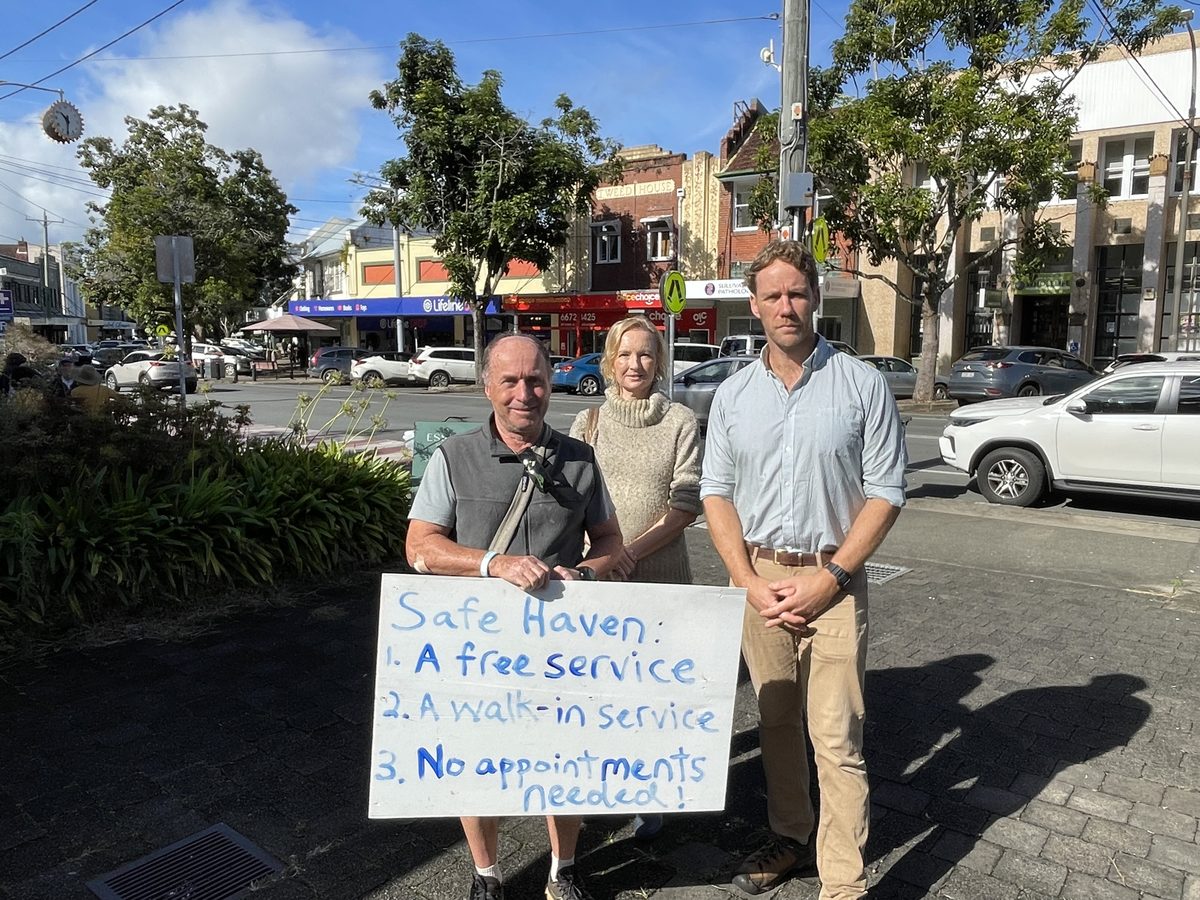
“They could see a psychologist or a social worker and you didn’t need to book a month or six weeks in advance when the whole episode would have catastrophised.”
Doctor Luke Robinson, who works in the emergency departments of Lismore, Ballina and Casino hospitals, attended the rally in his capacity as the Greens candidate for the state seat of Lismore.
He said services such as Safe Haven could help people access support before reaching crisis point.
“As an emergency department doctor, we often see people coming in in crisis, but they could be much better helped if they were helped earlier out in the community,” he said.
“Places like Safe Haven are a safe, non-threatening, calm, non-clinical environment where people can still get the help that they need in a timely manner.
“They don’t have to wait weeks to see a psychologist or a GP, or face a busy, intimidating emergency department.”
Robinson said preventative services were essential to easing pressure on the healthcare system.
“Our health system, unfortunately, is often too geared towards responding to crises,” he said.
“We need to have much more focus on helping people stay well and helping prevent illness or intervening early in illness.”
Share


Related Articles

Could kiwi berries be the next big thing? This Northern Rivers grower thinks so
AFTER taking time out to have children, Natalie Bell returned…
Community shines bright as thousands flock to lantern parade
THOUSANDS of people packed the streets of Lismore with the…