From the desk of Roland Rocchiccioli
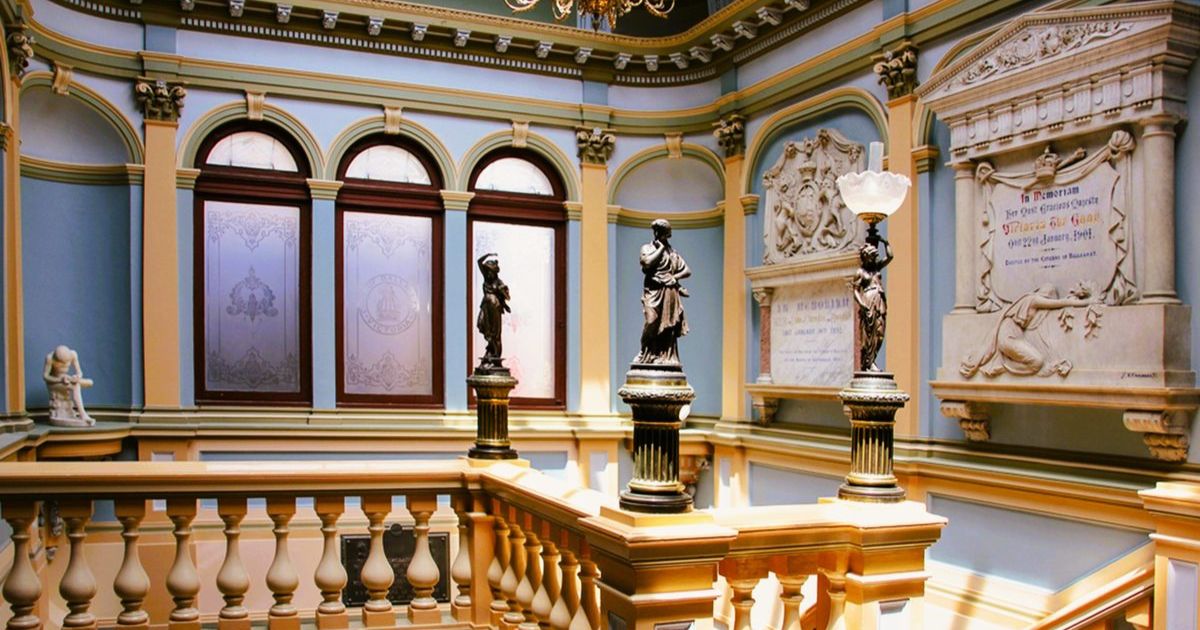
City councils are important; however, there is no place for conspiratorial based agendas.


THE Public Health and Wellbeing Act 2008 recognises the key role of councils in improving the health and wellbeing of people in their municipality. Section 26 of the Act requires each council to prepare a municipal public health and wellbeing plan every 4- years, and within 12-months of a council general election.
Health and wellbeing encompasses not only the absence of disease, but a holistic zeitgeist where individuals experience physical, mental, and social health. Personal wellbeing is an on-going process — reflecting one’s overall state of happiness, life satisfaction, and the ability to flourish in various aspects of life — including physical health, mood, relationships, and purpose. Environment, socio-economic status, and personal behaviours, meaningfully influence health outcomes and the ability to maintain wellbeing.
As part of the Ballarat City Council’s obligation under the Act, it has prepared a Harmful Industries Declaration and Sponsorship Guide. An aspirational document which, in principle, is to be applauded for its daring — “Mens sana in corpore sano”. Conversely, the application of the intent is more problematic — more nuanced in its ramifications and objective.
According to this document, “harmful industries” include any businesses deriving significant benefit or income from one, or more, of the following: unhealthy foods (high in saturated fats, sugar, salt and/or energy), sugary drinks, alcohol, tobacco, e-cigarettes and vaping, and gambling. To elucidate their questionable over-reach, they have constructed a risible list of low, medium, and high risk, “harmful industries”.
Low “harmful industries” include independent groceries (IGA); and local cafes or restaurants.
Illogically, “moderately harmful” includes local fish-and-chip shops, local take-away outlets, and multi-national businesses (Aldi, Coles and Woolworths).
Studies have found a large proportion of food products in major supermarkets are unhealthy. One Australian study suggests 78.7% of available shelf space was allocated to unhealthy foods including ultra-processed foods. Another analysis of convenience supermarkets showed 89.5% of food products displayed to children at checkout areas were unhealthy — influenced by seasonal factors.
Preposterously, “high risk harmful” companies include fast-food outlets or restaurants; hotels, bars, and breweries.
Curiously, the BCC’s suggested list of Healthy Fundraising and Sponsorship partnerships includes accountants and banks. The Banking Royal Commission, 2017-19, heard a egregious litany of transgressions perpetrated by collective banks, including: charging fees for no service; engaging in predatory and misleading behaviour; and stealing money from dead customers. Banking criminal activity accounted for billions of dollars in losses for customers. As for accountants: the list of swindling operatives makes for sombre reading.
The “Harmful Industries Declaration and Sponsorship Guide” supports an inflexible obligation for those not-for-profit organisations applying for council grants to declare their association with any organisation deemed a “harmful industry” by BCC. Council work is not confined to “rates, roads, and rubbish” — they are imperative; however, this venture is ill-conceived. Its raison d’etre might be be unravelled as tacit support for one councillor’s unfortunate, philistinic, cultural perspective: “they play while we pay”.
There is a decided element of the cavalier surrounding this endeavour. In the absence of empirical research-based evidence to support the fallacious classifications, the document should be rescinded — immediately. The overriding premise is wrong and regrettable. It discriminates; it is divisive; and is inaccurate in its judgements. It is a disquieting demonisation based on the apocryphal and brimming with a potential to create financial havoc. Indubitably, it will generate obstacles for grant applicants.
Roland can be heard with Brett Macdonald radio 3BA — Monday 10.40am. Contact: [email protected]
Share


Related Articles
Ballarat’s Best Pie returns this August with 30 venues competing for the title
Restaurants, bakeries, breweries and artisans across Ballarat will once again…
From the office of ROLAND ROCCHICCIOLI
A DOG is our best friend! Their love is unconditional.…