From the desk of Roland Rocchiccioli
Christianity, like Democracy, must be defended, assiduously. Both are so embracing, and so tolerant, it takes little to destabilise their fragility.


CHRISTMAS is a holy and religious observance. The nativity is one of the two great Christian festivals. It marks the birth of the boy child in Bethlehem 2000-years ago.
Christmastime brings congregations together in towering cathedrals and small parish churches to rejoice and pray; and to raise their voices in songs of adoration.
In his great oratorio, The Messiah, Handel set to music Isaiah 9:6 — Unto us a Son is given/ and the government shall be upon His shoulders/ and His name shall be called Wonderful/ Counsellor, the Mighty God/ the everlasting Father/ the Prince of Peace.
Happily, we live in a stable democracy which awards freedom of religious worship. Christianity embraces with enthusiasm other faiths and their idiosyncratic tenets. Whether you believe, or not, matters little. Christmas is a liturgical feast. It is not the Yuletide, or the festive season, or the summer holidays — or any other of the erroneously attached epithets. Out of respect, we should not refer to Eid al-Fitr, Yom Kippur, or Diwali, by any other name except the one expressly used by its disciples. That Christmas would be known by any other name than the one chosen by its adherents is perplexing.
Recently, there has been a covert pattern of determination to remove Christmas carols and the Nazarene’s teachings from schools and public places, often by those who follow a less accommodating faith — or those of no faith. European Australia was founded on Christian principals, and — for better or worse — Australia has two Patron Saints: Our Lady Help of Christians, and Saint Mary of the Cross MacKillop. Axiomatically, for many it is purely symbolic. While it may appear discriminatory to those Australians who do not accept the Christian doctrine of the Holy Trinity, it does not infer exclusion. Traditional Christians are taught to embrace and respect the beliefs and practices of all faiths. While each religion teaches its own distinct understanding of an Almighty God, there is an accepted notion all Divinities are — in essence — the same being.
The world watched in celebration as His Majesty King Charles 111 and His Holiness Pope Leo XIV prayed together in the Vatican’s Sistine Chapel. It was the first shared Act of Worship by an Anglican monarch and a Catholic pontiff since King Henry VIII — the religious reformer —broke-away from Rome in 1534.
Places of worship have the power to feed the soul. Ignoring ancient religious vagaries, it is the overwhelming spirit-of-fellowship — the communion of souls — which is to be found in churches, temples, mosques, and synagogues, and which nurtures our spirituality. The spectacle of the Torah being processed is so powerful it makes your soul sing in gladness.
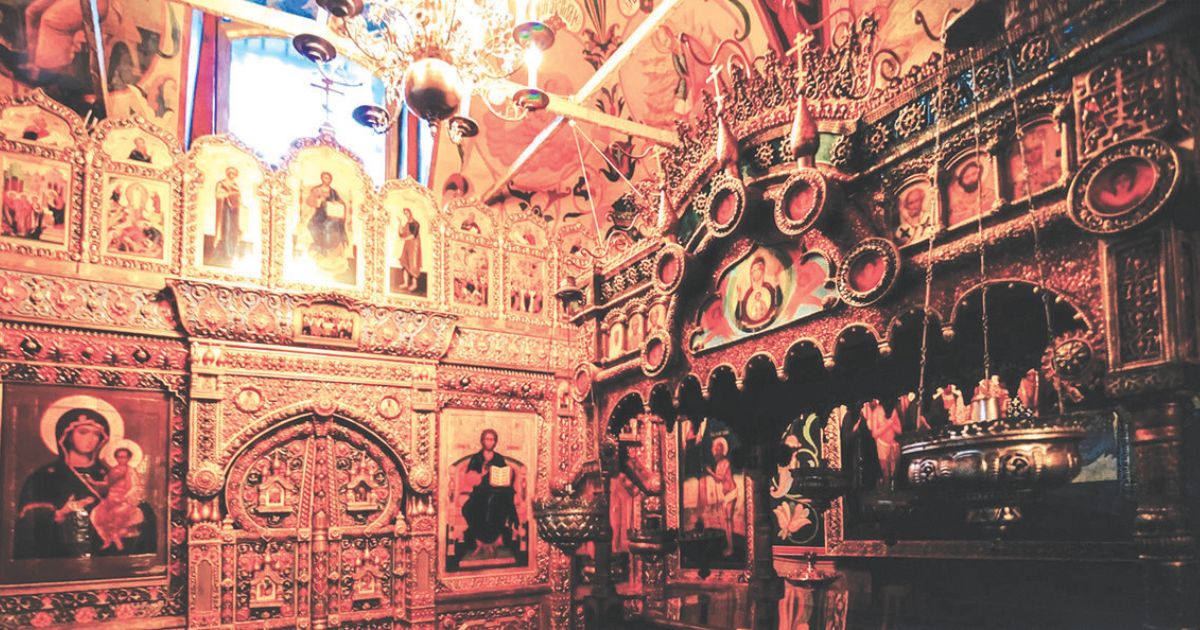
In St. Basil’s Cathedral, Red Square, Moscow, the days of worship leading-up to Christmas are steeped with Eastern Orthodox mystery. The spirit of unity is profound. The sandalwood incense hangs heavy. The ceiling is blackened from the rising smoke. There are no pews. Inexorably, the visceral a cappella Russian chant renders you mute in reverence.
The character of Christmas is a blend of universal values with an emphasis on love, kindness, and true generosity-of-spirit. It is a time to focus on compassion; to foster unity; and to contemplate our shared humanity and its enduring power.
Let us forget not: Christmas celebrates the birth of The Prince of Peace.
Happy Christmas, to you.
Contact: [email protected]
Share


Related Articles
Ballarat’s Best Pie returns this August with 30 venues competing for the title
Restaurants, bakeries, breweries and artisans across Ballarat will once again…
From the office of ROLAND ROCCHICCIOLI
A DOG is our best friend! Their love is unconditional.…