From the desk of Roland Rocchiccioli
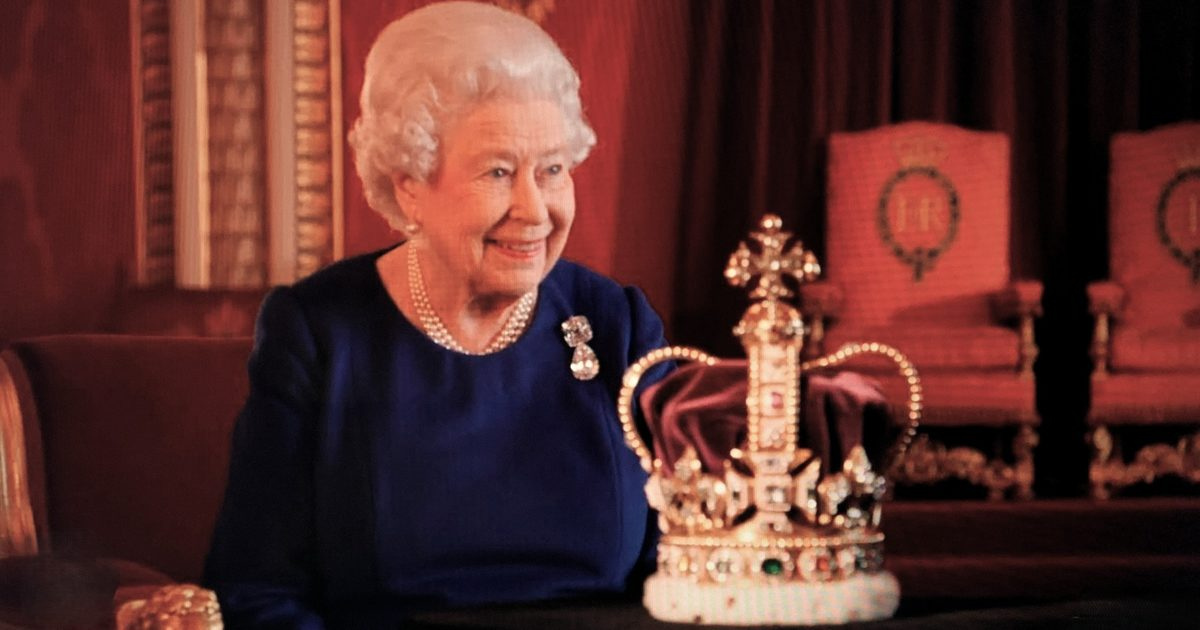
Her late Majesty, Queen Elizabeth, believed symbols are important. Seventy-one-percent of Australians believe our National Flag unites us.


THERE is something disagreeable about those who choose to burn the Australian Flag. It smacks of an ugly hostility and an alarming disrespect for national values. The insult is reason to be offended — to take stock.
Member for Western Victoria Region, Bev McArthur, has backed a motion calling on the state government to criminalise the deliberate desecration of the Australian and Victorian flags.
In parliament, Mrs McArthur posited: “The Australian National Flag, and the Victorian State Flag, are enduring symbols of our nation and our state. They represent our history, recall our shared values, and symbolise our unity.”
Symbols serve as a foundation for human understanding. They are a bridge between abstract concepts and tangible theories. Freedom of speech and peaceful protest are sacrosanct; however, for too long the accompanying denigration and desecration of our unifying symbols has gone unchecked. It should no longer be tolerated.
Further, Mrs. McArthur catergorised public flag burning: “It is not a harmless act of protest but a threatening act of aggression, a symbolic call to violence against Australia, its institutions, and its people.”
Citing IPA research on community sentiment, Mrs McArthur noted: “Seventy-seven-percent of Australians polled believe burning the Australian National Flag should be against the law.” Also, the poll — a majority of age 18-24 — showed 63-per cent believe offenders should be sentenced; 71-per cent believe non-citizens who burn the flag should be deported — some to countries where flag desecration carries a heavy term of imprisonment.
Mrs. McArthur argued flag desecration causes tangible injury: “It harms social cohesion, provokes violence and signals aggression against fellow citizens. We do not ban ideas, but we can, and must, curb acts that symbolically attack the polity itself.” She called for a measured legislative response. “Laws should be carefully crafted, targeting deliberate desecration done with intent to incite hatred or public disorder, balancing deterrence with proportionality. We must distinguish between sincere, even passionate, political speech, and acts whose primary purpose is to wound the nation and divide its people.”
Mrs. McArthur urged the government to act on the motion and to recommit Victoria to the shared values our flags symbolically represent: “The Australian National Flag is a symbol of our unity, democracy and hard-won freedoms. To treat it with such contempt is to treat the Australian people with contempt.”
Let We Forget, in the two World Wars men and women died defending the freedom of the flag. For prisoners-of-war it was a tangible, symbolic representation of home — a physical manifestation of why they were fighting. The Australian Flag lowered to half-mast is a symbol of National mourning and respect for those who sacrificed their lives for the country’s independence and sovereignty.
Curiously, in the majority of the less democratic countries flag desecration is illegal. We have much for which we should be grateful. The Nation’s flags and symbols — including that of the First Nations people — deserve respect. Our Flag characterises a society which has chosen the specific emblem. If that precept does not sit easily then perhaps it requires serious personal reflection. Comparatively, Australia is a generous country; however, if it is imbued with those values and expectations which cause consternation, or unrest, there might be another country which would better satisfy.
Burning the Flag is a desecration. It must have a consequence.
Roland can be heard with Brett Macdonald radio 3BA — Monday 10.40am. Contact: [email protected]
Share


Related Articles

From the office of ROLAND ROCCHICCIOLI
A DOG is our best friend! Their love is unconditional.…
The from office of ROLAND ROCCHICCIOLI
I was alarmed to read of the serious assault charge…