From the desk of ROLAND ROCCHICCIOLI
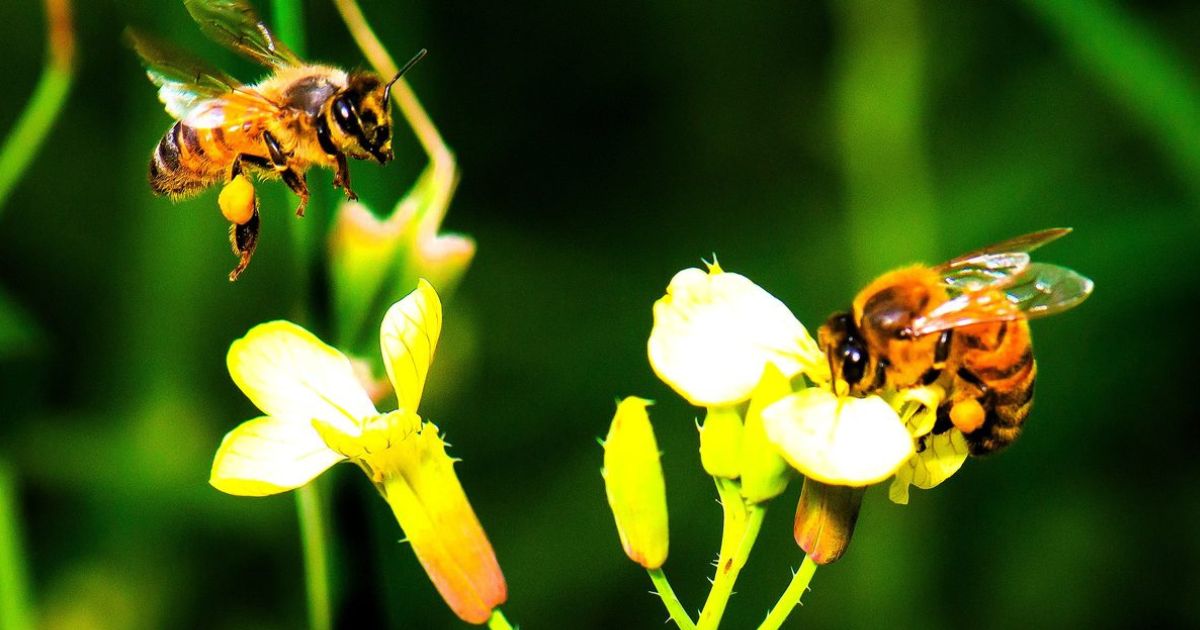
Australia is home to around 2,000 species of native bees which have co-evolved with our unique native flora over thousands of years.


THE scenario is so ominous it might easily be the plot of an American, B-grade, 1950s horror movie! Imagine: in less than 100-years many of the world’s animals — including lions, tigers, elephants, rhinoceroses, and gorillas — will be gone from the planet.
Working against time, scientists know there is only one way to save them — and us. Bees — a combination of honey and wild bees! It sounds too preposterous to be true — but is it?
While they may be small, bees are imperative to the survival of life on earth. Three-quarters of the crops we eat depend on pollinators — and bees are the most vital. They are the building blocks of nature. Without them we face potential extinction. Astonishingly, the production of one-in-every-three bites of our food depends on this army of pollinators playing a perfect role in keeping our magnificent natural world thriving.
Many insecticides, fungicides, herbicides, and fertilisers — commonly used in agriculture and horticulture — are highly toxic to bees, affecting their health and numbers
However, all is not lost! If we collectively combine our efforts we can re-write the script for a happy-ever-after ending. Australia’s Wheen Bee Foundation collaborates with all levels of government, apiculture industry, bee-reliant food industries, universities, research organisations, and the community. The challenge is immense — our survival is at stake — but with the right degree of commitment these little workers will keep feeding us long into the future.
Australia’s Common Blossom Bat is an important pollinator — particularly in our coastal, tropical, and subtropical rainforests and heathlands. With specialized long tongues and furry bodies they efficiently transfer pollen between native flowers especially banksia, paperbark, and eucalyptus. Butterflies fly at speeds of up to 20-kph and travel distances of over 320-km a day. Wherever we go — or look — pollinators are quietly working in the background. Bees communicate through dance. They wiggle in accordance with the position of the sun, sharing information about the location of patches of pollen-rich flowers, water sources, and new nests.
Some bats, small mammals, and primates, pollinate night–blooming or heavy, musky flowers. Deprived of pollinators’ support nearly 90-percent of the world’s wild plant species, and more than 75-percent of global food crops, are facing absolute crisis.
If our pollinators disappear the entire world could — quite literally —collapse. Bees, together with butterflies, hummingbirds, sunbirds, honeyeaters, bats, moths, flies, beetles — and so many more — are the tireless heroes who support our vital, life-giving ecosystems across the globe. Scarily, all life on earth will be effected. The Australian honeybee is an introduced species, likewise the majority of crops they pollinate. Those crops would struggle to be productive without honeybee pollination.
Acre-after-acre of farmland is being doused in chemical pesticides — spraying deadly poison on the food resource of some creatures. Experts say we should eliminate pesticide use — particularly harmful insecticides; provide nesting sites by leaving some areas of your garden with bare soil or the lawn unmowed for ground-nesting bees, and — where practicable — leaving plant stems, fallen logs or stumps for beetles and flies to use for nesting; provide a shallow dish filled with water and pebbles to help prevent their drowning; choose native flowers to provide familiar nectar and pollen; and ensure a food supply by planting a variety of species that bloom at different times.
We need bees for our food security.
Roland talks with Brett Macdonald radio 3BA Monday 10.40am. Contact: [email protected]
Share


Related Articles
From the office of ROLAND ROCCHICCIOLI
A DOG is our best friend! Their love is unconditional.…
The from office of ROLAND ROCCHICCIOLI
I was alarmed to read of the serious assault charge…