From the office of ROLAND ROCCHICCIOLI
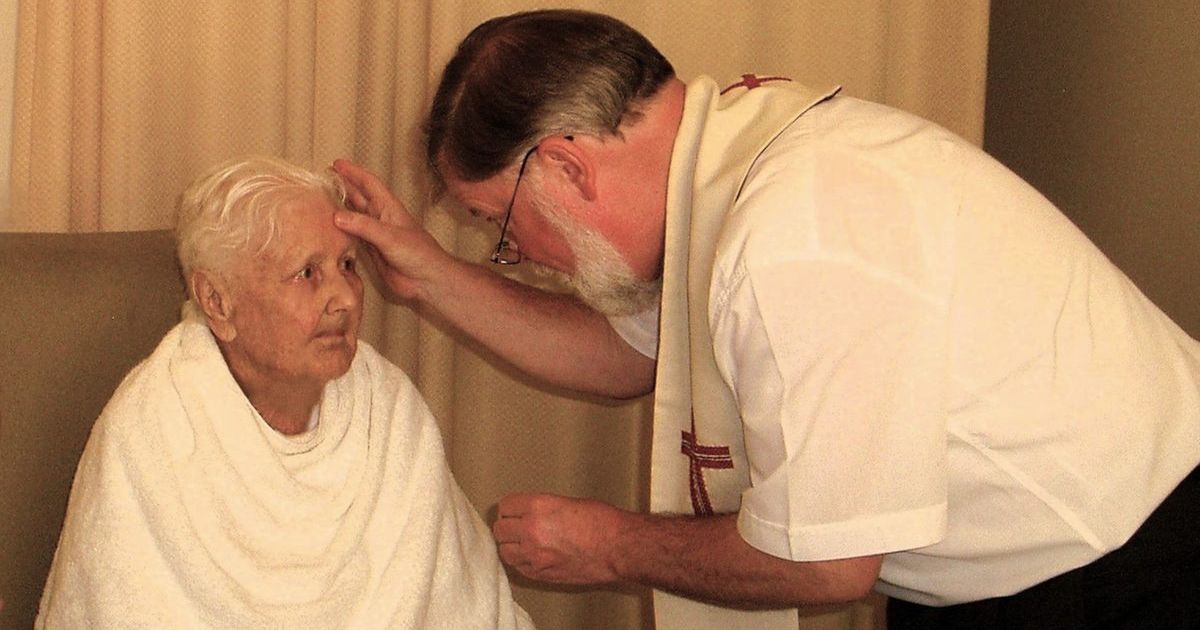
Baptism: Beria and Father Brendan Hayes. Photo: Supplied


OVER time, Easter has been erroneously marketed as a secular ‘holiday’ season—a suitably placed four-day break early in Spring—which disregards its ancient genesis. For those of faith, however, Easter remains the most solemn religious festival in the calendar: the cornerstone of Christianity.
Christian dogma—its foundational truths—rests on a leap of faith. For those who believe, no explanation is necessary; for those who do not, none is possible.
Personal belief aside, the history of civilisation is writ large in the annals of our diversified faiths. To purge this history from our lives—or the lives of our children—negates the rich human mosaic which has led us through the epochs, however precarious the confluence at this juncture.
Easter is not the festival of the chocolate rabbit or the hot cross bun. It is the conclusion of Lent—the 40-day season of fasting, prayer, and repentance. The achievement of turning sorrow into celebration.
The 1950s Roman Catholicism was a life-defining ingredient for Western Australia’s Goldfields Catholic children. In Gwalia, with a population of 60 per cent Italian and 20 per cent other Europeans, we prayed for the “perfidious Jews” (it was never explained), and for the conversion of Russia; we beseeched St. Michael the Archangel to “save us from the wickedness and snares of the devil”; we said the Rosary and offered-up Novenas; heard the Mass in Latin; and gave money for Africa’s brown babies.
Habitually, we abstained from meat on Friday; confessed weekly our mortal and venial sins; fasted the 12 hours before Mass and Holy Communion; observed Holy Days of Obligation; did the Stations of the Cross; performed plenary indulgences—including the Adoration of the Blessed Sacrament; attended Benediction regularly; and paused for the midday Angelus.
We believed—ex Cathedra—in the infallibility of Pope Pius XII, the Universal Shepherd of the Church. The implacable discipline helped shape our lives and elucidated Catholicism’s Joyful, Sorrowful, and Glorious mysteries. It was a religious cornucopia which kept us on our toes!
In one of many conversations with the late George, Cardinal Pell, he said: “I hope all that did you some good—it certainly didn’t do you any harm!” He was correct—it served me well! While I cannot feign being a practising Catholic, I have never abandoned my faith. Like my late mother, Beria, I shall die a Catholic.
Beria converted to Catholicism weeks before her death. She was deep-sleeping and died two minutes before the religious arrived to administer the Last Rites. Oscar, her black-and-white Shih Tzu, was on the bed licking her hand. He attacked Father Brendan Hayes when he attempted the anointing.
The exposés of criminal abuse notwithstanding—that is a horse of another colour—Goldfields Catholicism was not of the brand which pharisaically saw singers Elvis Presley and Frank Sinatra, and actresses Ingrid Bergman (“a powerful influence for evil”) and Elizabeth Taylor, denounced from a pulpit of “divine vengeance”. However obdurate, 1950s Catholicism comprised a litany of tenets fostering a life of regard—both for yourself and for others; to do unto others as we would have done; to be your best possible person. Categorically, it espoused individual discipline.
Today, much of this is lost. Arguably, most under 30 are unaware: Easter eggs represent the tomb from which Jesus rose, and hot cross buns are so marked to symbolise The Crucifixion.
To be ignorant of religious heritage is to be historically illiterate. Happy Easter!
Contact: [email protected]
Share


Related Articles

From the office of ROLAND ROCCHICCIOLI
A DOG is our best friend! Their love is unconditional.…
The from office of ROLAND ROCCHICCIOLI
I was alarmed to read of the serious assault charge…